Alfaddagh Abdulhamied, Martin Seth S, Leucker Thorsten M, Michos Erin D, Blaha Michael J, Lowenstein Charles J, Jones Steven R, Toth Peter P
Ciccarone Center for the Prevention of Cardiovascular Disease, Johns Hopkins University School of Medicine, Baltimore, MD, USA.
Am J Prev Cardiol. 2020 Nov 21;4:100130. doi: 10.1016/j.ajpc.2020.100130. eCollection 2020 Dec.
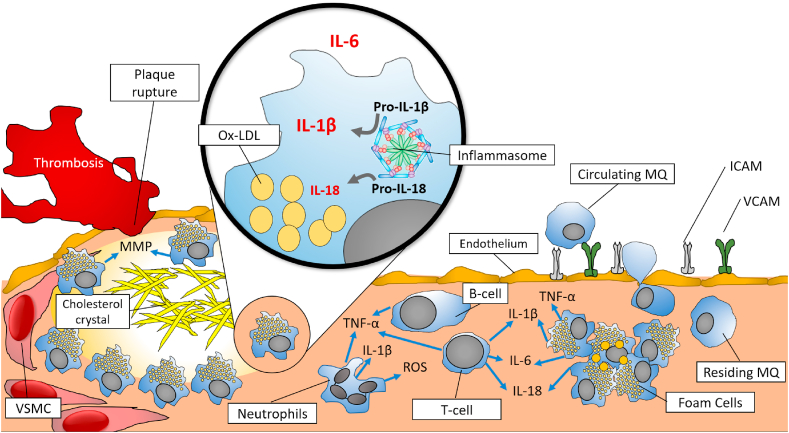
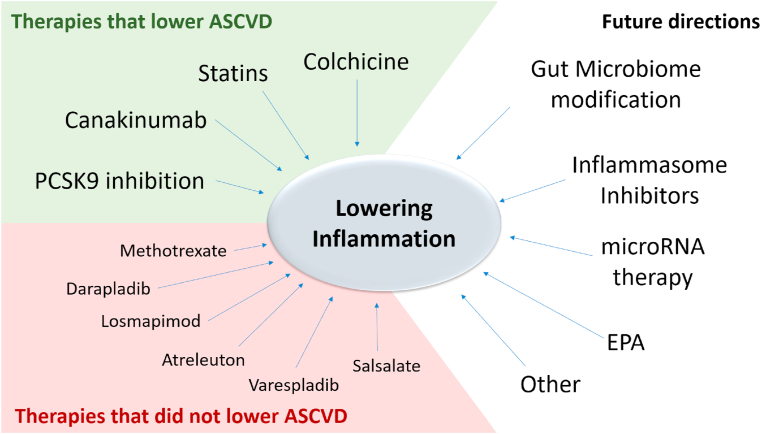
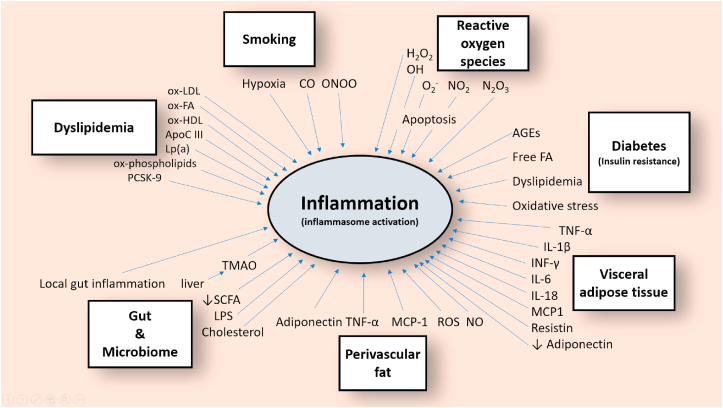
Inflammation constitutes a complex, highly conserved cascade of molecular and cellular events. Inflammation has been labeled as "the fire within," is highly regulated, and is critical to host defense and tissue repair. In general, inflammation is beneficial and has evolved to promote survival. However, inflammation can also be maladaptive when chronically activated and sustained, leading to progressive tissue injury and reduced survival. Examples of a maladaptive response include rheumatologic disease and atherosclerosis. Despite evidence gathered by Virchow over 100 years ago showing that inflammatory white cells play a role in atherogenesis, atherosclerosis was until recently viewed as a disease of passive cholesterol accumulation in the subendothelial space. This view has been supplanted by considerable basic scientific and clinical evidence demonstrating that every step of atherogenesis, from the development of endothelial cell dysfunction to foam cell formation, plaque formation and progression, and ultimately plaque rupture stemming from architectural instability, is driven by the cytokines, interleukins, and cellular constituents of the inflammatory response. Herein we provide an overview of the role of inflammation in atherosclerotic cardiovascular disease, discuss the predictive value of various biomarkers involved in inflammation, and summarize recent clinical trials that evaluated the capacity of various pharmacologic interventions to attenuate the intensity of inflammation and impact risk for acute cardiovascular events.
炎症构成了一个复杂的、高度保守的分子和细胞事件级联反应。炎症被称为“体内之火”,受到高度调节,对宿主防御和组织修复至关重要。一般来说,炎症是有益的,并且已经进化到促进生存。然而,当炎症长期被激活和持续时,也可能是适应不良的,导致进行性组织损伤和生存率降低。适应不良反应的例子包括风湿性疾病和动脉粥样硬化。尽管100多年前魏尔啸收集的证据表明炎症白细胞在动脉粥样硬化形成中起作用,但直到最近,动脉粥样硬化仍被视为一种在内皮下空间被动胆固醇积累的疾病。这一观点已被大量基础科学和临床证据所取代,这些证据表明,动脉粥样硬化形成的每一步,从内皮细胞功能障碍的发展到泡沫细胞形成、斑块形成和进展,以及最终由于结构不稳定导致的斑块破裂,都是由炎症反应的细胞因子、白细胞介素和细胞成分驱动的。在此,我们概述炎症在动脉粥样硬化性心血管疾病中的作用,讨论参与炎症的各种生物标志物的预测价值,并总结最近评估各种药物干预减轻炎症强度和影响急性心血管事件风险能力的临床试验。