Foster Russell G, Hughes Steven, Peirson Stuart N
Sleep & Circadian Neuroscience Institute (SCNi), Nuffield Department of Clinical Neurosciences, Sir William Dunn School of Pathology, Oxford Molecular Pathology Institute, South Parks Road, University of Oxford, Oxford OX1 3RF, UK.
Biology (Basel). 2020 Jul 21;9(7):180. doi: 10.3390/biology9070180.
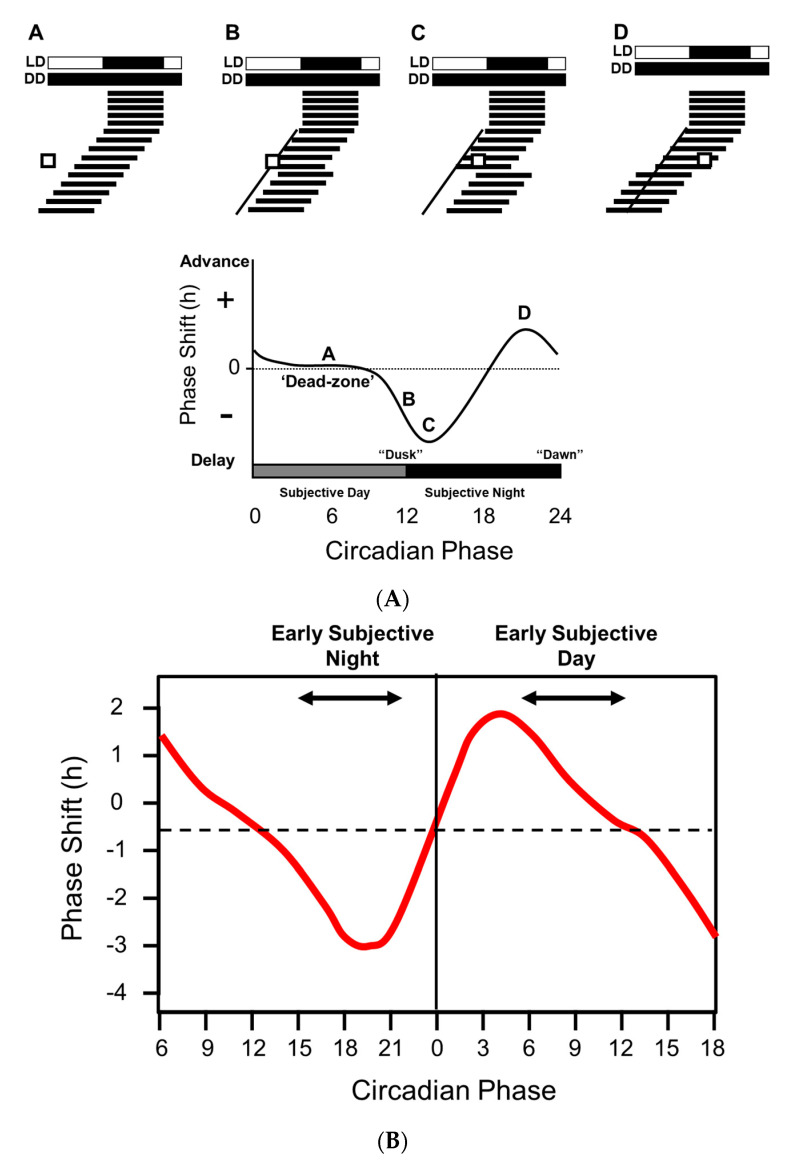
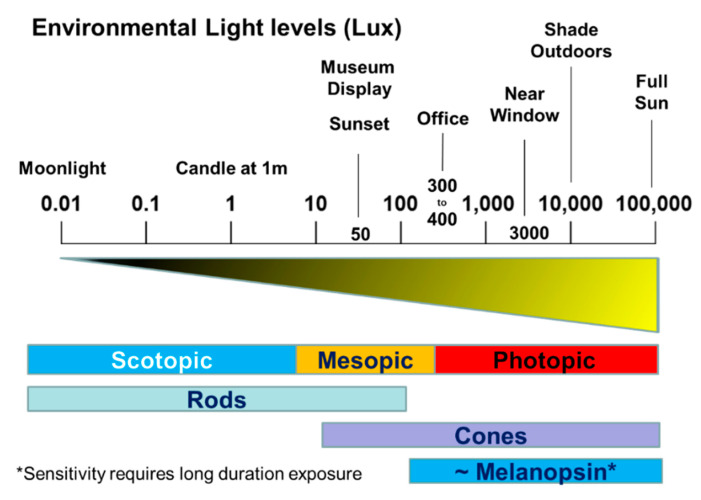
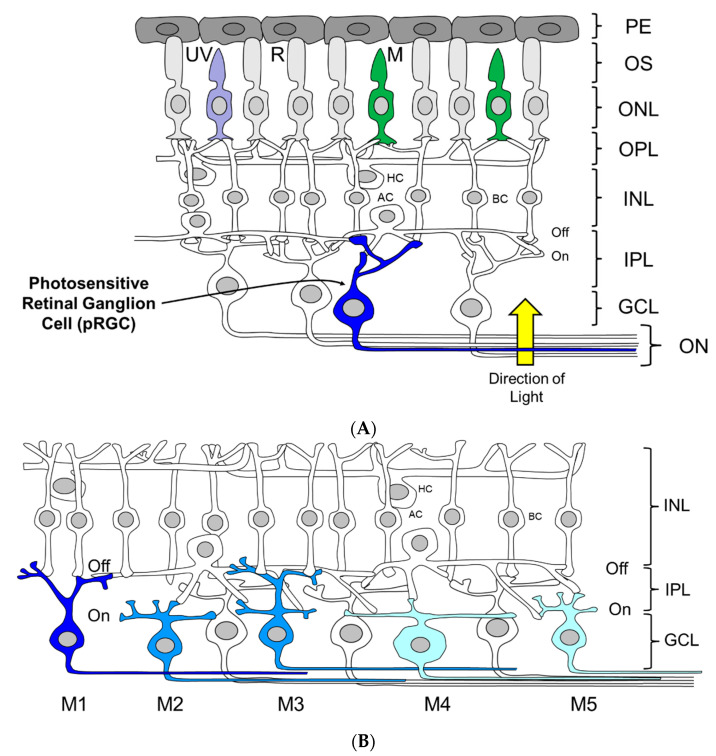
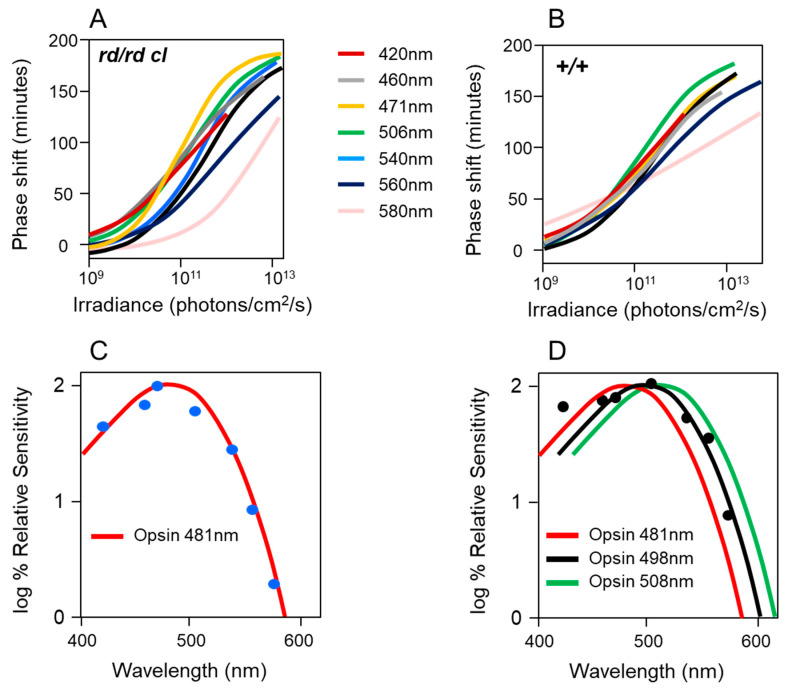
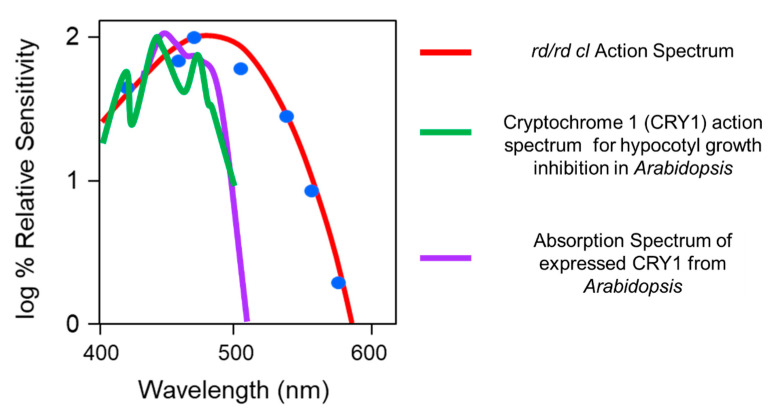
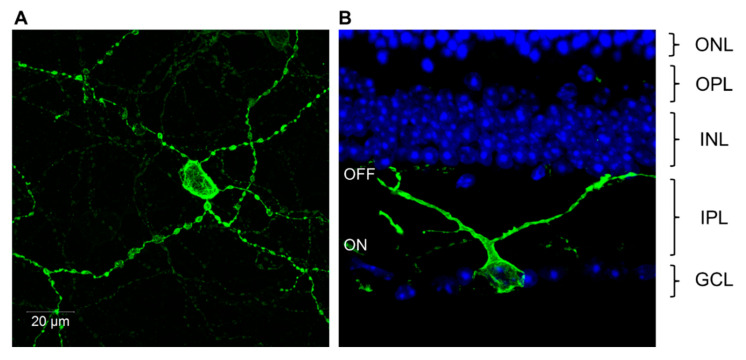
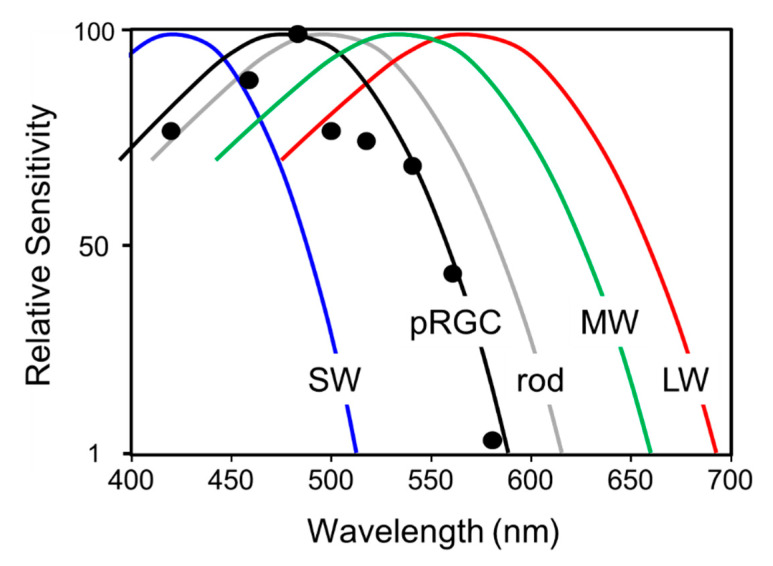
Light around twilight provides the primary entrainment signal for circadian rhythms. Here we review the mechanisms and responses of the mouse and human circadian systems to light. Both utilize a network of photosensitive retinal ganglion cells (pRGCs) expressing the photopigment melanopsin (OPN4). In both species action spectra and functional expression of OPN4 in vitro show that melanopsin has a λ close to 480 nm. Anatomical findings demonstrate that there are multiple pRGC sub-types, with some evidence in mice, but little in humans, regarding their roles in regulating physiology and behavior. Studies in mice, non-human primates and humans, show that rods and cones project to and can modulate the light responses of pRGCs. Such an integration of signals enables the rods to detect dim light, the cones to detect higher light intensities and the integration of intermittent light exposure, whilst melanopsin measures bright light over extended periods of time. Although photoreceptor mechanisms are similar, sensitivity thresholds differ markedly between mice and humans. Mice can entrain to light at approximately 1 lux for a few minutes, whilst humans require light at high irradiance (>100's lux) and of a long duration (>30 min). The basis for this difference remains unclear. As our retinal light exposure is highly dynamic, and because photoreceptor interactions are complex and difficult to model, attempts to develop evidence-based lighting to enhance human circadian entrainment are very challenging. A way forward will be to define human circadian responses to artificial and natural light in the "real world" where light intensity, duration, spectral quality, time of day, light history and age can each be assessed.
黄昏前后的光线为昼夜节律提供主要的同步信号。在此,我们综述小鼠和人类昼夜节律系统对光的机制及反应。两者都利用表达光色素黑视蛋白(OPN4)的光敏视网膜神经节细胞(pRGC)网络。在这两个物种中,OPN4的作用光谱和体外功能表达均表明,黑视蛋白的波长接近480纳米。解剖学研究结果表明,存在多种pRGC亚型,在小鼠中有一些证据表明它们在调节生理和行为方面的作用,但在人类中相关证据很少。对小鼠、非人灵长类动物和人类的研究表明,视杆细胞和视锥细胞投射到pRGC并能调节其光反应。这种信号整合使视杆细胞能够检测暗光,视锥细胞能够检测更高强度的光以及间歇性光照的整合,而黑视蛋白则在较长时间内测量强光。尽管光感受器机制相似,但小鼠和人类的敏感度阈值存在显著差异。小鼠能在约1勒克斯的光照下同步几分钟,而人类则需要高辐照度(>100勒克斯)且持续时间长(>30分钟)的光照。这种差异的原因尚不清楚。由于我们视网膜的光照高度动态,且光感受器相互作用复杂且难以建模,因此尝试开发基于证据的照明以增强人类昼夜节律同步极具挑战性。未来的方向将是在“现实世界”中定义人类对人工光和自然光的昼夜节律反应,在这个世界中,可以分别评估光强度、持续时间、光谱质量、一天中的时间、光照历史和年龄。