Department of Biomedical Sciences, School of Medicine, Debre Markos University, Debre Markos, Ethiopia.
PLoS One. 2022 Jul 27;17(7):e0268480. doi: 10.1371/journal.pone.0268480. eCollection 2022.
Cervical cancer is the fourth commonest and the fourth leading cause of cancer death in females globally. The upregulated expression of microRNA-21 in cervical cancer has been investigated in numerous studies, yet given the inconsistency on some of the findings, a systematic review and meta-analysis is needed. Therefore, the aim of this systematic review and meta-analysis is to investigate the role in disease progression as well as the diagnostic and prognostic value of microRNA-21 in patients with cervical cancer.
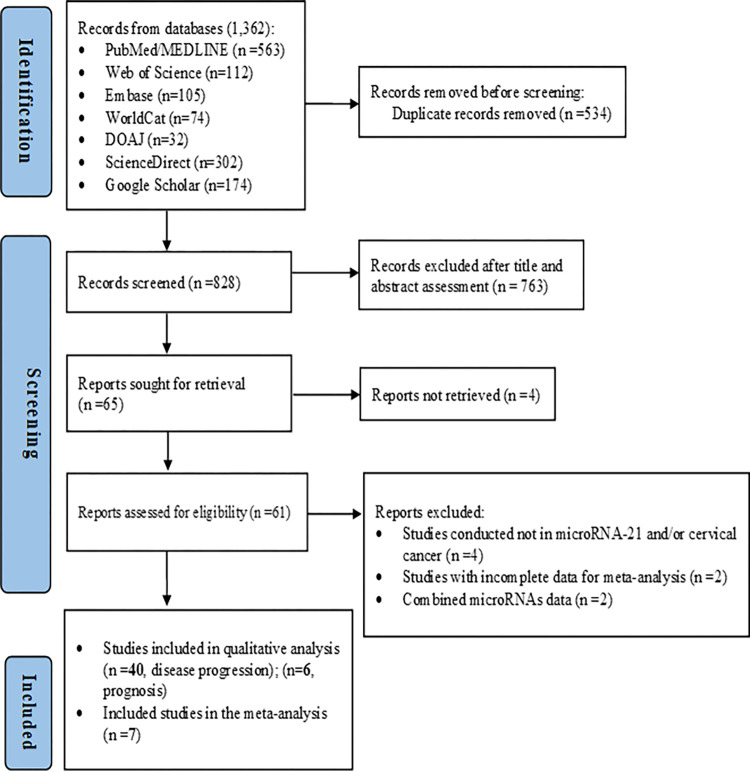
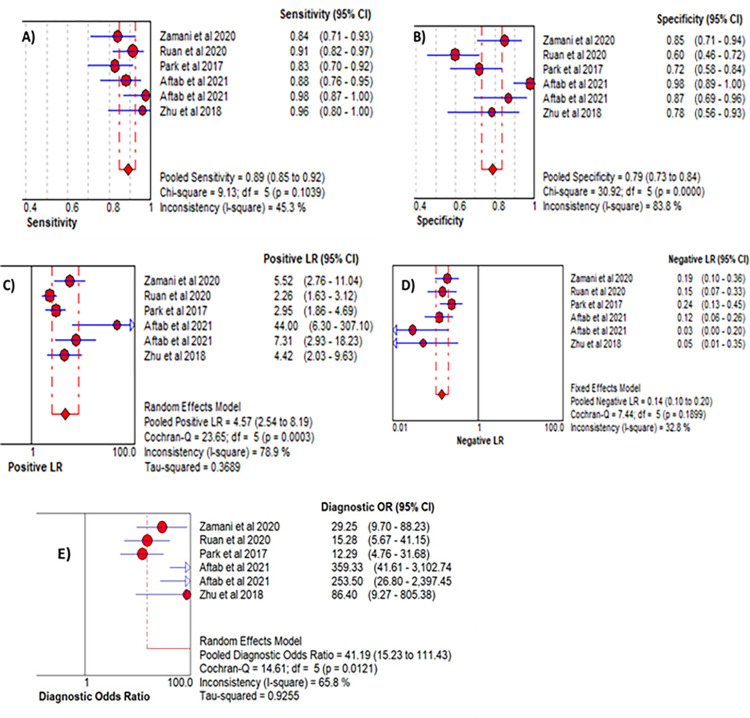
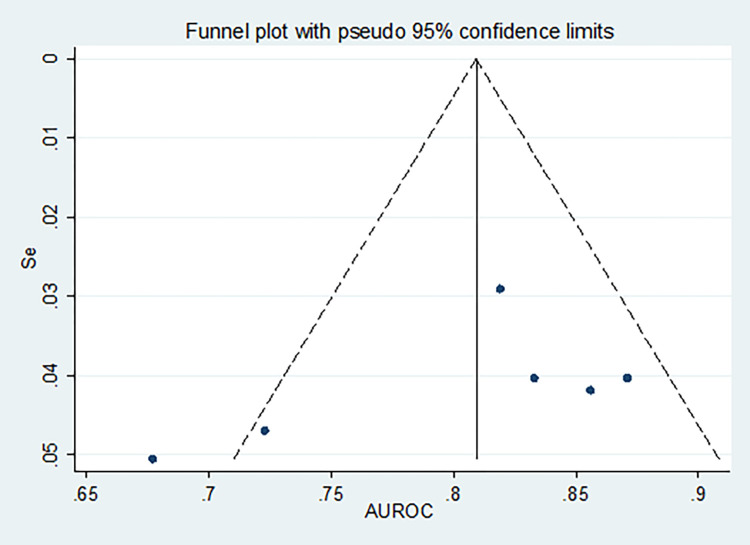
Literature search was carried out through visiting several electronic databases including PubMed/MEDLINE/ PubMed Central, Web of Science, Embase, WorldCat, DOAJ, ScienceDirect, and Google Scholar. After extraction, data analysis was carried out using Rev-Man 5.3, STATA 15.0 and Meta-disk 1.4. I2 and meta-bias statistics assessed heterogeneity and publication bias of the included studies, respectively. The area under summary receiver operating characteristic curve and other diagnostic indexes were used to estimate diagnostic accuracy.
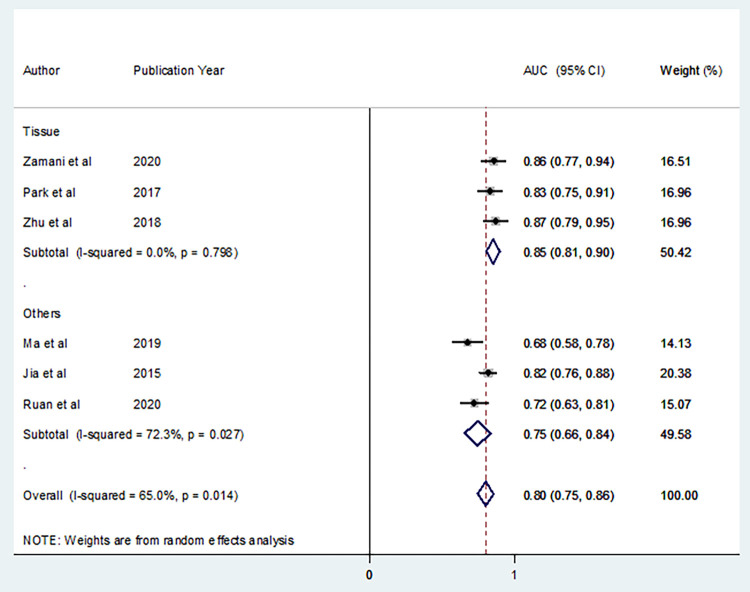
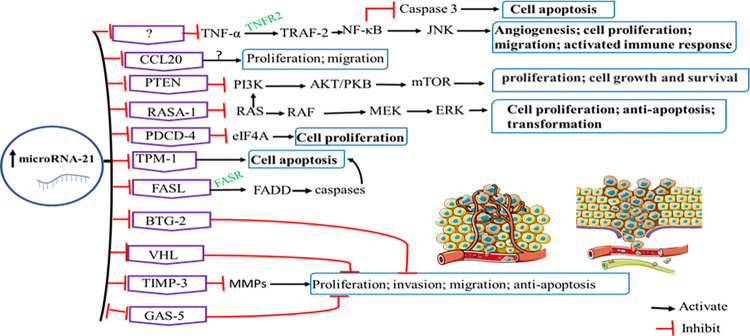
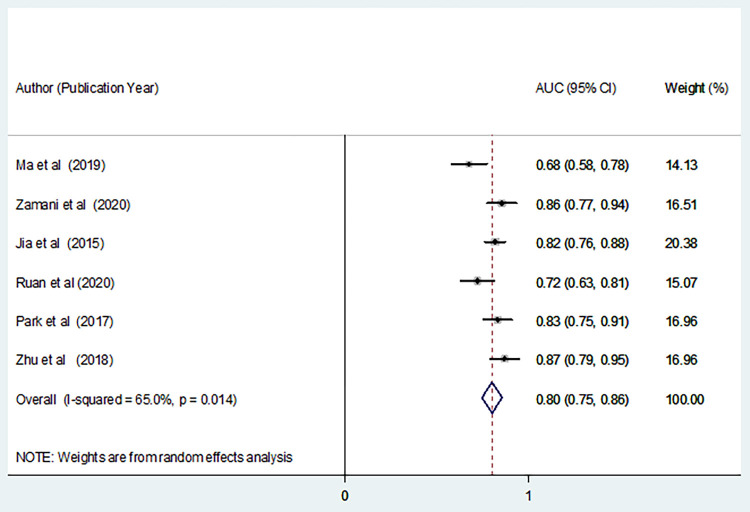
A total of 53 studies were included for this systematic review and meta-analysis. This study summarized that microRNA-21 targets the expression of numerous genes that regulate their subsequent downstream signaling pathways which promote cervical carcinogenesis. The targets addressed in this study included TNF-α, CCL20, PTEN RasA1, TIMP3, PDCD-4, TPM-1, FASL, BTG-2, GAS-5, and VHL. In addition, the meta-analysis of reports from 6 eligible studies has demonstrated that the overall area under the curve (AUC) of summary receiver operating characteristic (SROC) of microRNA-21 as a diagnostic accuracy index for cervical cancer was 0.80 (95% CI: 0.75, 0.86). In addition, evidence from studies revealed that upregulated microRNA-21 led to worsening progression and poor prognosis in cervical cancer patients.
microRNA-21 is an oncogenic microRNA molecule playing a key role in the development and progression of cervical malignancy. It has good diagnostic accuracy in the diagnosis of cervical cancer. In addition, the upregulation of microRNA-21 could predict a worse outcome in terms of prognosis in cervical cancer patients.
宫颈癌是全球女性中第四常见的癌症,也是第四大癌症死亡原因。已有大量研究探讨了 microRNA-21 在宫颈癌中的上调表达,但由于部分研究结果存在不一致性,因此需要进行系统评价和荟萃分析。因此,本系统评价和荟萃分析的目的是研究 microRNA-21 在宫颈癌患者疾病进展中的作用以及其在诊断和预后中的价值。
通过访问 PubMed/MEDLINE/PubMed Central、Web of Science、Embase、WorldCat、DOAJ、ScienceDirect 和 Google Scholar 等多个电子数据库进行文献检索。提取数据后,使用 RevMan 5.3、STATA 15.0 和 Meta-disk 1.4 进行数据分析。分别使用 I2 和 meta-bias 统计评估纳入研究的异质性和发表偏倚。使用汇总受试者工作特征曲线下面积和其他诊断指标来评估诊断准确性。
本系统评价和荟萃分析共纳入 53 项研究。本研究总结表明,microRNA-21 靶向调控其下游信号通路的多个基因的表达,促进宫颈癌的发生。本研究中涉及的靶点包括 TNF-α、CCL20、PTEN RasA1、TIMP3、PDCD-4、TPM-1、FASL、BTG-2、GAS-5 和 VHL。此外,来自 6 项合格研究的荟萃分析表明,microRNA-21 作为宫颈癌诊断准确性指标的汇总受试者工作特征(SROC)曲线下总面积(AUC)为 0.80(95%CI:0.75,0.86)。此外,研究证据表明,microRNA-21 的上调导致宫颈癌患者的病情恶化和预后不良。
microRNA-21 是一种致癌 microRNA 分子,在宫颈癌的发生和发展中发挥关键作用。它在宫颈癌的诊断中具有良好的诊断准确性。此外,microRNA-21 的上调可预测宫颈癌患者预后不良。