Fox Tamaryn, Akhtar Hamza, Blocher Nissa, Anastasopoulou Catherine
Department of Internal Medicine, Einstein Medical Center Philadelphia, Philadelphia, Pennsylvania, USA.
Department of Cardiology, Einstein Medical Center Philadelphia, Philadelphia, Pennsylvania, USA.
Endocrinol Diabetes Metab Case Rep. 2022 Jul 1;2022. doi: 10.1530/EDM-22-0298.
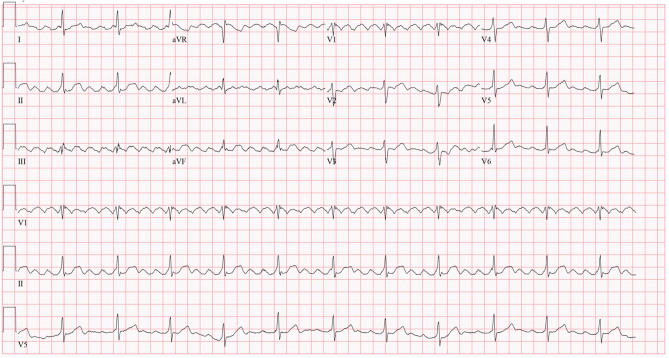
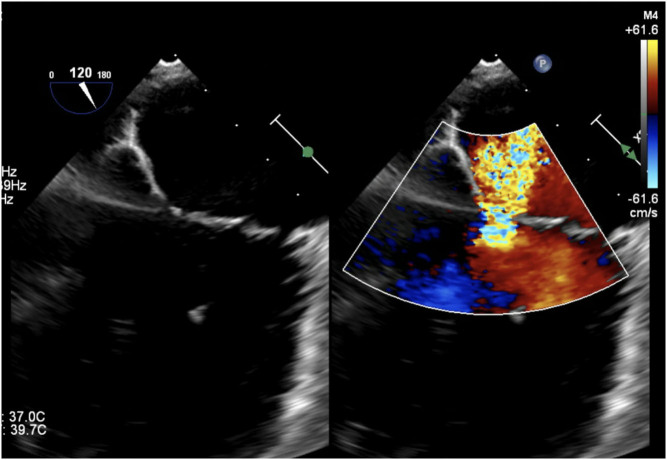
Graves' disease can have multiple cardiac manifestations. A rare complication is that of severe mitral regurgitation secondary to mitral valve chordae rupture, due to both compromise of valve integrity by deposition of glycosaminoglycans and the hemodynamic stresses of thyrotoxicosis. Pregnancy, with its related hemodynamic changes, is another setting in which mitral valve chordae rupture has occasionally been documented. We present a unique case of a 36-year-old female with uncontrolled Graves' disease who presented during pregnancy at 13 weeks gestation with atrial flutter and features of congestive heart failure. Echocardiogram found severe mitral regurgitation secondary to a ruptured mitral chord. She was treated conservatively with diuresis and ultimately delivered her baby without complication at 28 weeks when she had preterm premature rupture of membranes. She is currently on methimazole and propranolol and pending definitive management of her Graves' disease. This represents not only a rare cardiac complication in a patient with Graves' disease but also is the first in the literature, to our knowledge, which describes this complication in a pregnant patient with Graves' disease.
Thyroid disease can have multiple effects on the heart through hemodynamic and structural changes and can result in heart failure, arrhythmias, valvular disease, and pulmonary hypertension. Graves' disease can cause glycosaminoglycan deposition in valvular tissue resulting in fragile leaflets that can rupture with little stress. Pregnancy and thyrotoxicosis have similar hemodynamic consequences with increased cardiac output and reduced systemic vascular resistance. Be vigilant in those with hyperthyroidism with a new murmur or features of acute heart failure, as a ruptured valve chord can result in increased morbidity and mortality if not recognized and addressed quickly.
格雷夫斯病可出现多种心脏表现。一种罕见的并发症是继发于二尖瓣腱索破裂的严重二尖瓣反流,这是由于糖胺聚糖沉积损害瓣膜完整性以及甲状腺毒症的血流动力学应激所致。妊娠及其相关的血流动力学变化是另一种偶尔有二尖瓣腱索破裂记录的情况。我们报告了一例独特的病例,一名36岁患有未控制的格雷夫斯病的女性,在妊娠13周时因心房扑动和充血性心力衰竭症状就诊。超声心动图发现二尖瓣腱索破裂继发严重二尖瓣反流。她接受了利尿保守治疗,最终在孕28周胎膜早破时顺利分娩,无并发症。她目前正在服用甲巯咪唑和普萘洛尔,等待对其格雷夫斯病进行确定性治疗。这不仅是格雷夫斯病患者罕见的心脏并发症,据我们所知,也是文献中首例描述格雷夫斯病妊娠患者出现这种并发症的病例。
甲状腺疾病可通过血流动力学和结构变化对心脏产生多种影响,可导致心力衰竭、心律失常、瓣膜疾病和肺动脉高压。格雷夫斯病可导致糖胺聚糖在瓣膜组织中沉积,导致瓣叶脆弱,几乎在轻微应激下就会破裂。妊娠和甲状腺毒症具有相似的血流动力学后果,即心输出量增加和全身血管阻力降低。对于患有甲状腺功能亢进且有新杂音或急性心力衰竭症状的患者要保持警惕,因为如果瓣膜腱索破裂未被及时识别和处理,可能会导致发病率和死亡率增加。