Institute for Immunology and School of Medicine, Tsinghua University, Beijing 100084, China.
Shanghai Immune Therapy Institute, Shanghai Jiaotong University School of Medicine-affiliated Renji Hospital, Shanghai 200127, China.
Sci Adv. 2022 Jul 29;8(30):eabo4577. doi: 10.1126/sciadv.abo4577. Epub 2022 Jul 27.
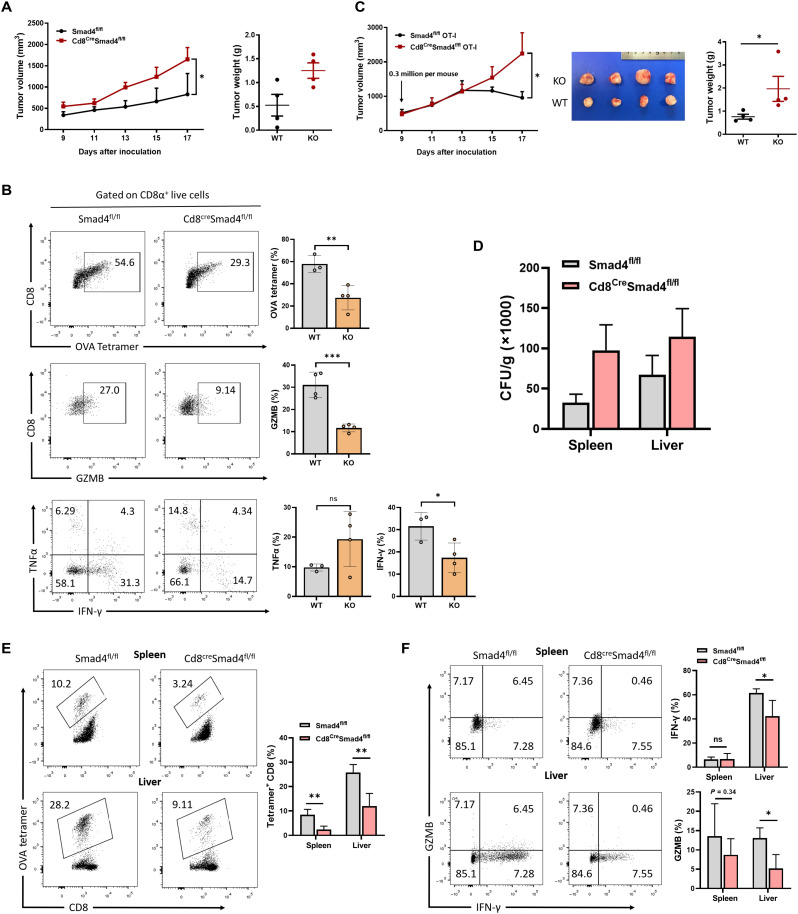
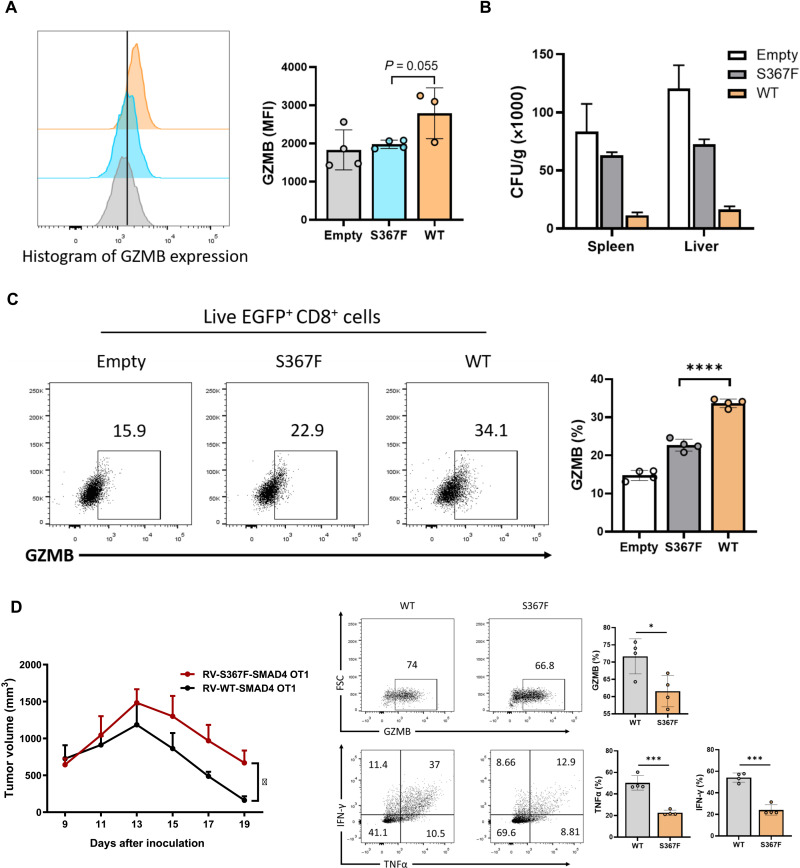
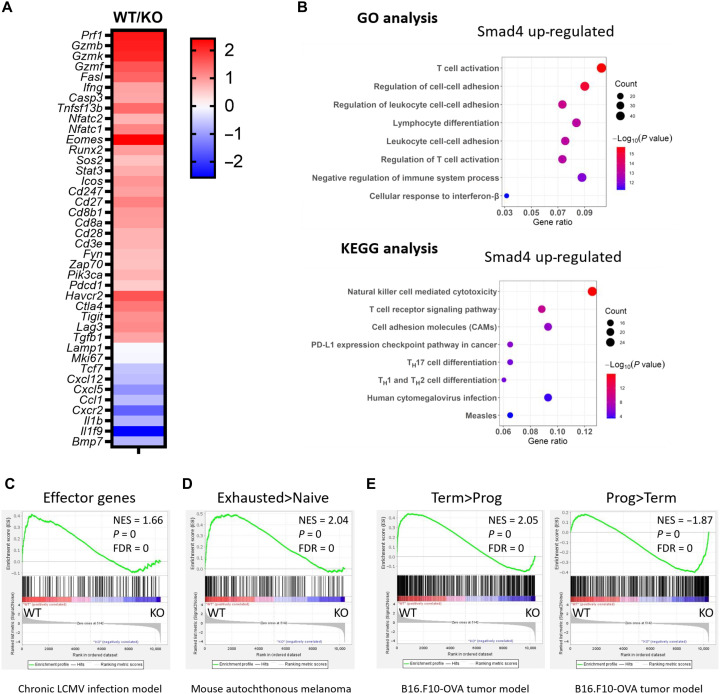
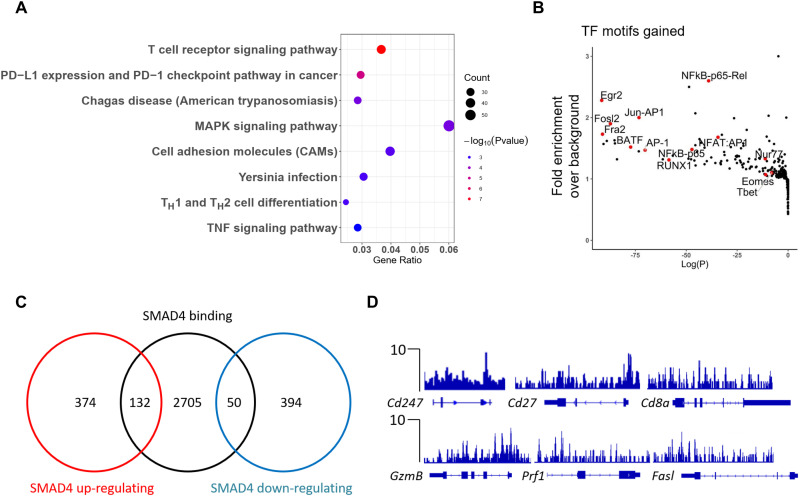
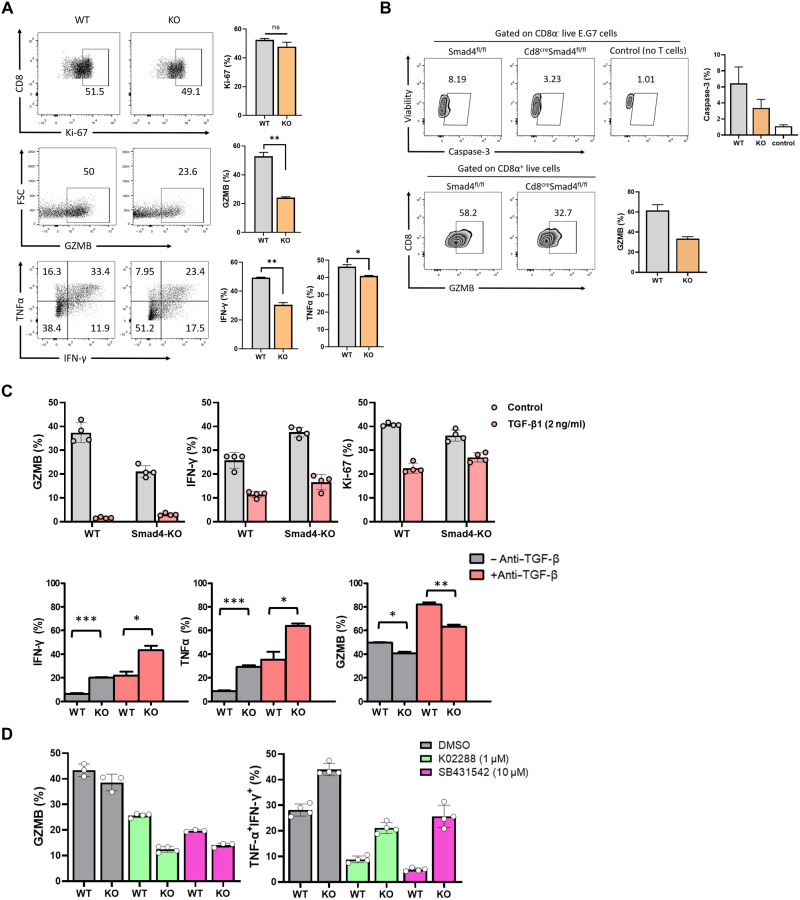
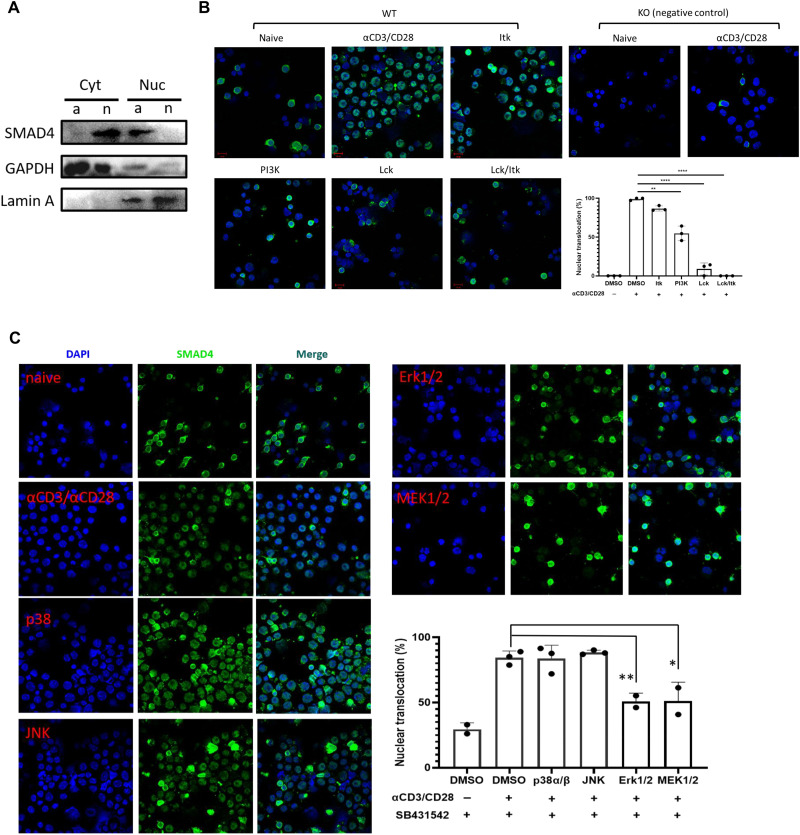
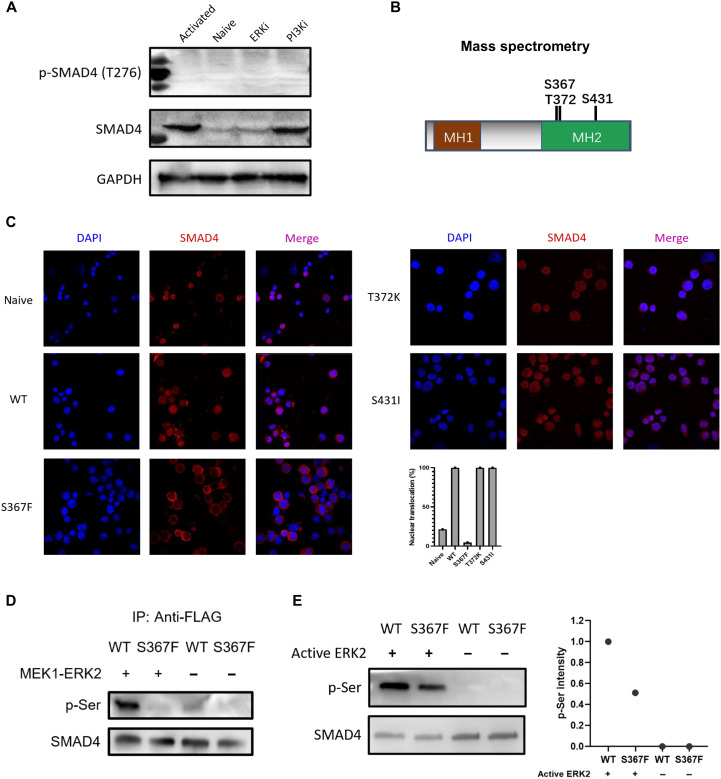
Transforming growth factor-β is well known to restrain cytotoxic T cell responses to maintain self-tolerance and to promote tumor immune evasion. In this study, we have investigated the role of SMAD4, a core component in the TGF-β signaling pathway, in CD8 T cells. Unexpectedly, we found that SMAD4 was critical in promoting CD8 T cell function in both tumor and infection models. SMAD4-mediated transcriptional regulation of CD8 T cell activation and cytotoxicity was dependent on the T cell receptor (TCR) but not TGF-β signaling pathway. Following TCR activation, SMAD4 translocated into the nucleus, up-regulated genes encoding TCR signaling components and cytotoxic molecules in CD8 T cells and thus reinforced T cell function. Biochemically, SMAD4 was directly phosphorylated by ERK at Ser residue following TCR activation. Our study thus demonstrates a critical yet unexpected role of SMAD4 in promoting CD8 T cell-mediated cytotoxic immunity.
转化生长因子-β(TGF-β)是众所周知的抑制细胞毒性 T 细胞反应,以维持自身耐受性并促进肿瘤免疫逃逸的关键分子。在这项研究中,我们研究了 SMAD4 在 CD8 T 细胞中的作用。出乎意料的是,我们发现 SMAD4 在肿瘤和感染模型中均对促进 CD8 T 细胞功能至关重要。SMAD4 通过调节 CD8 T 细胞的激活和细胞毒性的转录,这一过程依赖于 T 细胞受体(TCR)而不是 TGF-β 信号通路。TCR 激活后,SMAD4 易位到细胞核,上调 TCR 信号成分和细胞毒性分子在 CD8 T 细胞中的表达,从而增强 T 细胞的功能。从生化角度来看,SMAD4 在 TCR 激活后通过 ERK 在 Ser 残基上直接被磷酸化。因此,我们的研究表明 SMAD4 在促进 CD8 T 细胞介导的细胞毒性免疫中具有关键但出乎意料的作用。