Department of Horticulture Science, College of Agriculture and Natural Resources, University of Tehran, Karaj, 31587, Iran.
Department of Horticultural Sciences, Faculty of Agriculture, Ferdowsi University of Mashhad, Mashhad, Iran.
BMC Plant Biol. 2022 Jul 27;22(1):373. doi: 10.1186/s12870-022-03754-y.
Today, salinity stress is one of the most important abiotic stresses in the world, because it causes damage to many agricultural products and reduces their yields. Oxidative stress causes tissue damages in plants, which occurs with the production of reactive oxygen species (ROS) when plants are exposed to environmental stresses such as salinity. Today, it is recommended to use compounds that increase the resistance of plants to environmental stresses and improve plant metabolic activities. Salicylic acid (SA), as an intracellular and extracellular regulator of the plant response, is known as one of these effective compounds. Damask rose (Rosa damascena Mill.) is a medicinal plant from the Rosaceae, and its essential oils and aromatic compounds are used widely in the cosmetic and food industries in the world. Therefore, considering the importance of this plant from both medicinal and ornamental aspects, for the first time, we investigated one of the native cultivars of Iran (Kashan). Since one of the most important problems in Damask rose cultivation is the occurrence of salinity stress, for the first time, we investigated the interaction of several levels of NaCl salinity (0, 4, 8, and 12 ds m) with SA (0, 0.5, 1, and 2 mM) as a stress reducer.
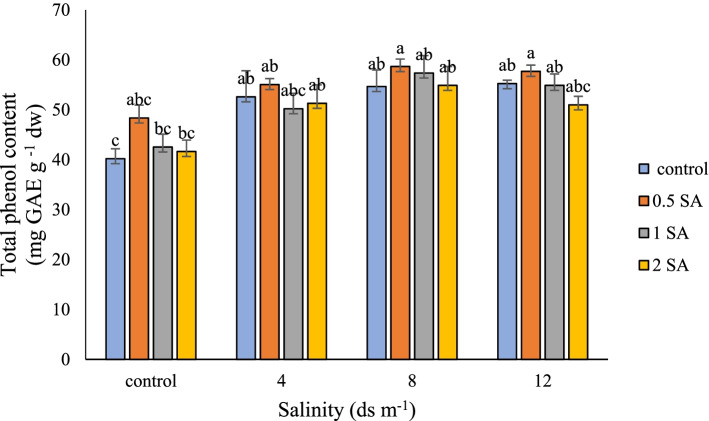
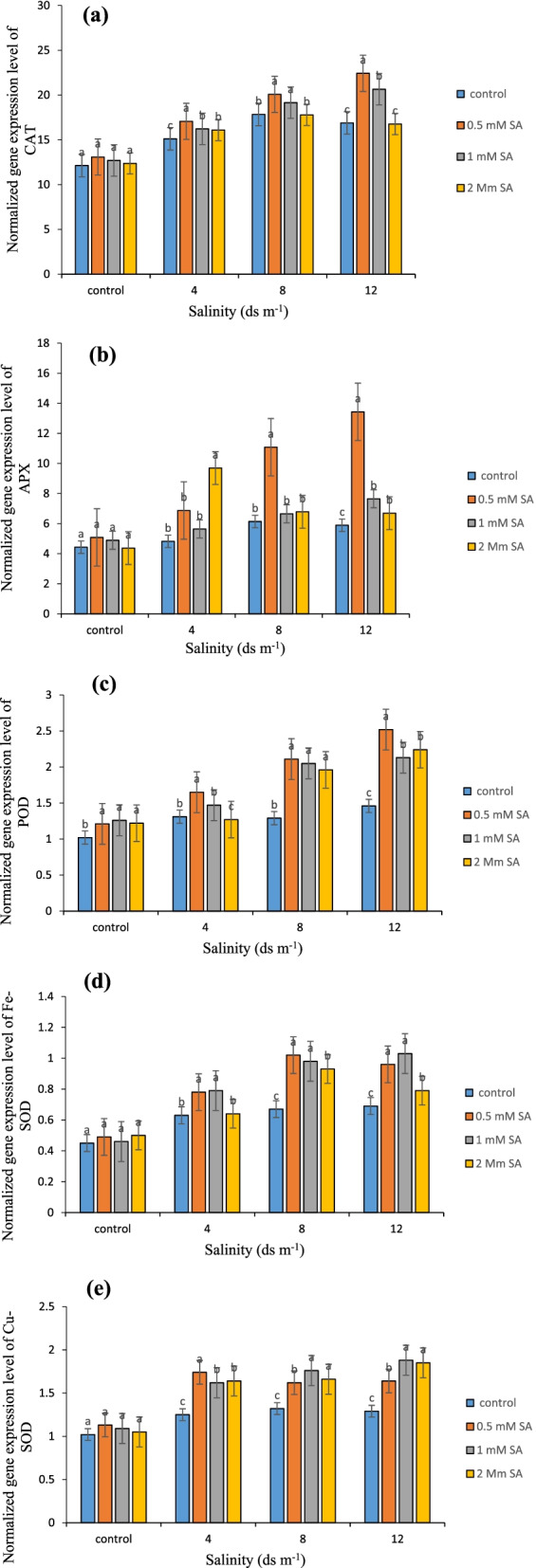
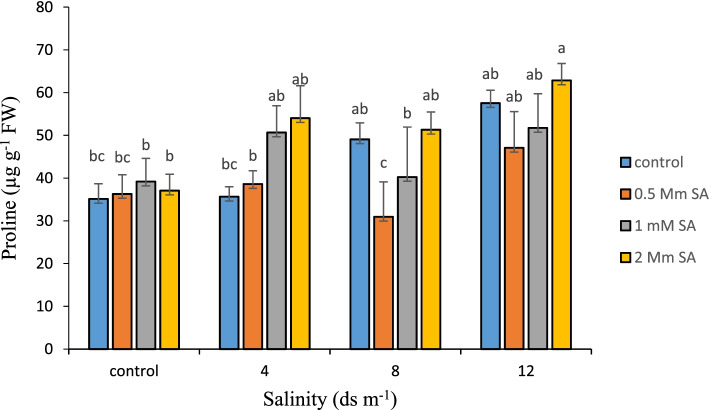
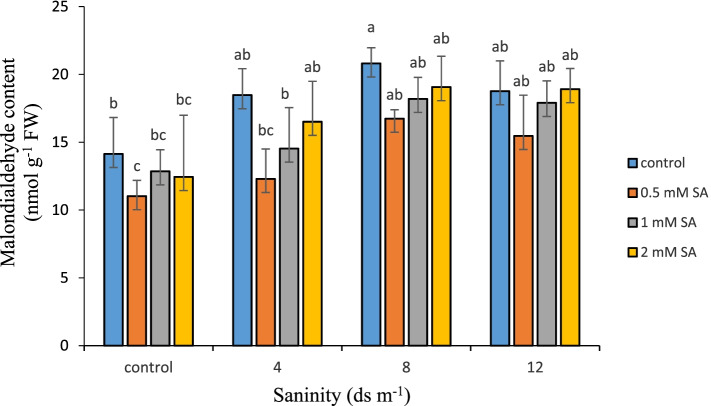
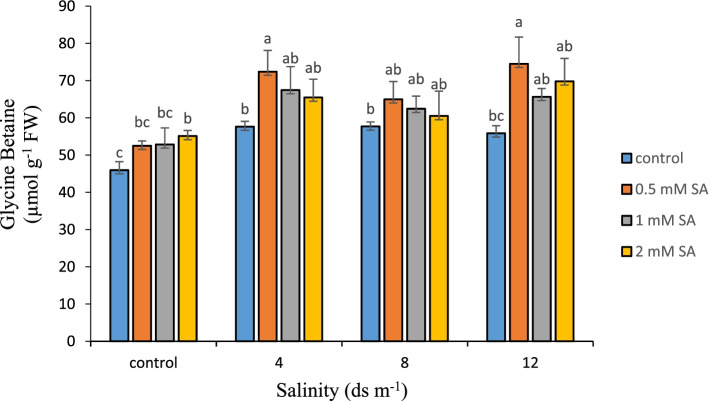
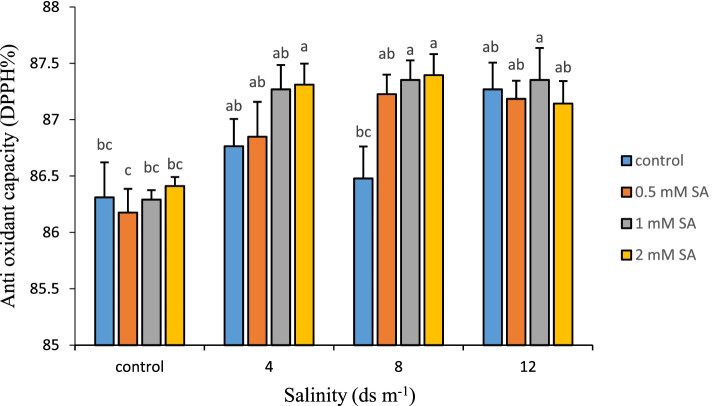
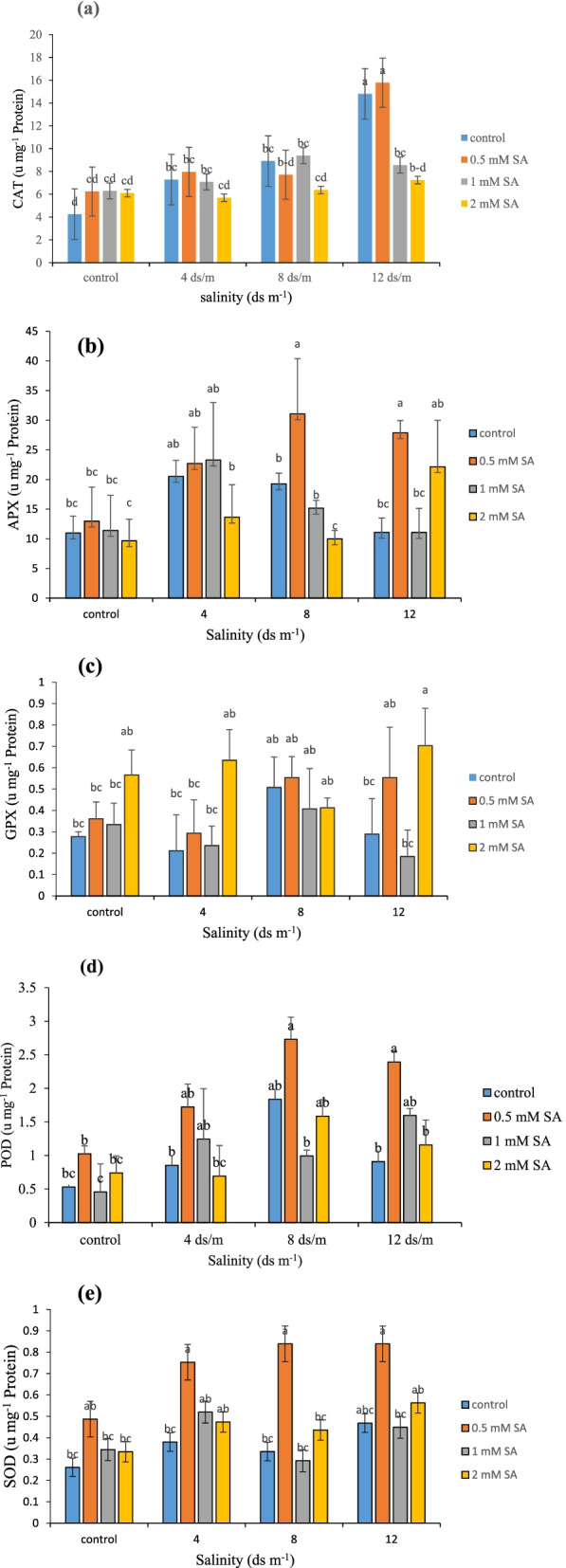
Since salinity stress reduces plant growth and yield, in this experiment, the results showed that the increase in NaCl concentration caused a gradual decrease in photosynthetic and morphological parameters and an increase in ion leakage. Also, increasing the level of salinity stress up to 12 ds m affected the amount of chlorophyll, root length and leaf total area, all of which reduced significantly compared to plants under no stress. However, many studies have highlighted the application of compounds that reduce the negative effects of stress and increase plant resistance and tolerance against stresses. In this study, the application of SA even at low concentration (0.5 mM) could neutralize the negative effects of salinity stress in the Rosa damascena. In this regard, the results showed that salinity increases the activity of antioxidant enzymes catalase (CAT) and superoxide dismutase (SOD) and the concentration of proline, protein and glycine betaine (GB). Overexpression of antioxidant genes (Ascorbate Peroxidase (APX), CAT, Peroxidase (POD), Fe-SOD and Cu-SOD) showed an important role in salt tolerance in Damascus rose. In addition, 0.5 mm SA increased the activity of enzymatic and non-enzymatic systems and increased salinity tolerance.
The change in weather conditions due to global warming and increased dryness contributes to the salinization of the earth's surface soils. Therefore, it is of particular importance to measure the threshold of tolerance of roses to salinity stress and the effect of stress-reducing substances in plants. In this context, SA has various roles such as increasing the content of pigments, preventing ethylene biosynthesis, increasing growth, and activating genes involved in stress, which modifies the negative effects of salinity stress. Also, according to the results of this research, even in the concentration of low values, positive results can be obtained from SA, so it can be recommended as a relatively cheap and available material to improve production in saline lands.
如今,盐胁迫是世界上最重要的非生物胁迫之一,因为它会对许多农产品造成损害,降低其产量。氧化应激会导致植物组织损伤,当植物暴露在盐度等环境胁迫下时,会产生活性氧(ROS)。如今,建议使用能提高植物对环境胁迫的抗性并改善植物代谢活动的化合物。水杨酸(SA)作为植物响应的细胞内和细胞外调节剂,是一种有效的化合物。大马士革玫瑰(Rosa damascena Mill.)是蔷薇科的一种药用植物,其精油和芳香化合物在世界范围内广泛用于化妆品和食品工业。因此,考虑到这种植物在药用和观赏方面的重要性,我们首次研究了伊朗的一种本地品种(卡尚)。由于大马士革玫瑰栽培中最重要的问题之一是盐胁迫的发生,我们首次研究了不同浓度的 NaCl 盐度(0、4、8 和 12 ds m)与 SA(0、0.5、1 和 2 mM)作为胁迫缓解剂的相互作用。
由于盐胁迫会降低植物的生长和产量,在本实验中,结果表明,NaCl 浓度的增加会导致光合作用和形态参数逐渐下降,离子渗漏增加。此外,盐度胁迫水平的增加到 12 ds m 会影响叶绿素、根长和叶片总面积的含量,与无胁迫下的植物相比,这些含量均显著降低。然而,许多研究强调了应用化合物来减轻胁迫的负面影响,提高植物对胁迫的抗性和耐受性。在这项研究中,即使在低浓度(0.5 mM)下施用 SA 也可以减轻大马士革玫瑰的盐胁迫的负面影响。在这方面,结果表明盐度会增加抗氧化酶过氧化氢酶(CAT)和超氧化物歧化酶(SOD)的活性以及脯氨酸、蛋白质和甘氨酸甜菜碱(GB)的浓度。抗氧化基因(抗坏血酸过氧化物酶(APX)、CAT、过氧化物酶(POD)、Fe-SOD 和 Cu-SOD)的过表达在大马士革玫瑰的耐盐性中起着重要作用。此外,0.5 mM SA 提高了酶和非酶系统的活性,增加了盐胁迫耐受性。
由于全球变暖导致的天气条件变化和干燥度增加,导致地球表面土壤的盐渍化。因此,测量玫瑰对盐胁迫的耐受性阈值以及植物中减轻胁迫物质的效果尤为重要。在这种情况下,SA 具有多种作用,如增加色素含量、抑制乙烯生物合成、促进生长和激活参与胁迫的基因,从而改变盐胁迫的负面影响。此外,根据这项研究的结果,即使在低浓度值下,SA 也能产生积极的结果,因此可以推荐其作为一种相对便宜且可用的物质,以提高盐渍土地的产量。