Department of Horticulture, Faculty of Agriculture, University of Maragheh, Maragheh, 55136-553, Iran.
Department of Biology, Faculty of Science, University of Maragheh, Maragheh, Iran.
Sci Rep. 2023 Oct 18;13(1):17795. doi: 10.1038/s41598-023-45041-2.
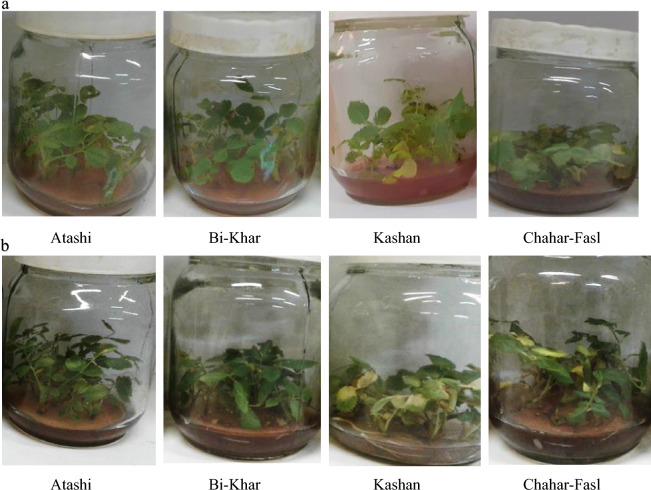
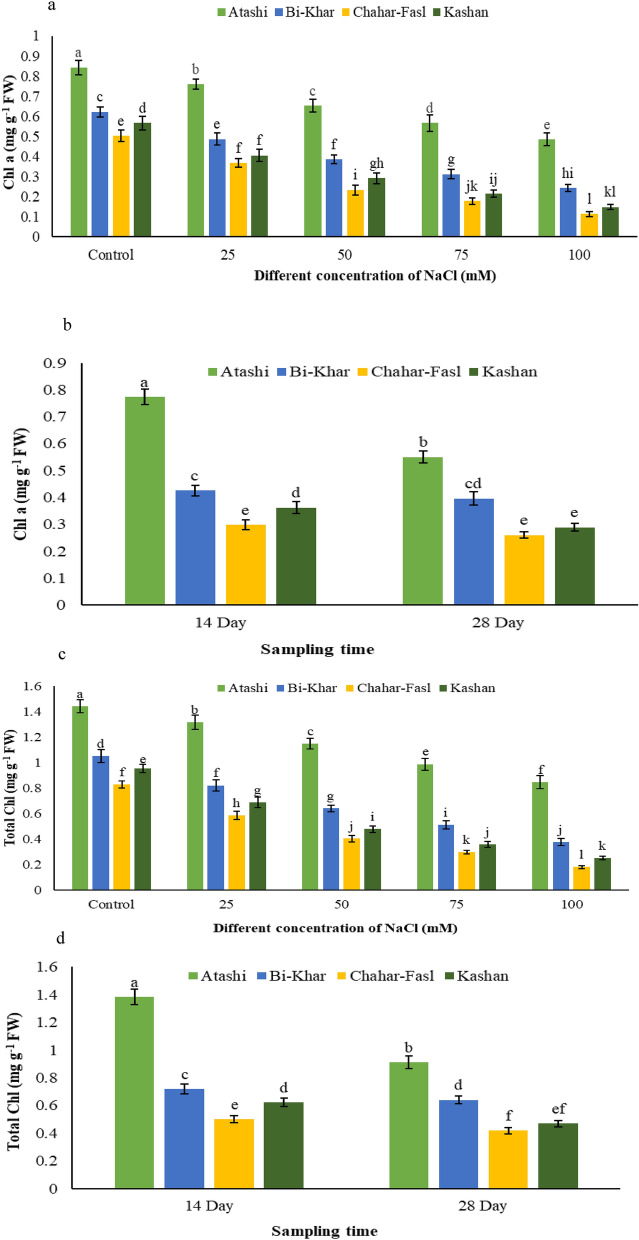
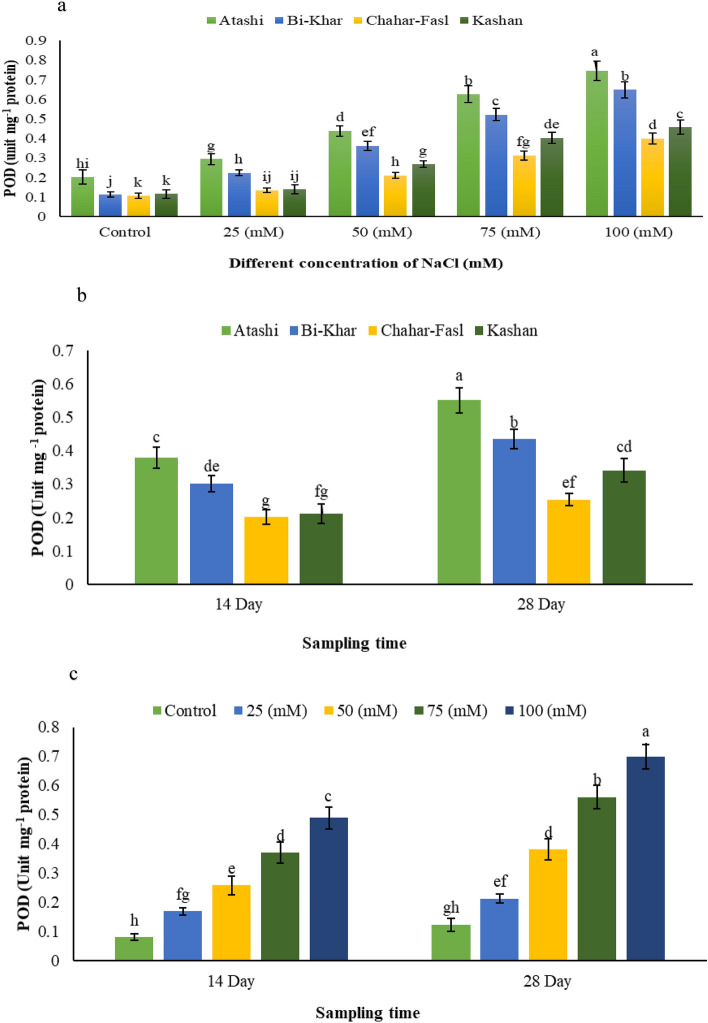
Rosa damascena is one of the most important medicinal and ornamental plants in Iran which is tolerant of salinity to some extent. However, the selection of genotypes that are more tolerant to salinity will influence on Damask cultivation in salt stress-affected regions. For this purpose, a factorial experiment in a completely randomized design with three replicates was performed under in vitro conditions on four Damask rose genotypes (Atashi, Bi-Khar, Chahar-Fasl and Kashan) at 5 concentrations of NaCl (0, 25, 50, 75, and 100 mM), and the physico-chemical traits were measured 14 and 28 days after treatment.The results showed that Atashi genotype with high levels of Chl a, Chl b, total Chl content, carotenoids, relative leaf water content, proline, total soluble protein, TPC, TFC, TAA, and the highest increase in the activity of antioxidant enzymes such as GPX, APX, CAT, SOD, and POD as well as the lowest amount of hydrogen peroxide showed a better protection mechanism against oxidative damage than the other three genotypes (Bi-Khar, Chahar-Fasl and Kashan) in the 14th and 28th days by maintaining the constructive and induced activities of antioxidant enzymes, it was shown that Bi-Khar genotype had moderate tolerance and Kashan and Chahar-Fasl genotypes had low tolerance to salinity stress. In vitro selection methods can be used effectively for salt tolerant screening of Damask rose genotypes, although the same experiment should be conducted in open filed cultures to verify the in vitro experimental results.
大马士革玫瑰是伊朗最重要的药用和观赏植物之一,在一定程度上具有耐盐性。然而,选择更耐盐的基因型将影响盐胁迫地区的大马士革玫瑰种植。为此,在体外条件下,采用完全随机设计三重复试验,对 4 个大马士革玫瑰基因型(Atashi、Bi-Khar、Chahar-Fasl 和 Kashan)在 5 个 NaCl 浓度(0、25、50、75 和 100mM)下进行了试验,处理 14 和 28 天后测量了理化特性。结果表明,Atashi 基因型的 Chl a、Chl b、总 Chl 含量、类胡萝卜素、相对叶片水分含量、脯氨酸、总可溶性蛋白、TPC、TFC、TAA 水平较高,GPX、APX、CAT、SOD 和 POD 等抗氧化酶活性较高,H2O2 含量较低,在第 14 天和第 28 天比其他 3 个基因型(Bi-Khar、Chahar-Fasl 和 Kashan)具有更好的保护机制,能抵抗氧化损伤,通过维持抗氧化酶的建设性和诱导性活性。结果表明,Bi-Khar 基因型具有中度耐盐性,而 Kashan 和 Chahar-Fasl 基因型对盐胁迫的耐受性较低。体外选择方法可有效用于大马士革玫瑰基因型的耐盐性筛选,尽管应在开放田间条件下进行相同的实验,以验证体外实验结果。