Centre de Recherche en Nutrition Humaine (CRNH), Laboratoire des Adaptations Métaboliques à l'Exercice en Conditions Physiologiques et Pathologiques (AME2P), Unité de Formation et de Recherche (UFR) des Sciences et Techniques des Activités Physiques et Sportives (STAPS), Université Clermont Auvergne, 63000 Clermont-Ferrand, France.
Service de Médecine Physique et de Réadaptation, Institut National de Recherche pour l'Agriculture, l'Alimentation et l'Environnement (INRAE), Unité de Nutrition Humaine (UNH), Centre Hospitalier Universitaire (CHU) Clermont-Ferrand, Université Clermont Auvergne, 63000 Clermont-Ferrand, France.
Int J Environ Res Public Health. 2022 Jul 25;19(15):9025. doi: 10.3390/ijerph19159025.
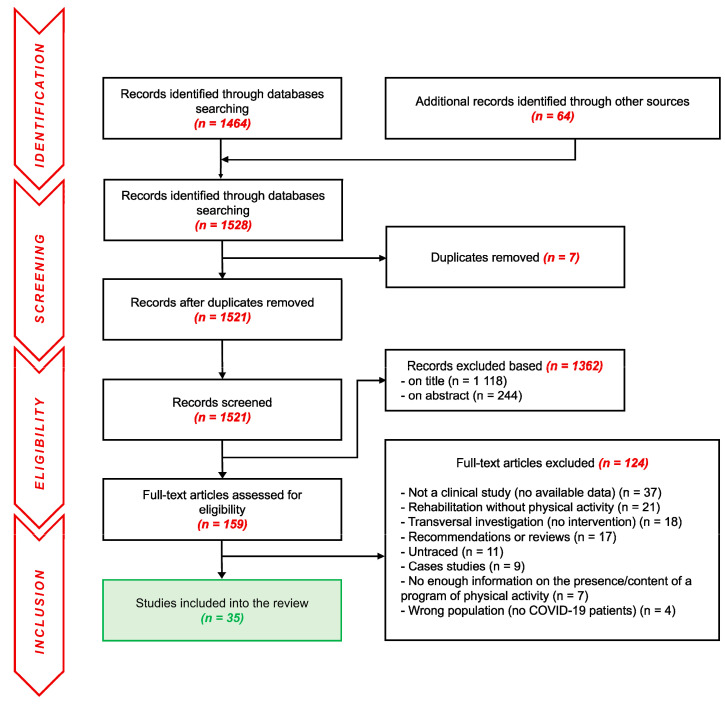
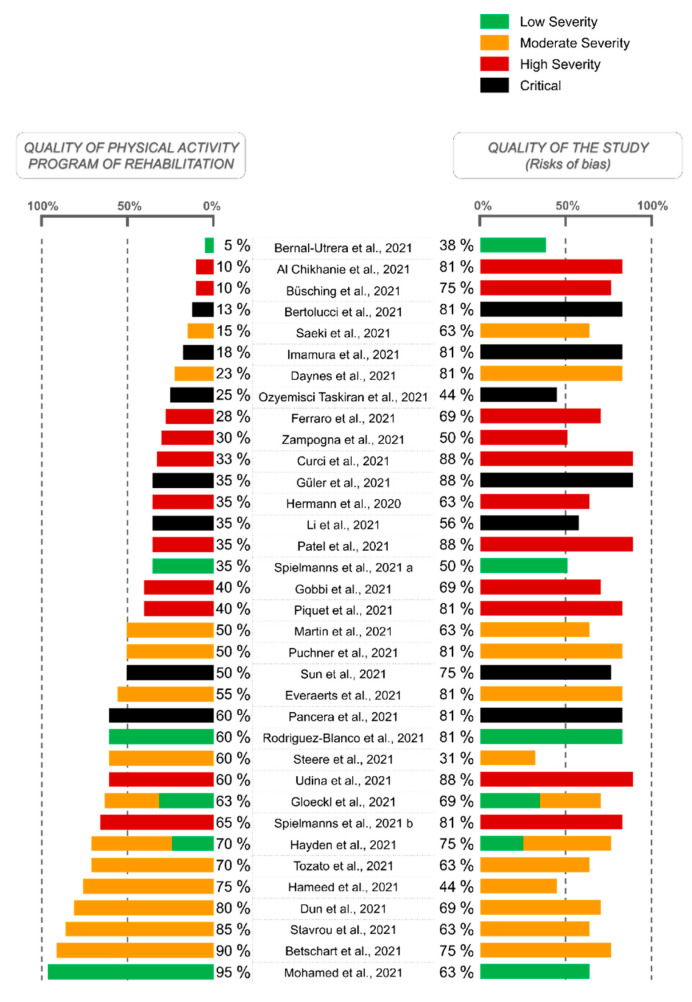
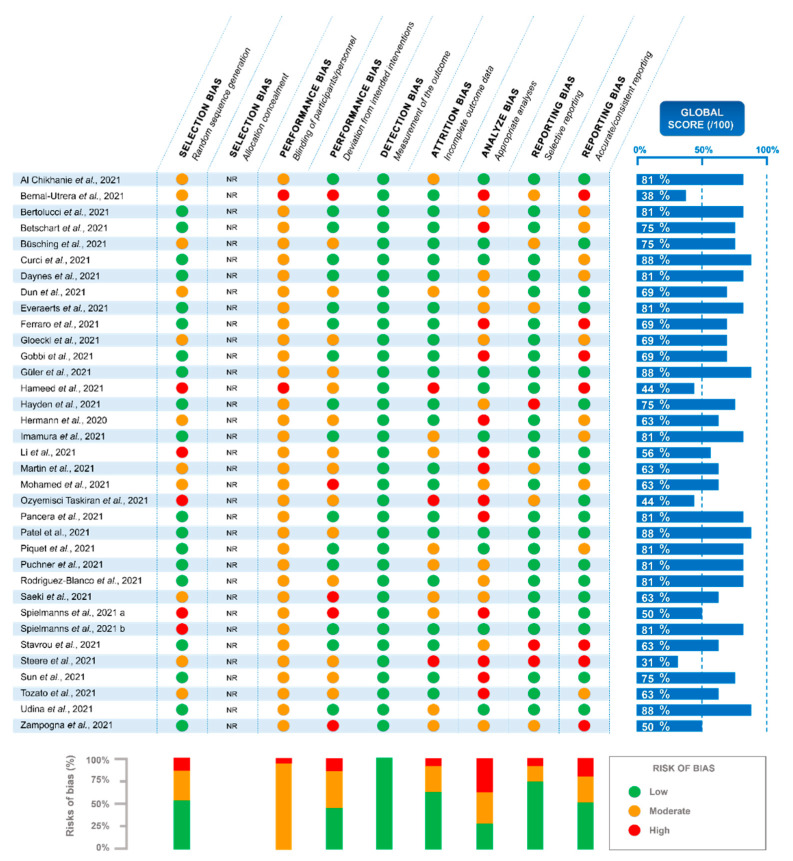
The first emergency was to receive and treat COVID-19 patients in their acute phase; today, there is a clear need to propose appropriate post-acute rehabilitation programs. The aim of this research was to systematically review the effects of physical activity programs in the recovery of post-COVID-19 patients. The literature search followed the Preferred Reporting Items for Systematic Review and Meta-Analysis (PRISMA) guidelines, was registered in the PROSPERO database (CRD42022289219), and was conducted between August and December 2021. A total of 35 studies out of the 1528 initially identified were finally included in the analysis. The systematic review clearly showed the health benefits of rehabilitation including physical activity in post-COVID-19 recovery, regardless of exercise modalities. These positive results were even observed using minor muscle re-mobilization for severe cases (i.e., postural changes, few steps-2 times/day) or using low volumes of exercise for mild-to-moderate cases (i.e., 120 min/week). A total of 97% of the 29 studies that performed statistical analyses demonstrated a significant increase in at least one parameter of functional capacity, and 96% of the 26 studies that statistically investigated the effects on the quality of life, mental health, and general state reported improvements. Yet, most of the studies were retrospective, uncontrolled, and enrolled aged people with comorbidities presented in severe forms of COVID-19. Physical activity programs, in addition to their high heterogeneity, remained poorly described in 83% of the studies and were part of a multidisciplinary program for 89% of the studies. Despite promising results, there is today a real need for prospective well-designed studies specifically assessing the effects of physical activity. In addition, it might appear relevant to propose standardized programs further considering the main characteristics of patients such as age, comorbidities, or the severity of COVID-19.
首要紧急事项是接收和治疗处于急性期的 COVID-19 患者;如今,显然需要提出适当的康复后计划。本研究旨在系统综述身体活动方案对 COVID-19 后患者康复的影响。文献检索遵循系统评价和荟萃分析的首选报告项目(PRISMA)指南,并在 PROSPERO 数据库(CRD42022289219)中进行注册,检索时间为 2021 年 8 月至 12 月。从最初确定的 1528 项研究中,共有 35 项最终纳入分析。系统综述清楚地表明,无论运动方式如何,康复包括身体活动对 COVID-19 恢复都有健康益处。即使对于重症病例(即姿势改变,每天 2 次走几步)使用小肌群再动员,或对于轻至中度病例使用低运动量(即每周 120 分钟),也观察到了这些积极结果。对至少一个功能能力参数进行统计分析的 29 项研究中的 97%,以及对生活质量、心理健康和一般状态进行统计调查的 26 项研究中的 96%,都表明有显著改善。然而,大多数研究是回顾性的、非对照的,并且招募了患有严重 COVID-19 形式的合并症的老年人。身体活动方案除了具有高度异质性外,在 83%的研究中描述得很差,并且在 89%的研究中作为多学科方案的一部分。尽管结果很有前景,但今天确实需要有前瞻性的精心设计的研究来专门评估身体活动的效果。此外,考虑到患者的主要特征,如年龄、合并症或 COVID-19 的严重程度,提出标准化方案可能是相关的。