Department of Neuroscience, University of Copenhagen, 2200 Copenhagen, Denmark.
Int J Mol Sci. 2022 Jul 22;23(15):8098. doi: 10.3390/ijms23158098.
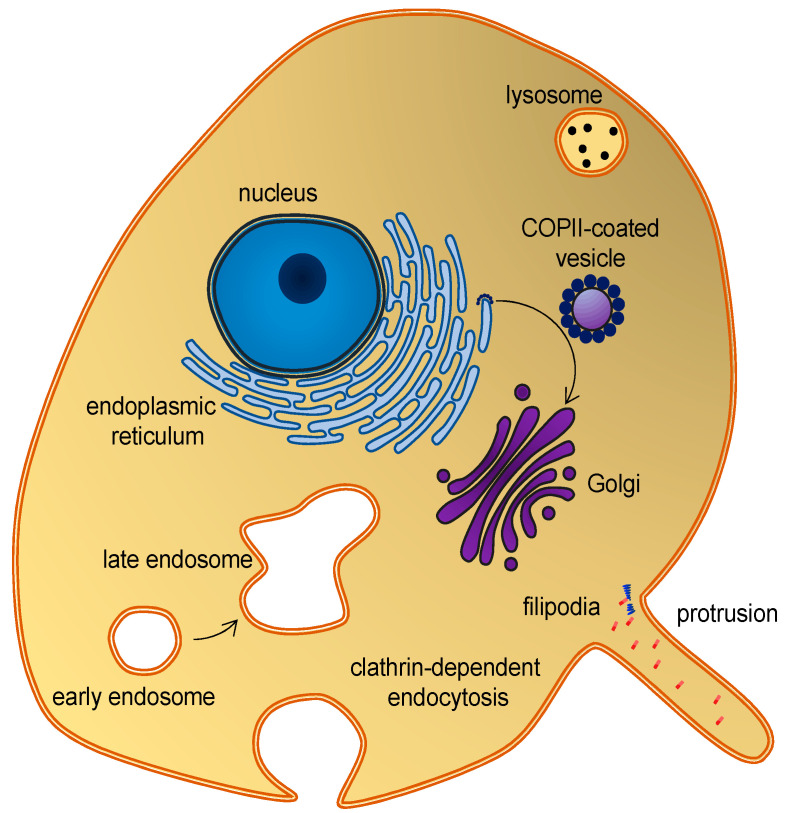
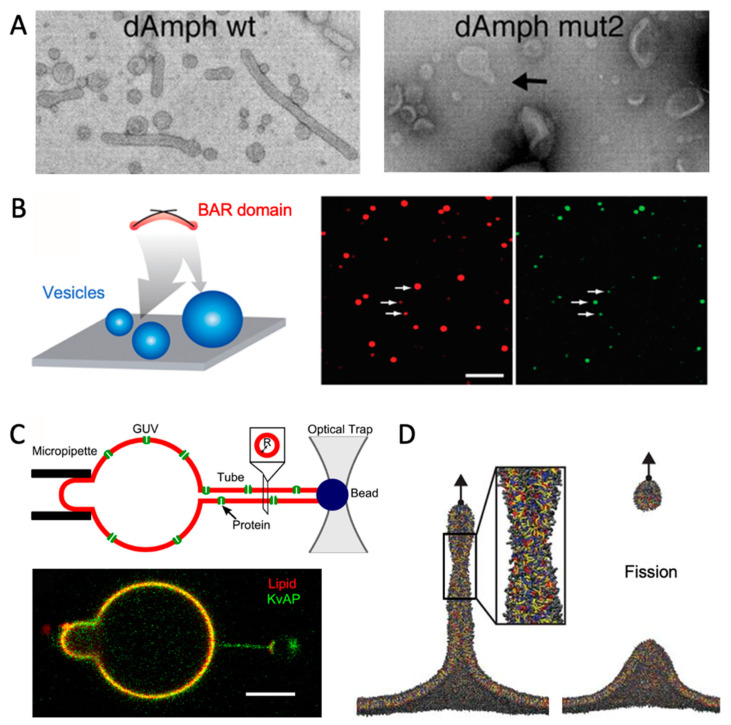
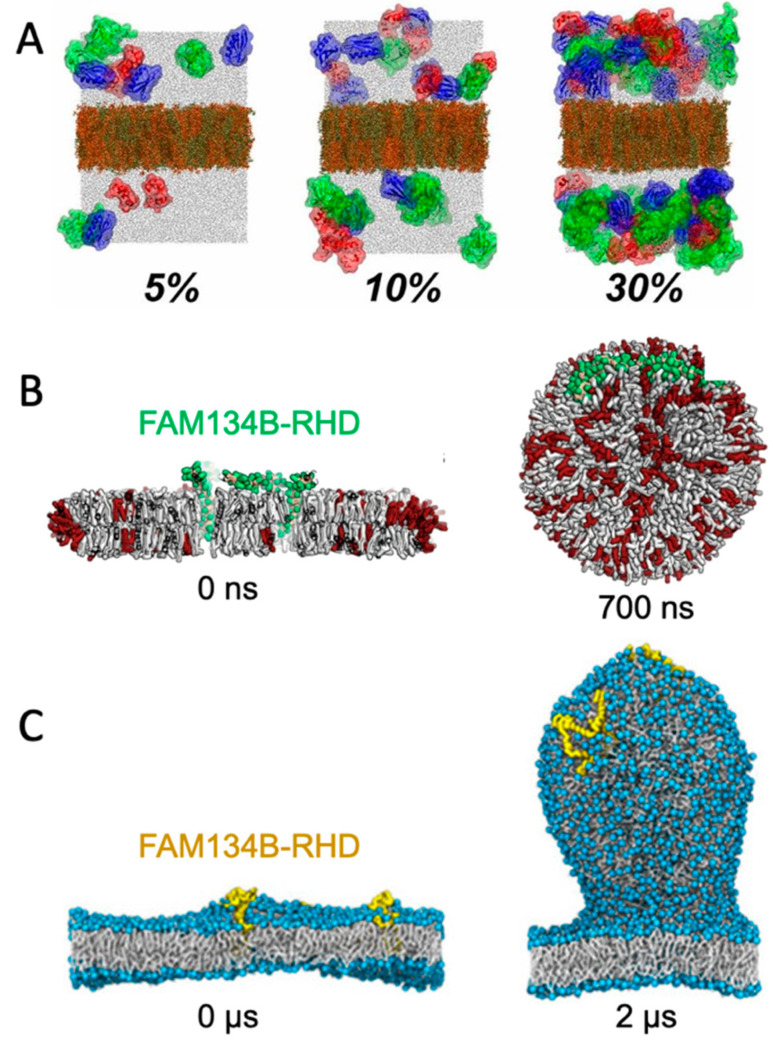
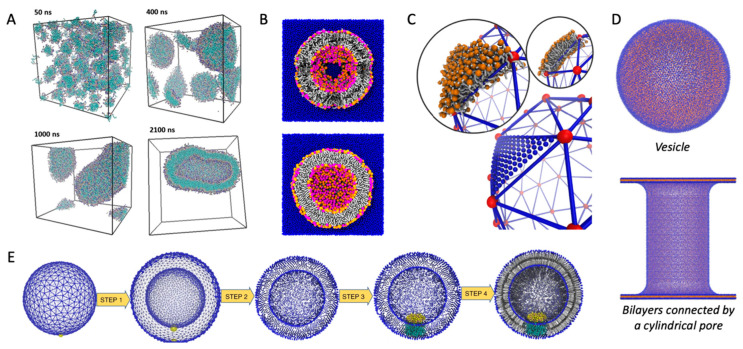
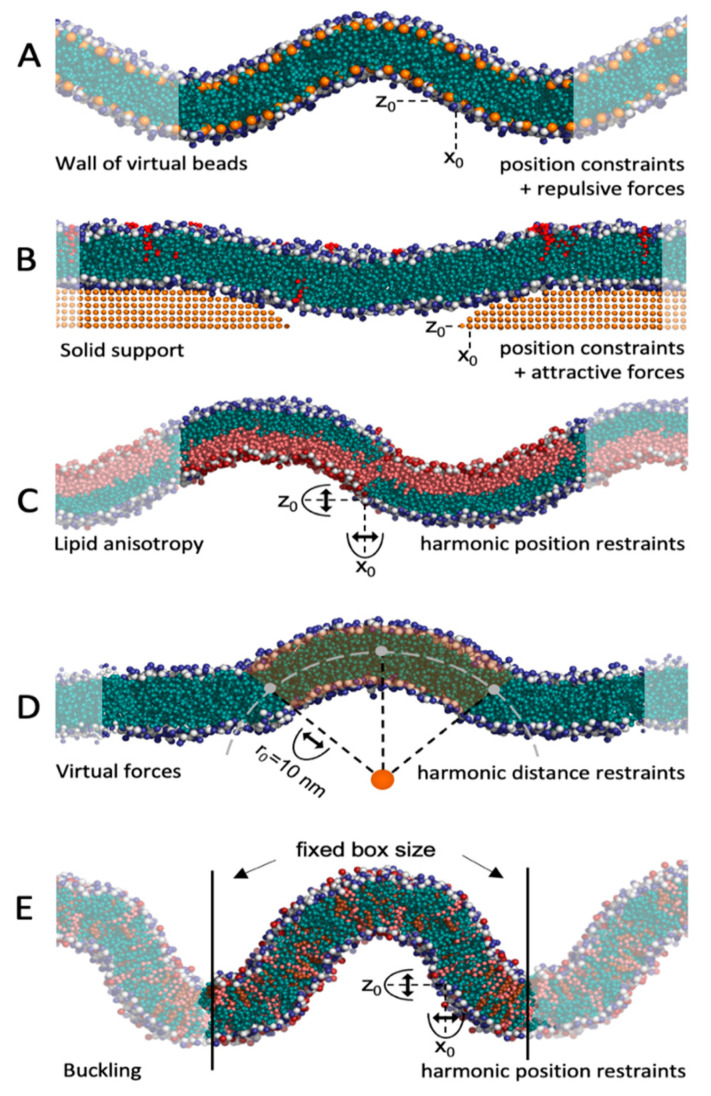
Eukaryotic cells contain membranes with various curvatures, from the near-plane plasma membrane to the highly curved membranes of organelles, vesicles, and membrane protrusions. These curvatures are generated and sustained by curvature-inducing proteins, peptides, and lipids, and describing these mechanisms is an important scientific challenge. In addition to that, some molecules can sense membrane curvature and thereby be trafficked to specific locations. The description of curvature sensing is another fundamental challenge. Curved lipid membranes and their interplay with membrane-associated proteins can be investigated with molecular dynamics (MD) simulations. Various methods for simulating curved membranes with MD are discussed here, including tools for setting up simulation of vesicles and methods for sustaining membrane curvature. The latter are divided into methods that exploit scaffolding virtual beads, methods that use curvature-inducing molecules, and methods applying virtual forces. The variety of simulation tools allow researcher to closely match the conditions of experimental studies of membrane curvatures.
真核细胞的膜具有各种曲率,从近乎平面的质膜到细胞器、囊泡和膜突起的高度弯曲的膜。这些曲率是由诱导曲率的蛋白质、肽和脂质产生和维持的,描述这些机制是一个重要的科学挑战。此外,一些分子可以感知膜曲率,从而被运输到特定的位置。描述曲率感应是另一个基本挑战。弯曲的脂质膜及其与膜相关蛋白的相互作用可以用分子动力学(MD)模拟来研究。本文讨论了 MD 模拟弯曲膜的各种方法,包括用于设置囊泡模拟的工具以及维持膜曲率的方法。后者分为利用支架虚拟珠的方法、使用曲率诱导分子的方法和应用虚拟力的方法。各种模拟工具使研究人员能够很好地匹配膜曲率实验研究的条件。