Clinical Pharmacology and Experimental Medicine, GSK, Uxbridge, UK.
Discovery and Translational Sciences, Metabolon Inc., Morrisville, North Carolina, USA.
Eur J Endocrinol. 2022 Jul 29;187(3):413-427. doi: 10.1530/EJE-21-0912. Print 2022 Sep 1.
The aim of this study was toidentify dose-related systemic effects of inhaled glucocorticoids (GCs) on the global metabolome.
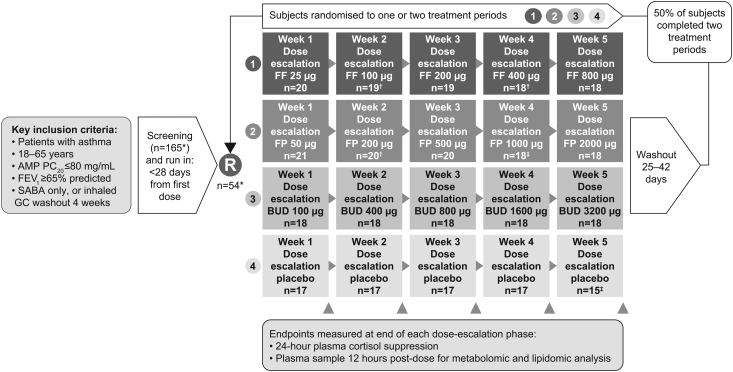
Metabolomics/lipidomic analysis from plasma was obtained from 54 subjects receiving weekly escalating doses (µg/day) of fluticasone furoate (FF; 25, 100, 200, 400 and 800), fluticasone propionate (FP; 50, 200, 500, 1000 and 2000), budesonide (BUD; 100, 400, 800, 1600 and 3200) or placebo. Samples (pre- and post-dose) were analysed using ultrahigh-performance liquid chromatography-tandem mass spectroscopy and liquid chromatography-mass spectrometry. Ions were matched to library standards for identification and quantification. Statistical analysis involved repeated measures ANOVA, cross-over model, random forest and principal component analysis using log-transformed data.
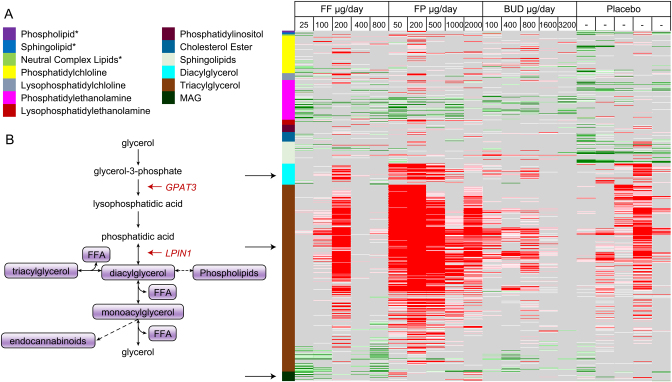
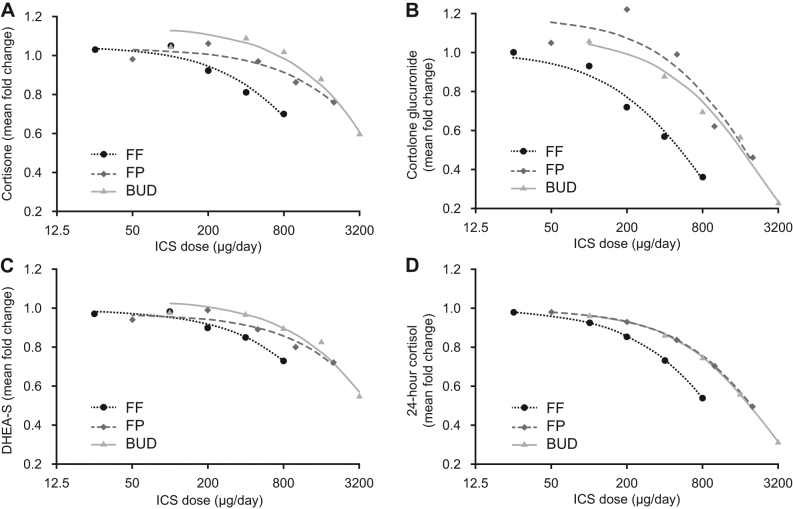
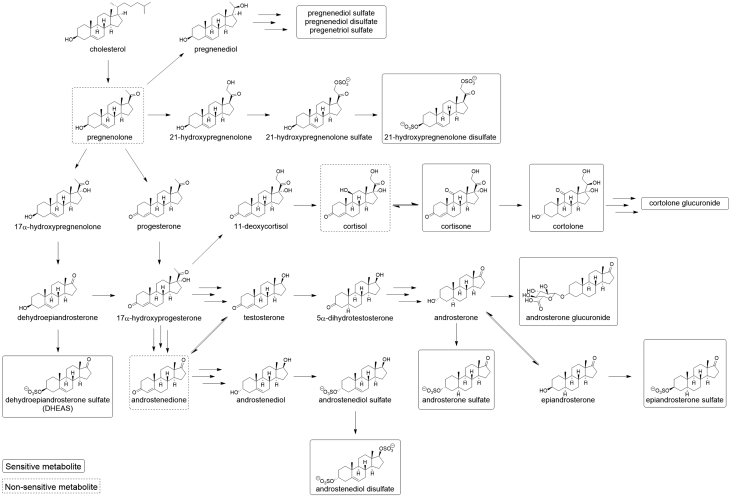
Quantifiable metabolites (1971) had few significant changes (% increases/decreases; P < 0.05) vs placebo: FF 1.34 (0.42/0.92), FP 1.95 (0.41/1.54) and BUD 2.05 (0.60/1.45). Therapeutic doses had fewer changes: FF 0.96 (0.36/0.61), FP 1.66 (0.44/1.22) and BUD 1.45 (0.56/0.90). At highest/supratherapeutic doses, changes were qualitatively similar: reduced adrenal steroids, particularly glucuronide metabolites of cortisol and cortisone and pregnenolone metabolite DHEA-S; increased amino acids and glycolytic intermediates; decreased fatty acid β-oxidation and branched-chain amino acids. Notable qualitative differences were lowered dopamine metabolites (BUD) and secondary bile acid profiles (BUD/FF), suggesting CNS and gut microbiome effects.
Dose-dependent metabolomic changes occurred with inhaled GCs but were seen predominately at highest/supratherapeutic doses, supporting the safety of low and mid therapeutic doses. At comparable therapeutic doses (FF 100, FP 500 and BUD 800 µg/day), FF had the least effect on the most sensitive markers (adrenal steroids) vs BUD and FP.
本研究旨在确定吸入性糖皮质激素(GCs)的剂量相关性全身作用对整体代谢组学的影响。
54 名受试者每周接受递增剂量(μg/天)的氟替卡松糠酸酯(FF;25、100、200、400 和 800)、丙酸氟替卡松(FP;50、200、500、1000 和 2000)、布地奈德(BUD;100、400、800、1600 和 3200)或安慰剂治疗,通过超高效液相色谱-串联质谱和液相色谱-质谱联用分析血浆中的代谢组学/脂质组学。采用重复测量方差分析、交叉模型、随机森林和主成分分析,对经过对数转换的数据进行离子匹配到文库标准进行鉴定和定量。
与安慰剂相比,可量化代谢物(1971 个)仅有少数显著变化(%增加/减少;P < 0.05):FF 为 1.34(0.42/0.92)、FP 为 1.95(0.41/1.54)和 BUD 为 2.05(0.60/1.45)。治疗剂量的变化较少:FF 为 0.96(0.36/0.61)、FP 为 1.66(0.44/1.22)和 BUD 为 1.45(0.56/0.90)。在最高/超治疗剂量下,变化在性质上是相似的:肾上腺类固醇减少,特别是皮质醇和可的松的葡萄糖醛酸代谢物和孕烯醇酮代谢物 DHEA-S;氨基酸和糖酵解中间产物增加;脂肪酸β-氧化和支链氨基酸减少。显著的定性差异是降低多巴胺代谢物(BUD)和次级胆汁酸谱(BUD/FF),提示中枢神经系统和肠道微生物组的影响。
吸入性 GCs 会导致剂量依赖性代谢组学变化,但主要发生在最高/超治疗剂量下,支持低和中治疗剂量的安全性。在相当的治疗剂量(FF 100、FP 500 和 BUD 800 μg/天)下,FF 对最敏感的标志物(肾上腺类固醇)的影响最小,与 BUD 和 FP 相比。