Department of Bioprocess Engineering, Faculty of Process and Environmental Engineering, Lodz University of Technology, ul. Wolczanska 213, 93-005, Lodz, Poland.
Appl Microbiol Biotechnol. 2022 Sep;106(17):5459-5477. doi: 10.1007/s00253-022-12087-7. Epub 2022 Jul 30.
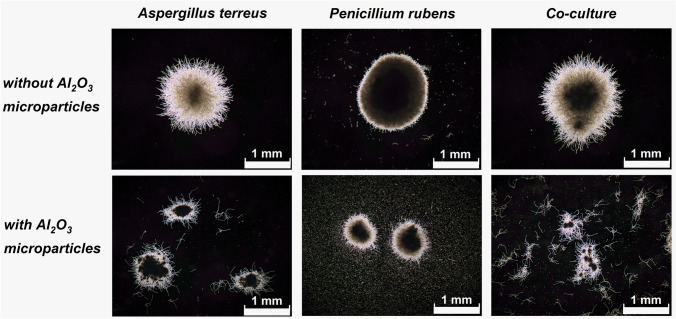
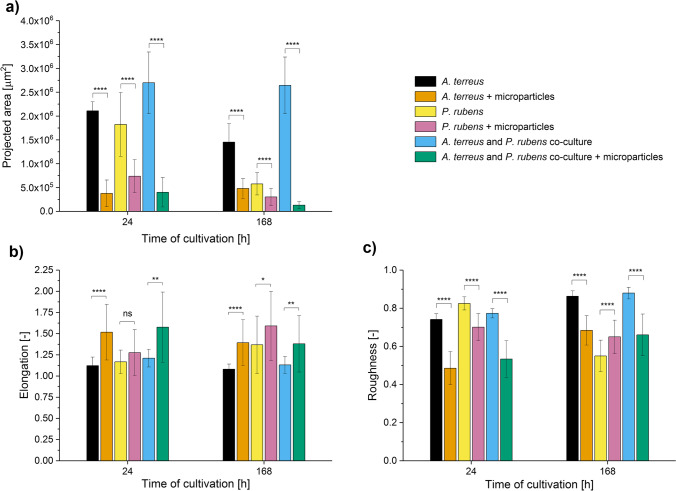
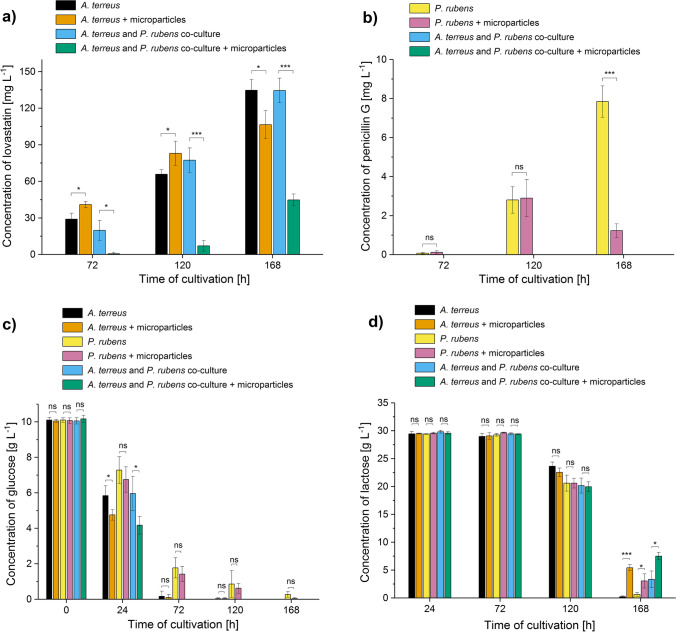
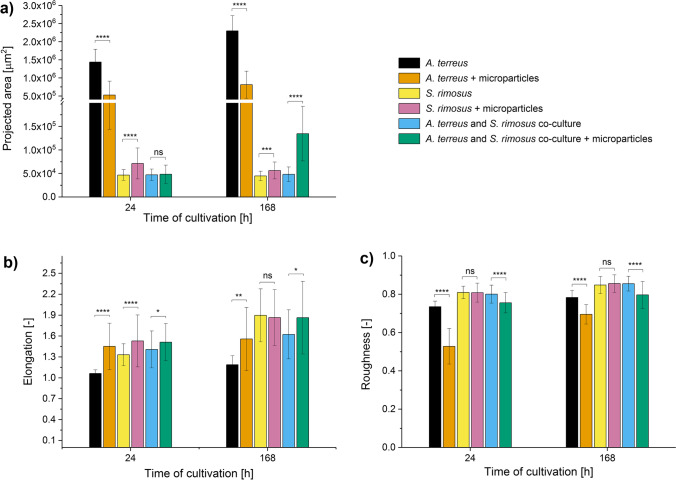
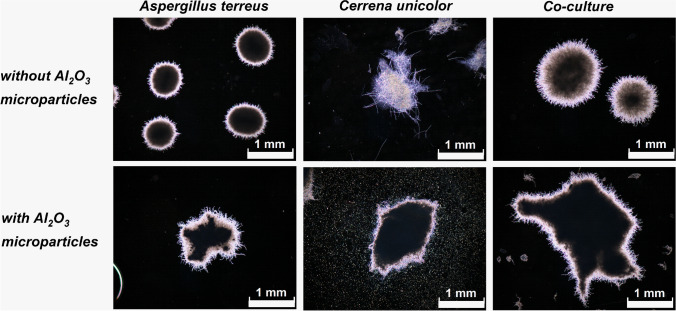
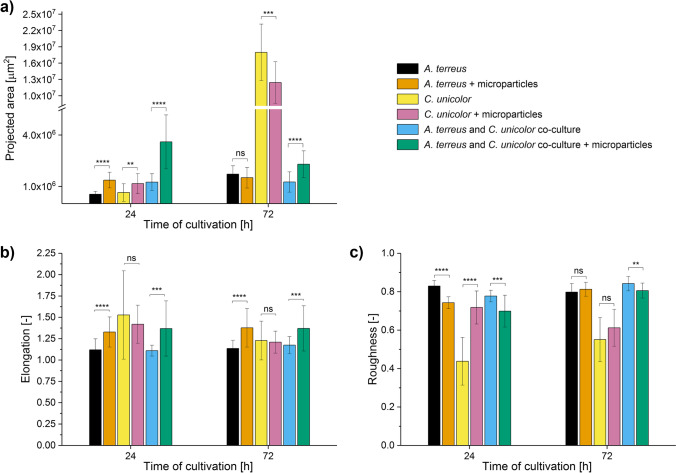
In the present work, the approaches of submerged co-cultivation and microparticle-enhanced cultivation (MPEC) were combined and evaluated over the course of three case studies. The filamentous fungus Aspergillus terreus was co-cultivated with Penicillium rubens, Streptomyces rimosus, or Cerrena unicolor in shake flasks with or without the addition of aluminum oxide microparticles. The influence of microparticles on the production of lovastatin, penicillin G, oxytetracycline, and laccase in co-cultures was compared with the effects recorded for the corresponding monocultures. In addition, the quantitative analyses of morphological parameters, sugars consumption, and by-products formation were performed. The study demonstrated that the influence of microparticles on the production of a given molecule in mono- and co-culture may differ considerably, e.g., the biosynthesis of oxytetracycline was shown to be inhibited due to the presence of aluminum oxide in "A. terreus vs. S. rimosus" co-cultivation variants but not in S. rimosus monocultures. The differences were also observed regarding the morphological characteristics, e.g., the microparticles-induced changes of projected area in the co-cultures and the corresponding monocultures were not always comparable. In addition, the study showed the importance of medium composition on the outcomes of MPEC, as exemplified by lovastatin production in A. terreus monocultures. Finally, the co-cultures of A. terreus with a white-rot fungus C. unicolor were described here for the first time. KEY POINTS: • Aluminum oxide affects secondary metabolites production in submerged co-cultures. • Mono- and co-cultures are differently impacted by the addition of aluminum oxide. • Effect of aluminum oxide on metabolites production depends on medium composition.
在本工作中,结合了浸没共培养和微颗粒增强培养(MPEC)方法,并通过三个案例研究进行了评估。丝状真菌土曲霉与青霉红、链霉菌或栓菌在摇瓶中进行共培养,或在添加或不添加氧化铝微颗粒的情况下进行共培养。比较了微颗粒对共培养中洛伐他汀、青霉素 G、土霉素和漆酶生产的影响与相应的单一培养物的影响。此外,还进行了形态参数、糖消耗和副产物形成的定量分析。研究表明,微颗粒对单一和共培养中特定分子生产的影响可能有很大差异,例如,由于“土曲霉与链霉菌”共培养变体中存在氧化铝,土霉素的生物合成受到抑制,但在链霉菌的单一培养物中则没有。在形态特征方面也观察到了差异,例如,共培养和相应的单一培养物中微颗粒诱导的投影面积变化并不总是可比的。此外,该研究还表明了培养基组成对 MPEC 结果的重要性,例如土曲霉单一培养物中洛伐他汀的生产。最后,本文首次描述了土曲霉与白腐真菌栓菌的共培养。关键点: • 氧化铝会影响浸没共培养物中次生代谢产物的生产。 • 单一和共培养物受到氧化铝添加的影响不同。 • 氧化铝对代谢产物生产的影响取决于培养基组成。