Wang Xu, Han Mingzhi, Wang Shuai, Sun Yanfei, Zhao Wenbo, Xue Zhiyi, Liang Xiangjun, Huang Bin, Li Gang, Chen Anjing, Li Xingang, Wang Jian
Department of Neurosurgery, Qilu Hospital, Cheeloo College of Medicine and Institute of Brain and Brain-Inspired Science, Shandong University, Jinan, 250012, China.
Jinan Microecological Biomedicine Shandong Laboratory, Jinan, 250117, China and Shandong Key Laboratory of Brain Function Remodeling, Jinan, 250012, China.
Theranostics. 2022 Jul 11;12(12):5451-5469. doi: 10.7150/thno.72248. eCollection 2022.
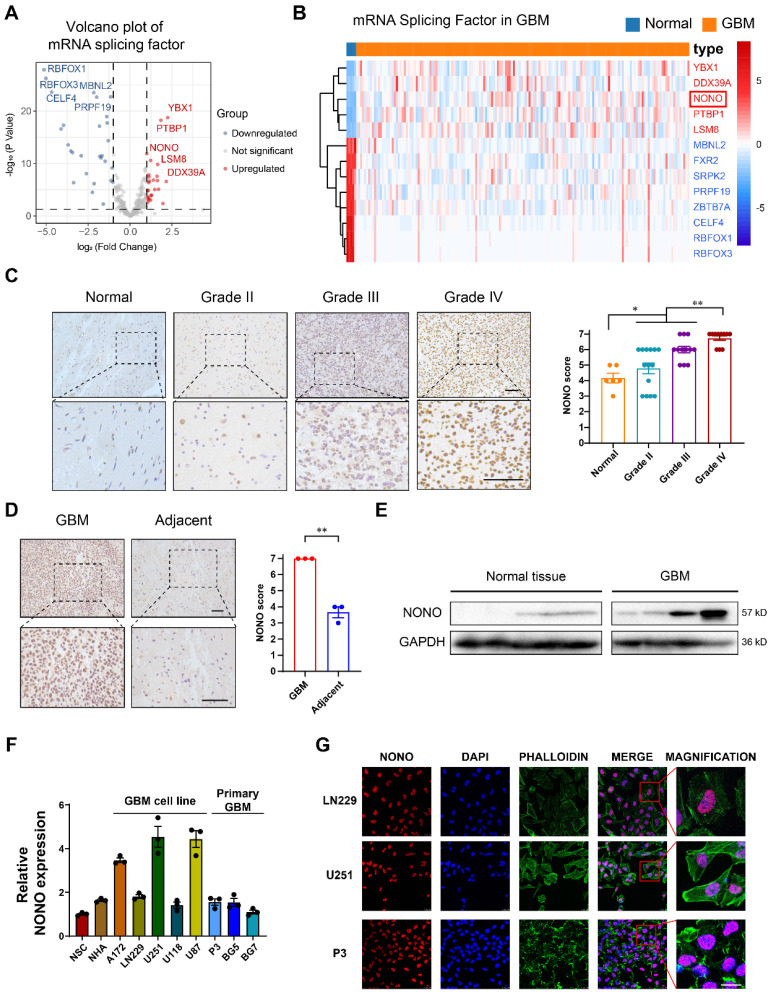
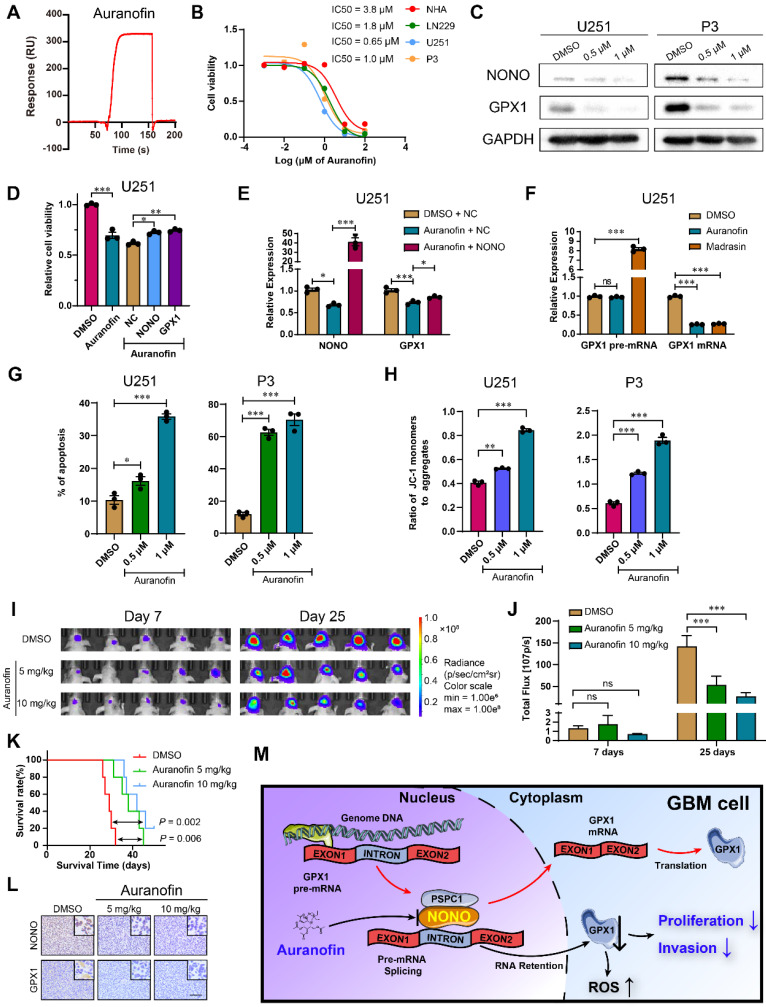
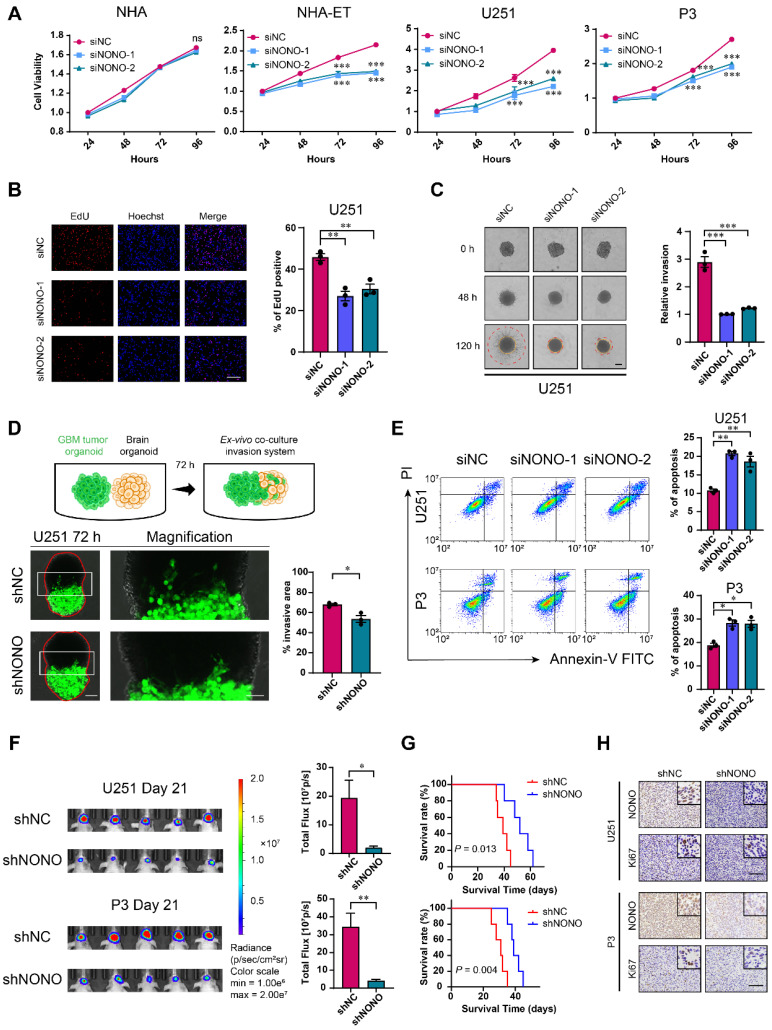
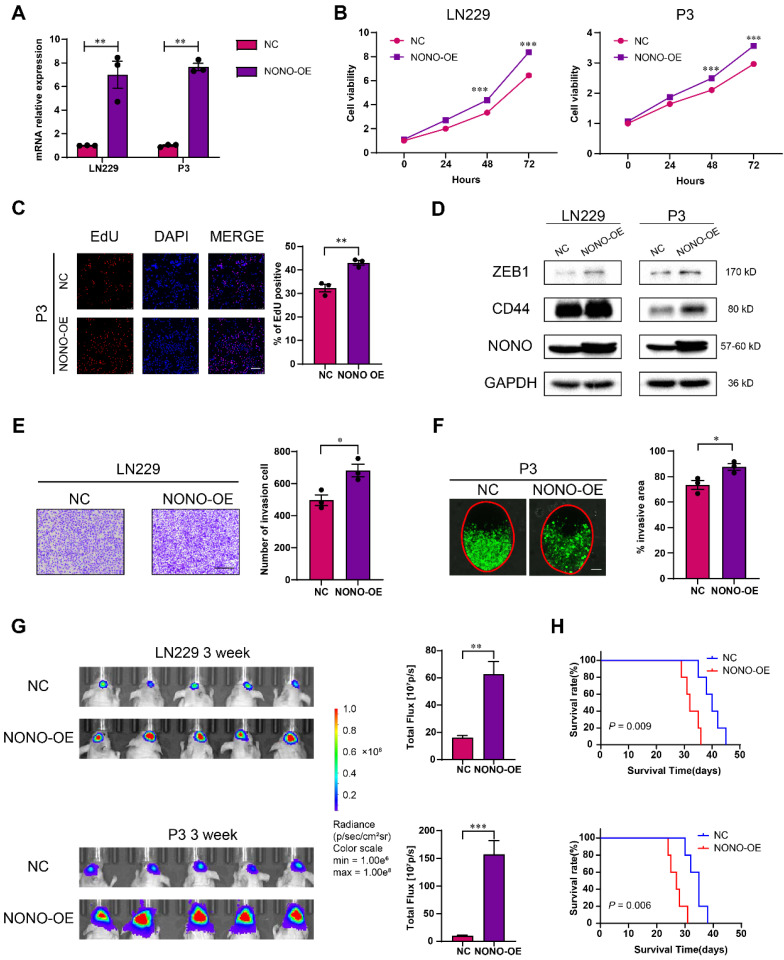
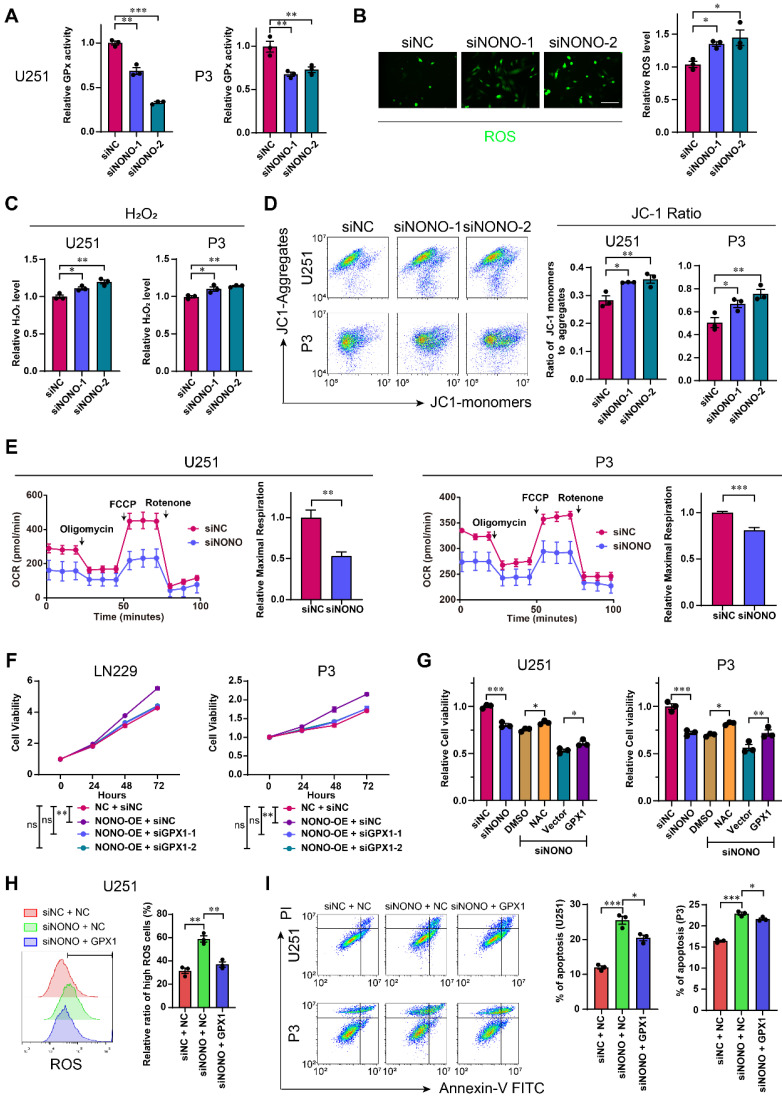
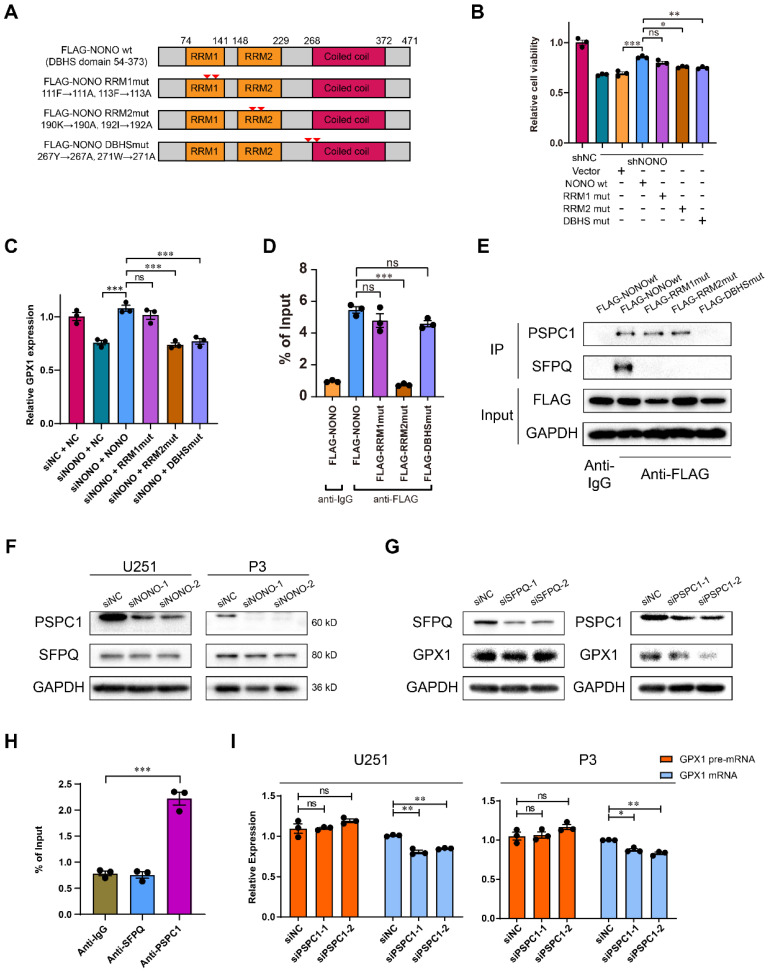
Splicing factors are essential for nascent pre-mRNA processing and critical in cancer progression, suggesting that proteins with splicing functions represent potential molecular targets for cancer therapy. Here, we investigate the role of splicing factors in glioblastoma multiforme (GBM) progression and the possibility of targeting them for the treatment of the disease. The TCGA and CGGA public databases were used to screen for differentially expressed mRNA splicing factors. Immunohistochemistry and qRT-PCR were used to analyze the expression of non-POU domain-containing octamer-binding protein (NONO), a Drosophila behavior human splicing (DBHS) protein. Knockdown/overexpression of NONO with siRNA and lentiviral expression constructs was used to examine cell growth, apoptosis, and invasion in GBM cells. RNA sequencing was used to identify potential downstream molecular targets of NONO. RIP-PCR and RNA pulldown were used to determine the interaction between NONO and pre-mRNA. JC-1 staining and the seahorse assay were performed to assess redox homeostasis. Expression of NONO was increased in GBM samples and associated with poor survival in patients ( = 0.04). Knockdown of NONO suppressed GBM growth, and overexpression of NONO promoted GBM tumorigenesis and . RNA sequencing-based transcriptomic profiling confirmed that knockdown of NONO in U251 and P3 cells resulted in global intron retention of pre-mRNA and led to abnormal splicing of specific pre-mRNAs for and . NONO bound to a consensus motif in the intron of pre-mRNA in association with another DBHS protein family member, PSPC1. Knockdown of NONO impaired tumor growth, invasion, and redox homeostasis through aberrant splicing of . Finally, Auranofin, a small molecule inhibitor of NONO, suppressed GBM tumor growth in an orthotopic xenograft model in mice. We demonstrated that intron retention was a critical alternative RNA splicing event to occur in GBM progression, and that NONO was a key regulator of mRNA splicing in GBM. Targeting NONO represents a novel, potential therapeutic strategy for GBM treatment.
剪接因子对于新生前体mRNA的加工至关重要,并且在癌症进展中起着关键作用,这表明具有剪接功能的蛋白质代表了癌症治疗的潜在分子靶点。在此,我们研究剪接因子在多形性胶质母细胞瘤(GBM)进展中的作用以及将其作为该疾病治疗靶点的可能性。利用TCGA和CGGA公共数据库筛选差异表达的mRNA剪接因子。采用免疫组织化学和qRT-PCR分析非POU结构域八聚体结合蛋白(NONO)的表达,NONO是一种果蝇行为人类剪接(DBHS)蛋白。使用siRNA和慢病毒表达构建体对NONO进行敲低/过表达,以检测GBM细胞的生长、凋亡和侵袭情况。利用RNA测序鉴定NONO潜在的下游分子靶点。采用RIP-PCR和RNA下拉实验确定NONO与前体mRNA之间的相互作用。进行JC-1染色和海马实验以评估氧化还原稳态。NONO在GBM样本中的表达增加,并且与患者的不良生存相关(P = 0.04)。敲低NONO可抑制GBM生长,而过表达NONO则促进GBM肿瘤发生。基于RNA测序的转录组分析证实,在U251和P3细胞中敲低NONO会导致前体mRNA的整体内含子保留,并导致特定前体mRNA的异常剪接,涉及基因和基因。NONO与前体mRNA内含子中的共有基序结合,与另一个DBHS蛋白家族成员PSPC1相关联。敲低NONO通过基因的异常剪接损害肿瘤生长、侵袭和氧化还原稳态。最后,金诺芬,一种NONO的小分子抑制剂,在小鼠原位异种移植模型中抑制了GBM肿瘤生长。我们证明内含子保留是GBM进展中发生的关键替代性RNA剪接事件,并且NONO是GBM中mRNA剪接的关键调节因子。靶向NONO代表了一种用于GBM治疗的新型潜在治疗策略。