Westman Linda, Castán Broto Vanesa
Urban Institute University of Sheffield Sheffield UK.
Antipode. 2022 Jul;54(4):1320-1343. doi: 10.1111/anti.12820. Epub 2022 Mar 8.
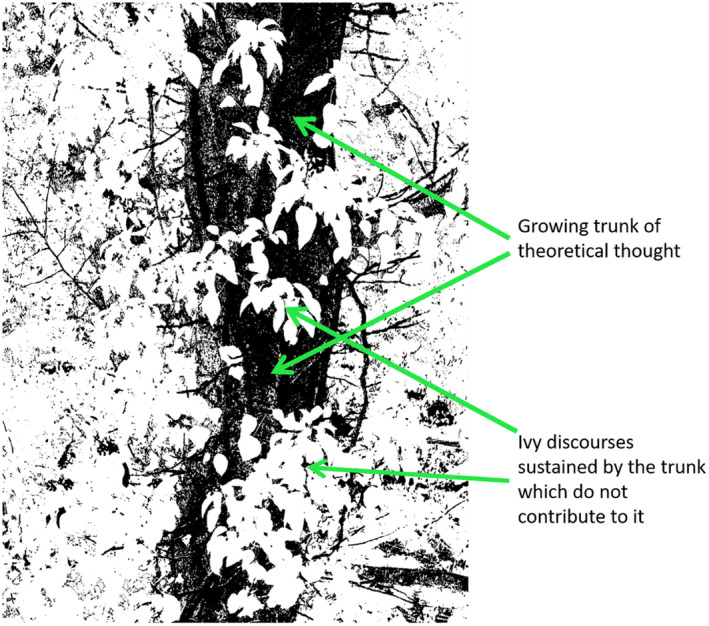
The concept of urban transformations has gathered interest among scholars and policymakers calling for radical change towards sustainability. The discourse represents an entry point to address systemic causes of ecological degradation and social injustice, thereby providing solutions to intractable global challenges. Yet, so far, urban transformations projects have fallen short of delivering significant action in cities. The limited ability of this discourse to enable change is, in our view, linked with a broader dynamic that threatens progressive commitments to knowledge pluralism. There are discourses that, cloaked in emancipatory terminology, prevent the flourishing of radical ideas. The ivy is a metaphor to understand how such discourses operate. Ivy discourses grow from a radical foundation, but they do so while reproducing assumptions and values of mainstream discourses. We are concerned that urban transformations functions as an ivy discourse, which reproduces rather than challenges knowledge systems and relations that sustain hegemony.
城市转型的概念已引起学者和政策制定者的兴趣,他们呼吁朝着可持续性进行彻底变革。这种论述是解决生态退化和社会不公正的系统性原因的切入点,从而为棘手的全球挑战提供解决方案。然而,到目前为止,城市转型项目在城市中未能采取重大行动。我们认为,这种论述推动变革的能力有限,与一种更广泛的动态有关,这种动态威胁到对知识多元主义的进步承诺。有些论述披着解放性术语的外衣,却阻碍激进思想的蓬勃发展。常春藤是理解此类论述如何运作的一个隐喻。常春藤式论述从激进的基础上发展而来,但在这样做的同时,它们又再现了主流论述的假设和价值观。我们担心城市转型起到了常春藤式论述的作用,它再现而非挑战维持霸权的知识体系和关系。