Palanisamy Rajesh, Zhang Yan, Zhang Guoquan
Department of Molecular Microbiology and Immunology, University of Texas at San Antonio, San Antonio, TX 78249, USA.
Pathogens. 2024 May 14;13(5):405. doi: 10.3390/pathogens13050405.
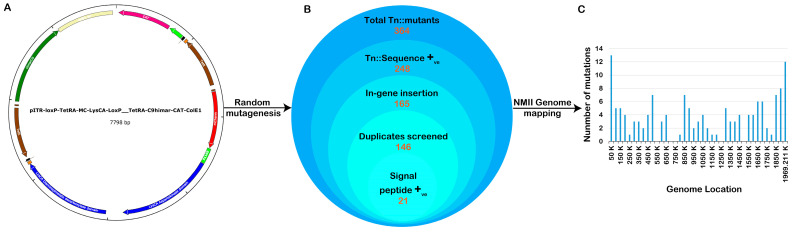
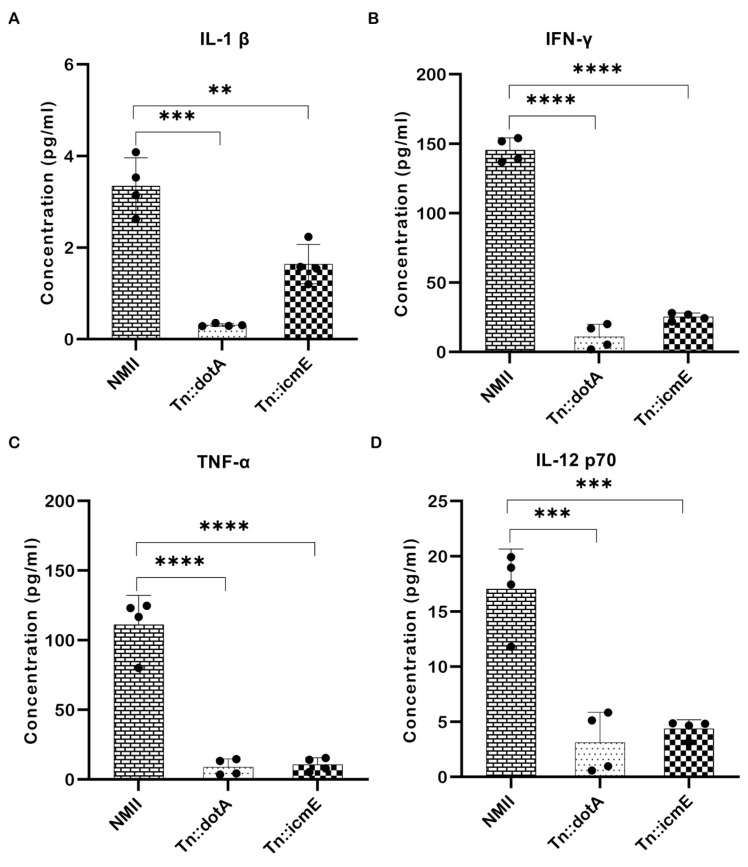
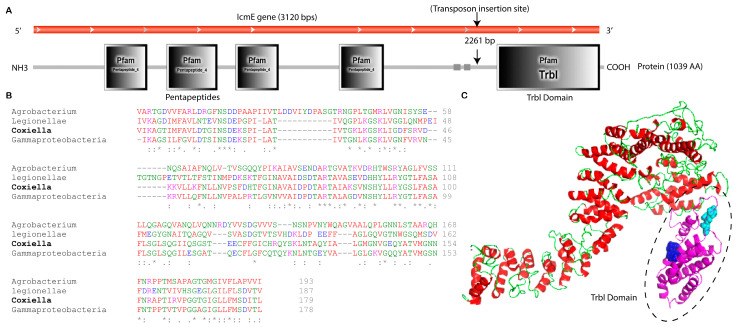
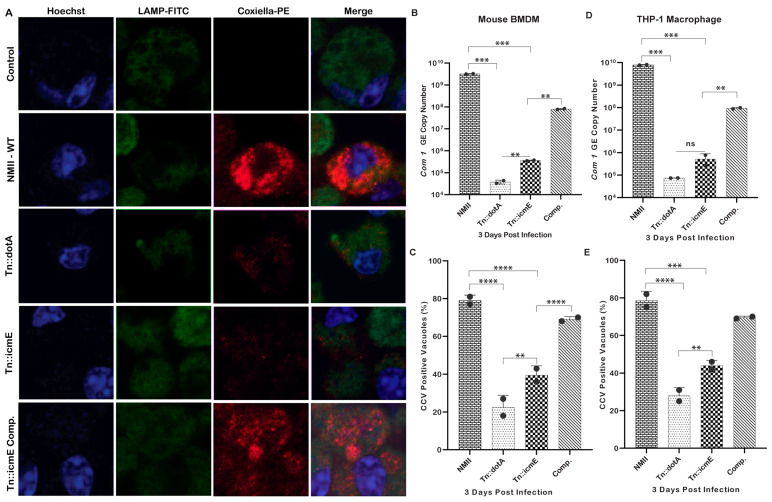
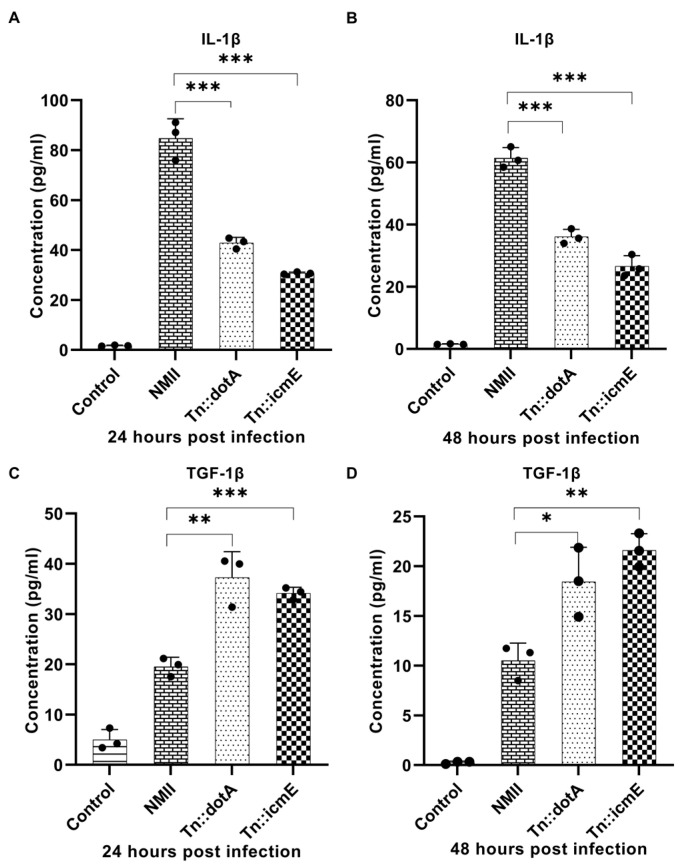
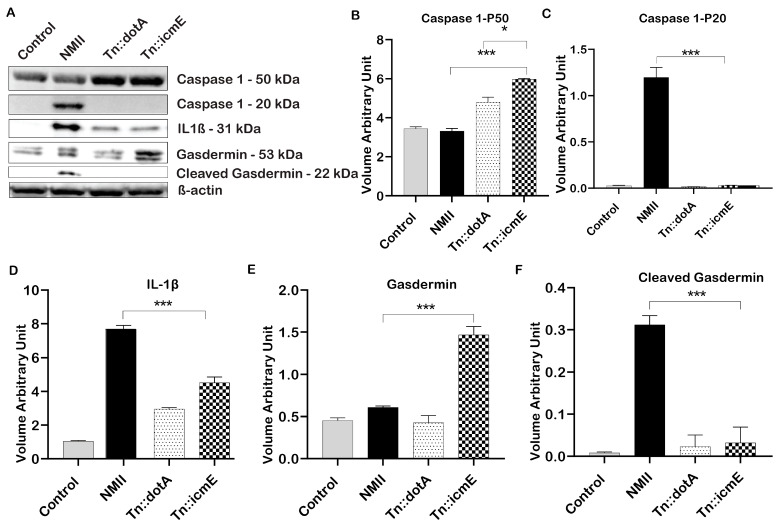
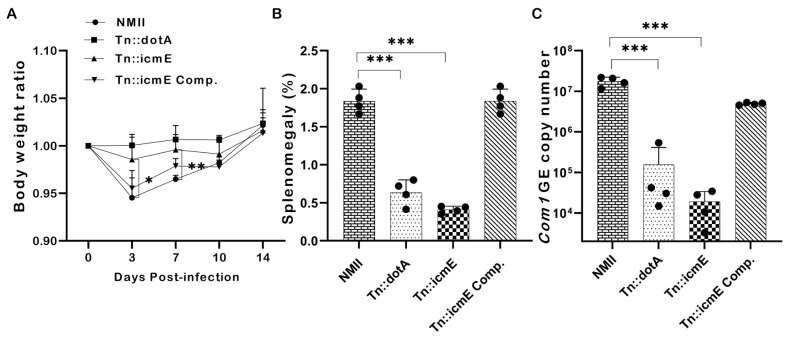
is an obligate intracellular Gram-negative bacterium that causes Q fever, a life-threatening zoonotic disease. replicates within an acidified parasitophorous vacuole derived from the host lysosome. The ability of to replicate and achieve successful intracellular life in the cell cytosol is vastly dependent on the Dot/Icm type 4B secretion system (T4SSB). Although several T4SSB effector proteins have been shown to be important for virulence and intracellular replication, the role of the icmE protein in the host- interaction has not been investigated. In this study, we generated a Nine Mile Phase II (NMII) mutant library and identified 146 transposon mutants with a single transposon insertion. Transposon mutagenesis screening revealed that disruption of gene resulted in the attenuation of NMII virulence in SCID mice. ELISA analysis indicated that the levels of pro-inflammatory cytokines, including interleukin-1β, IFN-γ, TNF-α, and IL-12p70, in serum from Tn::icmE mutant-infected SCID mice were significantly lower than those in serum from wild-type (WT) NMII-infected mice. Additionally, Tn::icmE mutant bacteria were unable to replicate in mouse bone marrow-derived macrophages (MBMDM) and human macrophage-like cells (THP-1). Immunoblotting results showed that the Tn::icmE mutant failed to activate inflammasome components such as IL-1β, caspase 1, and gasdermin-D in THP-1 macrophages. Collectively, these results suggest that the icmE protein may play a vital role in virulence, intracellular replication, and activation of inflammasome mediators during NMII infection.
是一种专性细胞内革兰氏阴性细菌,可引起Q热,这是一种危及生命的人畜共患病。在源自宿主溶酶体的酸化寄生泡内复制。在细胞质中复制并实现成功的细胞内生存的能力在很大程度上取决于Dot/Icm 4B型分泌系统(T4SSB)。尽管已证明几种T4SSB效应蛋白对毒力和细胞内复制很重要,但icmE蛋白在宿主相互作用中的作用尚未得到研究。在本研究中,我们构建了一个九英里II期(NMII)突变体文库,并鉴定出146个具有单个转座子插入的转座子突变体。转座子诱变筛选显示,基因的破坏导致NMII在SCID小鼠中的毒力减弱。ELISA分析表明,Tn::icmE突变体感染的SCID小鼠血清中促炎细胞因子,包括白细胞介素-1β、IFN-γ、TNF-α和IL-12p70的水平显著低于野生型(WT)NMII感染小鼠血清中的水平。此外,Tn::icmE突变体细菌无法在小鼠骨髓来源的巨噬细胞(MBMDM)和人巨噬细胞样细胞(THP-1)中复制。免疫印迹结果表明,Tn::icmE突变体未能激活THP-1巨噬细胞中的炎性小体成分,如IL-1β、半胱天冬酶1和gasdermin-D。总的来说,这些结果表明icmE蛋白可能在NMII感染期间的毒力、细胞内复制和炎性小体介质的激活中起关键作用。