Department of Burn Surgery, The First Affiliated Hospital of Sun Yat-sen University, Guangzhou, China.
Dis Markers. 2022 Jul 23;2022:2461055. doi: 10.1155/2022/2461055. eCollection 2022.
Melanomas are skin malignant tumors that arise from melanocytes which are primarily treated with surgery, chemotherapy, targeted therapy, immunotherapy, radiation therapy, etc. Targeted therapy is a promising approach to treating advanced melanomas, but resistance always occurs. This study is aimed at identifying the potential target genes and candidate drugs for drug-resistant melanoma effectively with computational methods.
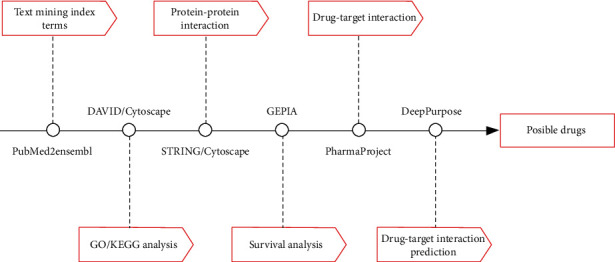
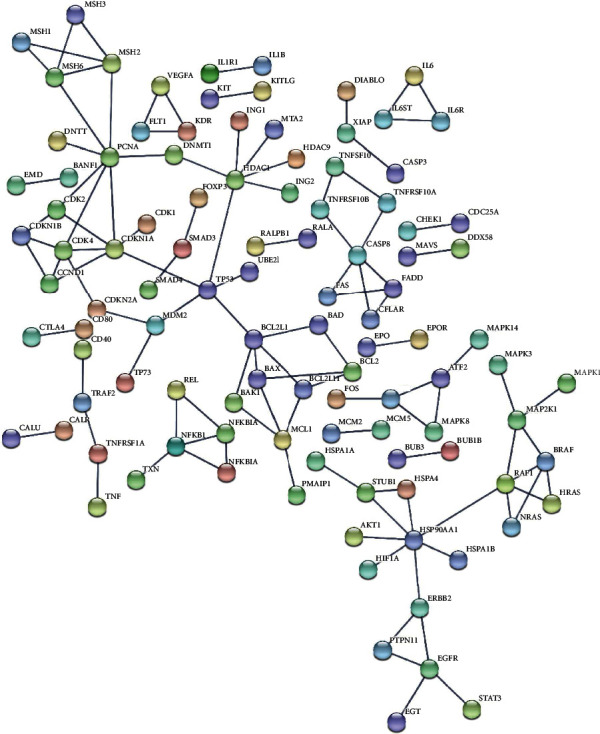
Identification of genes associated with drug-resistant melanomas was conducted using the text mining tool pubmed2ensembl. Further gene screening was carried out by GO and KEGG pathway enrichment analyses. The PPI network was constructed using STRING database and Cytoscape. GEPIA was used to perform the survival analysis and conduct the Kaplan-Meier curve. Drugs targeted at these genes were selected in Pharmaprojects. The binding affinity scores of drug-target interactions were predicted by DeepPurpose.
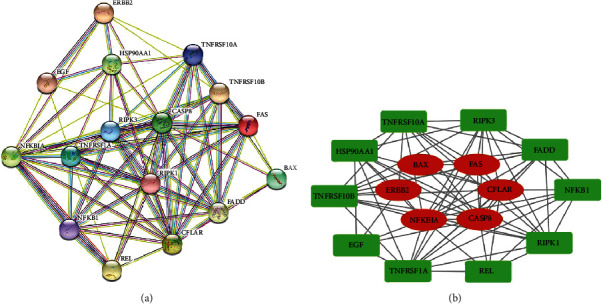
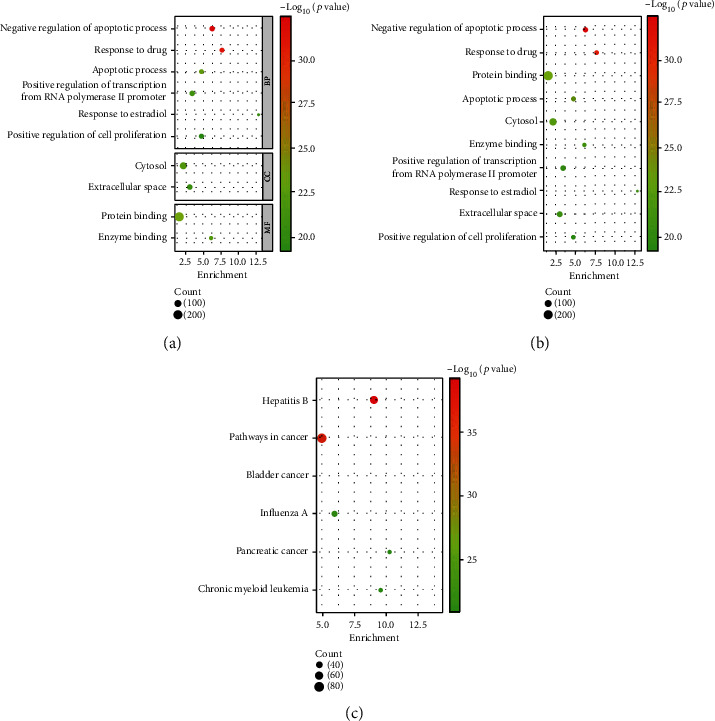
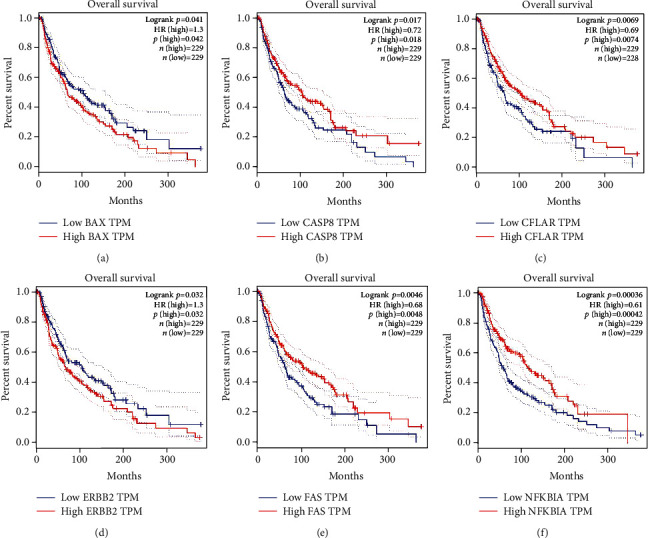
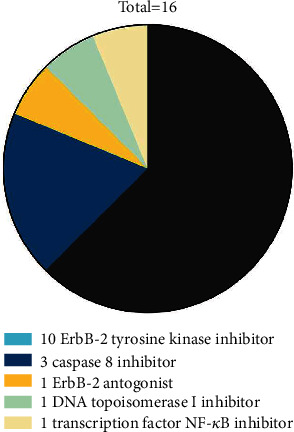
A total of 433 genes were found associated with drug-resistant melanomas by text mining. The most statistically differential functional enriched pathways of GO and KEGG analyses contained 348 genes, and 27 hub genes were further screened out by MCODE in Cytoscape. Six genes were identified with statistical differences after survival analysis and literature review. 16 candidate drugs targeted at hub genes were found by Pharmaprojects under our restrictions. Finally, 11 ERBB2-targeted drugs with top affinity scores were predicted by DeepPurpose, including 10 ERBB2 kinase inhibitors and 1 antibody-drug conjugate.
Text mining and bioinformatics are valuable methods for gene identification in drug discovery. DeepPurpose is an efficient and operative deep learning tool for predicting the DTI and selecting the candidate drugs.
黑色素瘤是一种起源于黑色素细胞的皮肤恶性肿瘤,主要采用手术、化疗、靶向治疗、免疫治疗、放射治疗等方法进行治疗。靶向治疗是治疗晚期黑色素瘤的一种有前途的方法,但总会出现耐药性。本研究旨在通过计算方法有效识别潜在的耐药性黑色素瘤靶基因和候选药物。
使用文本挖掘工具 pubmed2ensembl 进行与耐药性黑色素瘤相关的基因鉴定。进一步通过 GO 和 KEGG 通路富集分析进行基因筛选。使用 STRING 数据库和 Cytoscape 构建 PPI 网络。通过 GEPIA 进行生存分析并进行 Kaplan-Meier 曲线分析。在 Pharmaprojects 中选择针对这些基因的药物。通过 DeepPurpose 预测药物-靶标相互作用的结合亲和力评分。
通过文本挖掘共发现 433 个与耐药性黑色素瘤相关的基因。GO 和 KEGG 分析中最具统计学差异的功能富集通路包含 348 个基因,通过 Cytoscape 中的 MCODE 进一步筛选出 27 个枢纽基因。通过生存分析和文献回顾确定了 6 个具有统计学差异的基因。根据我们的限制条件,在 Pharmaprojects 中发现了 16 种针对枢纽基因的候选药物。最后,通过 DeepPurpose 预测出 11 种具有高亲和力评分的 ERBB2 靶向药物,包括 10 种 ERBB2 激酶抑制剂和 1 种抗体药物偶联物。
文本挖掘和生物信息学是药物发现中基因鉴定的有价值方法。DeepPurpose 是一种高效且实用的深度学习工具,可用于预测 DTI 和选择候选药物。