Reeve Julie, Mooney Sarah, Jepsen Nicola, White David
School of Clinical Sciences, Auckland University of Technology, Auckland, New Zealand.
Department of Mechanical Engineering, Auckland University of Technology, Auckland, New Zealand.
JMIR Rehabil Assist Technol. 2022 Aug 1;9(3):e35494. doi: 10.2196/35494.
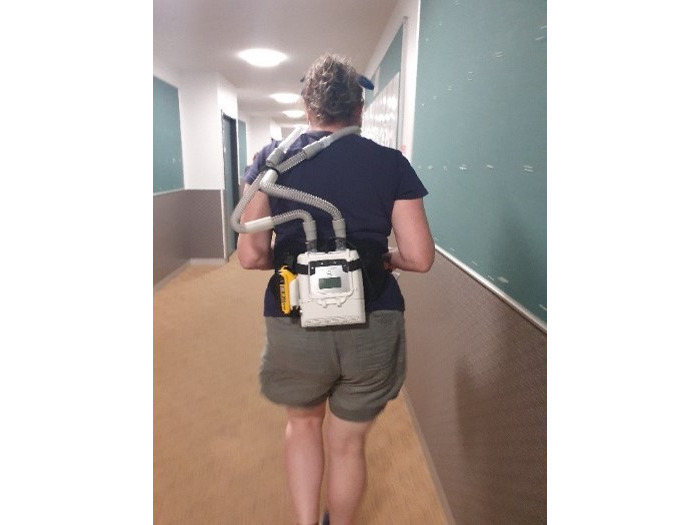
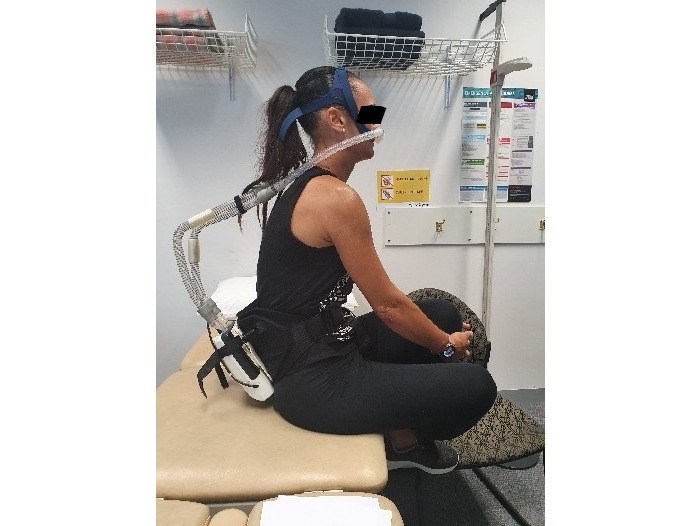
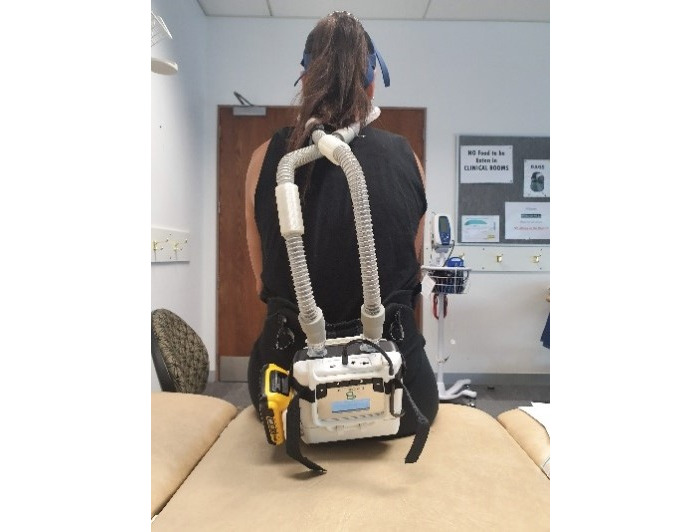
Noninvasive ventilation has been demonstrated to benefit people who have moderate to severe chronic obstructive pulmonary disease during acute exacerbations. Studies have begun to investigate the effectiveness of noninvasive ventilation during pulmonary rehabilitation to improve outcomes for people with chronic obstructive pulmonary disease; however, the lack of portability and humidification of these devices means their use is limited, especially when performing activities of daily living. A new prototype device, RACer-PAP (rest-activity cycler-positive airways pressure), delivers battery-operated positive airway pressure via a nasal interface while regulating nasal airway apportionment bias, removing the need for supplementary humidification. This device may offer people with chronic obstructive pulmonary disease an improved ability to participate in pulmonary rehabilitation and activities of daily living.
To assess the feasibility of exercising with the RACer-PAP in situ and the acceptability of the device during exercise in normal, healthy individuals.
A total of 15 healthy adults were invited to attend 2 exercise sessions, each 1 week apart. Sessions lasted approximately 1 hour and included 2 baseline 6-minute walk distance assessments, once with and once without the RACer-PAP in situ. Vital signs and spirometry results were monitored throughout, and spirometry was performed pre- and posttesting with RACer-PAP. Subjective questionnaires ascertained participant feedback on exercising with the device in situ.
Of the 15 initial participants, 14 (93%) completed both sessions. There were no adverse events associated with exercising with the device in situ. There were no differences in vital signs or 6-minute walk distance whether exercising with or without the device in situ. There were small increases in maximum dyspnea score (on the Borg scale) when exercising with the device in situ (median score 2.0, IQR 0.5-3.0, vs 3.0, IQR 2.0-3.25). There were small increases in forced vital capacity following exercise with the RACer-PAP. None of the participants reported symptoms associated with airway drying. Participant feedback provided recommendations for modifications for the next iteration of the device prior to piloting the device with people with chronic obstructive pulmonary disease.
This study has shown RACer-PAP to be safe and feasible to use during exercise and has provided feedback for modifications to the device to improve its use during exercise. We now propose to consider the application of the device in a small pilot feasibility study to assess the safety, feasibility, and utility of the device in a population of people with moderate to severe chronic obstructive pulmonary disease.
Australian New Zealand Clinical Trials Registry ACTRN12619000478112; https://www.anzctr.org.au/Trial/Registration/TrialReview.aspx?id=375477.
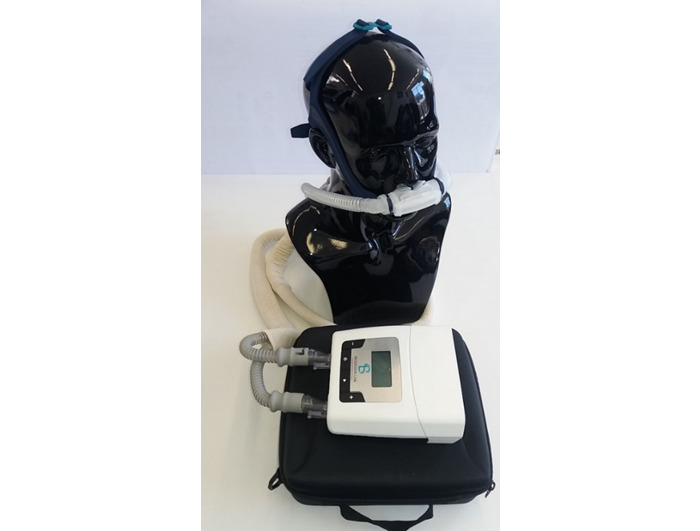
无创通气已被证明对中重度慢性阻塞性肺疾病急性加重期患者有益。研究已开始调查无创通气在肺康复期间对改善慢性阻塞性肺疾病患者预后的有效性;然而,这些设备缺乏便携性和加湿功能,这意味着其应用受到限制,尤其是在进行日常生活活动时。一种新的原型设备,RACer-PAP(休息-活动循环器-气道正压通气),通过鼻接口提供电池供电的气道正压通气,同时调节鼻气道分配偏差,无需补充加湿。该设备可能会提高慢性阻塞性肺疾病患者参与肺康复和日常生活活动的能力。
评估在正常健康个体中使用RACer-PAP进行原地运动的可行性以及该设备在运动期间的可接受性。
共邀请15名健康成年人参加2次运动 session,每次间隔1周。每个session持续约1小时,包括2次基线6分钟步行距离评估,一次在原地使用RACer-PAP,一次不使用。全程监测生命体征和肺功能测试结果,并在使用RACer-PAP前后进行肺功能测试。主观问卷确定了参与者对原地使用该设备进行运动的反馈。
15名初始参与者中,14名(93%)完成了两个session。原地使用该设备进行运动未出现不良事件。无论原地是否使用该设备进行运动,生命体征或6分钟步行距离均无差异。原地使用该设备进行运动时,最大呼吸困难评分(采用Borg量表)略有增加(中位数评分2.0,四分位数间距0.5-3.0,而之前为3.0,四分位数间距2.0-3.25)。使用RACer-PAP运动后用力肺活量略有增加。没有参与者报告与气道干燥相关的症状。参与者的反馈为该设备的下一次迭代改进提供了建议,以便在慢性阻塞性肺疾病患者中试用该设备。
本研究表明RACer-PAP在运动期间使用安全可行,并为改进该设备在运动期间的应用提供了反馈。我们现在提议在一项小型试点可行性研究中考虑该设备的应用,以评估其在中重度慢性阻塞性肺疾病患者群体中的安全性、可行性和实用性。
澳大利亚新西兰临床试验注册中心ACTRN12619000478112;https://www.anzctr.org.au/Trial/Registration/TrialReview.aspx?id=375477 。