Center for Health Security, Department of Environmental Health and Engineering, Johns Hopkins University Bloomberg School of Public Health, Baltimore, MD, USA, 621 East Pratt Street, Suite 210, 21202.
Center for Infectious Disease and Nursing Innovation, Johns Hopkins University School of Nursing, 525 North Wolfe Street, Suite 511, 21205, Baltimore, MD, USA.
AIDS Behav. 2023 Jan;27(1):344-357. doi: 10.1007/s10461-022-03771-w. Epub 2022 Aug 2.
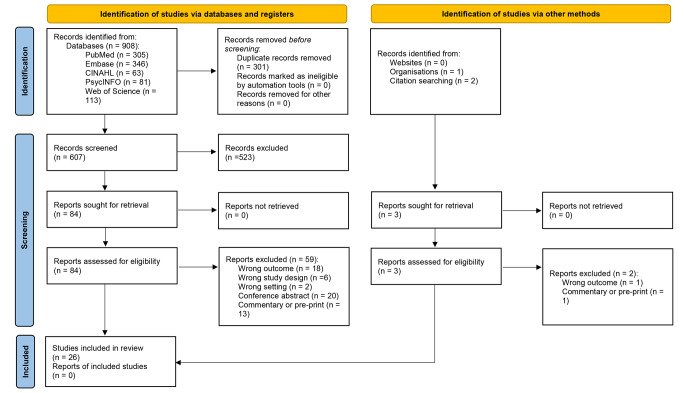
The COVID-19 pandemic has necessitated adaptations in how healthcare services are rendered. However, it is unclear how these adaptations have impacted HIV healthcare services across the United States. We conducted a systematic review to assess the impacts of the pandemic on service engagement, treatment adherence, and viral suppression. We identified 26 total studies spanning the beginning of the pandemic (March 11, 2020) up until November 5, 2021. Studies were conducted at the national, state, and city levels and included representation from all four CDC HIV surveillance regions. Studies revealed varying impacts of the pandemic on HIV healthcare retention/engagement, medication adherence, and viral suppression rates, including decreases in HIV healthcare visits, provider cancellations, and inability to get prescription refills. Telehealth was critical to ensuring continued access to care and contributed to improved retention and engagement in some studies. Disparities existed in who had access to the resources needed for telehealth, as well as among populations living with HIV whose care was impacted by the pandemic.
COVID-19 大流行迫使医疗服务方式发生了转变。然而,目前尚不清楚这些转变对美国各地的 HIV 医疗服务产生了怎样的影响。我们进行了一项系统评价,以评估大流行对服务参与、治疗依从性和病毒抑制的影响。我们共确定了 26 项研究,这些研究从大流行开始(2020 年 3 月 11 日)一直持续到 2021 年 11 月 5 日。研究在国家、州和市级进行,涵盖了所有四个 CDC HIV 监测区域的代表性。研究揭示了大流行对 HIV 医疗保健保留/参与、药物依从性和病毒抑制率的不同影响,包括 HIV 医疗保健就诊次数减少、提供者取消预约和无法获得处方药续配。远程医疗对于确保持续获得医疗保健至关重要,并在一些研究中有助于提高保留率和参与度。在获得远程医疗所需资源方面存在差异,以及在受大流行影响的 HIV 感染者群体中也存在差异。