Department of Clinical Pharmacy, School of Pharmacy, Shiraz University of Medical Sciences, Shiraz, Iran.
Department of Hematology and Medical Oncology, School of Medicine, Shiraz University of Medical Sciences, Shiraz, Iran.
Iran J Med Sci. 2022 Jul;47(4):291-299. doi: 10.30476/IJMS.2021.91614.2277.
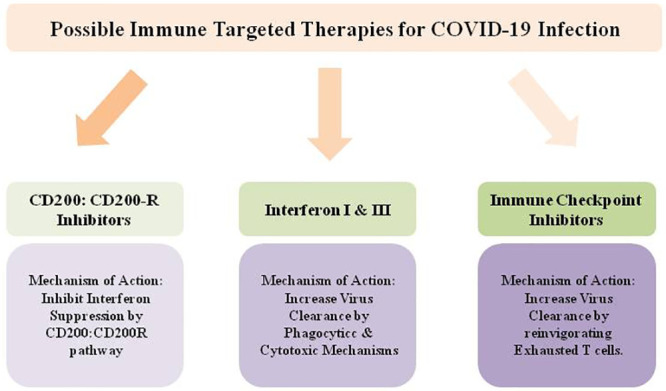
In December 2019, the coronavirus disease-2019 (COVID-19) outbreak emerged in Wuhan, China. The World Health Organization officially declared it a pandemic on March 11, 2020. Reports indicated that the associated mortality of the infection is quite higher in the elderly, individuals with specific comorbidities (such as diabetes mellitus), and generally the ones with a compromised immune system. A cohort study in Wuhan, China, reported a dysregulated immune response in 452 patients with laboratory-confirmed COVID-19. As a result of this suppressed immune response, an increase in neutrophil to lymphocyte ratio, T lymphopenia, and a decrease in CD4 T cells were all common laboratory findings, especially in severe cases. On the other hand, there is substantial evidence of T cell exhaustion in critically ill patients. Accordingly, the immune system seems to play an important role in the prognosis and pathogenesis of the disease. Therefore, this study aims to review the evidence on the immune response dysregulation in COVID-19 infection and the potential role of immunoregulatory treatments such as immune checkpoint inhibitors, interferons, and CD200 inhibitors in altering disease prognosis, especially in critically ill patients.
2019 年 12 月,新型冠状病毒病-2019(COVID-19)在中国武汉爆发。世界卫生组织于 2020 年 3 月 11 日正式宣布其为大流行。有报道称,感染的相关死亡率在老年人、有特定合并症(如糖尿病)的人群以及免疫系统受损的人群中较高。中国武汉的一项队列研究报告了 452 例实验室确诊的 COVID-19 患者的免疫反应失调。由于这种受抑制的免疫反应,中性粒细胞与淋巴细胞比值增加、T 淋巴细胞减少和 CD4 T 细胞减少都是常见的实验室发现,尤其是在重症病例中。另一方面,在重症患者中存在大量 T 细胞耗竭的证据。因此,免疫系统似乎在疾病的预后和发病机制中起着重要作用。因此,本研究旨在综述 COVID-19 感染中免疫反应失调的证据,以及免疫检查点抑制剂、干扰素和 CD200 抑制剂等免疫调节治疗在改变疾病预后方面的潜在作用,特别是在重症患者中。