Lab of Chemical Biology and Molecular Drug Design, College of Pharmaceutical Science, Zhejiang University of Technology, Hangzhou 310014, China; Institute of Drug Development & Chemical Biology, Zhejiang University of Technology, Hangzhou 310014, China; Department of Biochemistry & Food Sciences, University of Kordofan, El-Obeid 51111, Sudan.
Lab of Chemical Biology and Molecular Drug Design, College of Pharmaceutical Science, Zhejiang University of Technology, Hangzhou 310014, China.
Biomed Pharmacother. 2021 Oct;142:111957. doi: 10.1016/j.biopha.2021.111957. Epub 2021 Jul 28.
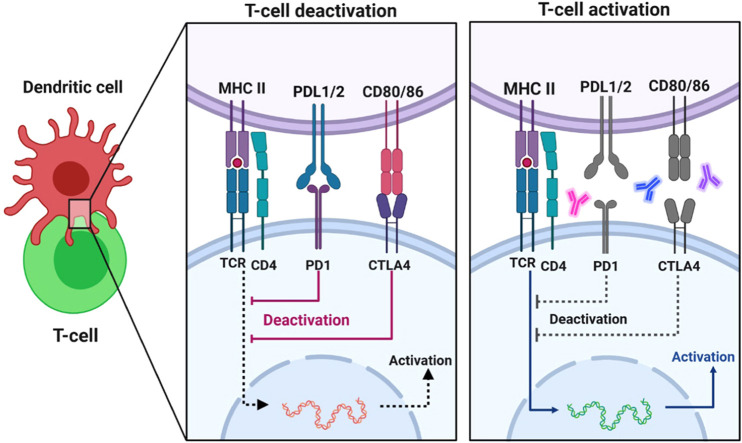
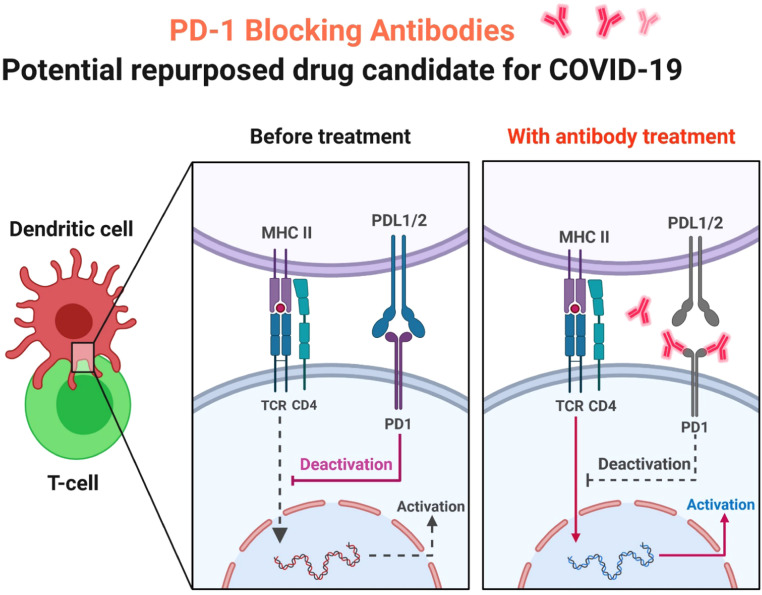
The outbreak of Severe acute respiratory syndrome coronavirus 2 (SARS-CoV-2) in Wuhan, China, in December 2019, and its global dissemination became the coronavirus disease 2019 (COVID-19) pandemic declared by the World Health Organization (WHO) on 11 March 2020. In patients undergoing immunotherapy, the effect and path of viral infection remain uncertain. In addition, viral-infected mice and humans show T-cell exhaustion, which is identified after infection with SARS-CoV-2. Notably, they regain their T-cell competence and effectively prevent viral infection when treated with anti-PD-1 antibodies. Four clinical trials are officially open to evaluate anti-PD-1 antibody administration's effectiveness for cancer and non-cancer individuals influenced by COVID-19 based on these findings. The findings may demonstrate the hypothesis that a winning strategy to combat SARS-CoV-2 infection could be the restoration of exhausted T-cells. In this review, we outline the potential protective function of the anti-PD-1 blockade against SARS-CoV-2 infection with the aim to develop SARS-CoV-2 therapy.
2019 年 12 月,中国武汉暴发严重急性呼吸综合征冠状病毒 2(SARS-CoV-2)疫情,该疫情随后在全球传播,世界卫生组织(WHO)于 2020 年 3 月 11 日宣布 COVID-19 大流行。在接受免疫治疗的患者中,病毒感染的效果和途径仍不确定。此外,感染 SARS-CoV-2 的病毒感染小鼠和人类表现出 T 细胞耗竭,这在感染后被鉴定出来。值得注意的是,当用抗 PD-1 抗体治疗时,它们恢复了 T 细胞的功能,并有效地预防了病毒感染。基于这些发现,四项临床试验正式开放,以评估抗 PD-1 抗体给药对 COVID-19 影响的癌症和非癌症个体的有效性。这些发现可能表明,对抗 SARS-CoV-2 感染的制胜策略可能是恢复耗竭的 T 细胞。在这篇综述中,我们概述了抗 PD-1 阻断对 SARS-CoV-2 感染的潜在保护作用,旨在开发 SARS-CoV-2 治疗方法。