Physiology Research Center, Institute of Neuropharmacology, Kerman University of Medical Sciences, Kerman, Iran.
Cardiovascular Research Center, Department of Cardiology, Institute of Basic and Clinical Physiology Sciences, Kerman University of Medical Sciences, Kerman, Iran.
Iran J Med Sci. 2022 Jul;47(4):328-337. doi: 10.30476/IJMS.2021.89898.2065.
The prevalence of opium addiction in Iran is high probably due to the belief that opium has preventive effects against cardiovascular diseases. In the second phase of Kerman coronary artery disease risk factors study, the prevalence, incidence rate, and the association between opium use and other coronary artery disease risk factors (CADRFs) were assessed.
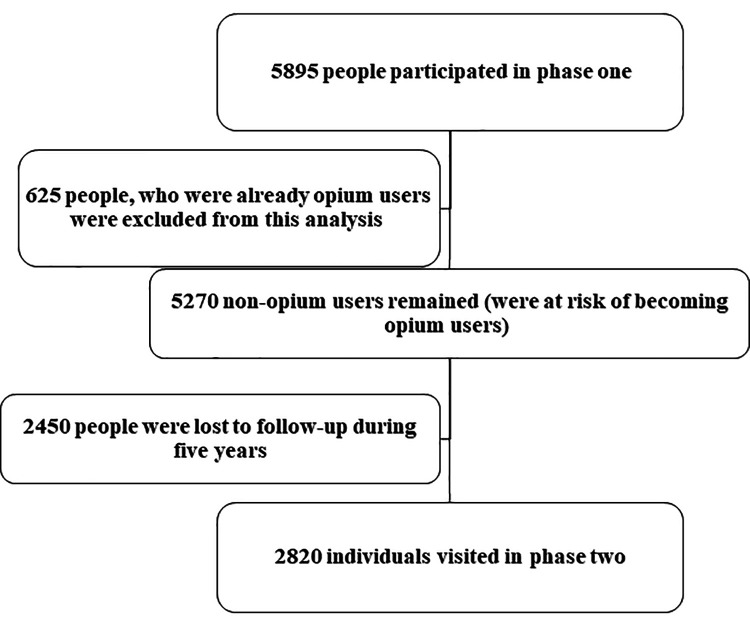
In a cross-sectional study (2014-2018), 9996 inhabitants of Kerman, southeastern Iran, aged 15-80 years were recruited to the study. After taking fasting blood samples, the participants were examined or interviewed for demographic data and CADRFs, including opium use. The participants were categorized into "never", "occasional", and "dependent" users. The association between opium use and CADRFs was assessed with adjusted regression analysis (Stata v.11 software).
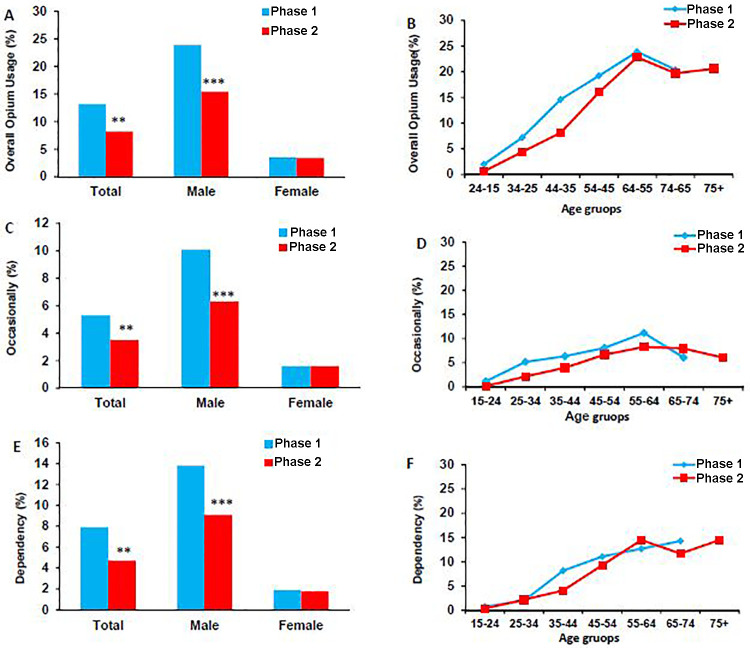
The overall prevalence of opium consumption was lower than that of five years earlier (P<0.01). The prevalence was currently higher in men than women and decreased in men between the two phases (P<0.001). There was a positive correlation between opium use and depression (P<0.001), anxiety (P<0.05), and a negative association with the level of physical activity (P<0.001). The five-year incident rate of dependent and occasional opium use was 4.2 and 3.9 persons/100 person-years, respectively. The incidence of opium use was higher in diabetic, hypertensive, depressed, anxious, and obese subjects.
The study did not demonstrate any protective effects of opium on CADRFs. Considering the higher rate of opium use in subjects with hypertension, diabetes, obesity, and psychological disorders, the health authorities should implement educational programs to warn and correct the unsafe belief.
伊朗鸦片成瘾的流行率很高,可能是因为人们相信鸦片对心血管疾病有预防作用。在克尔曼冠心病危险因素研究的第二阶段,评估了鸦片使用的流行率、发生率以及与其他冠心病危险因素(CADRFs)之间的关联。
在一项横断面研究(2014-2018 年)中,招募了伊朗东南部克尔曼的 9996 名年龄在 15-80 岁的居民参加该研究。在抽取空腹血样后,对参与者进行了人口统计学数据和 CADRFs 的检查或访谈,包括鸦片使用情况。参与者被分为“从未”、“偶尔”和“依赖”使用者。使用调整后的回归分析(Stata v.11 软件)评估了鸦片使用与 CADRFs 之间的关联。
鸦片消费的总体流行率低于五年前(P<0.01)。目前男性的流行率高于女性,而且在两个阶段之间男性的流行率有所下降(P<0.001)。鸦片使用与抑郁(P<0.001)、焦虑(P<0.05)呈正相关,与体力活动水平呈负相关(P<0.001)。依赖和偶尔使用鸦片的五年发生率分别为 4.2 和 3.9 人/100 人年。在糖尿病、高血压、抑郁、焦虑和肥胖患者中,鸦片使用的发生率更高。
本研究未证明鸦片对 CADRFs 有任何保护作用。考虑到高血压、糖尿病、肥胖和心理障碍患者中鸦片使用率较高,卫生当局应实施教育计划,以警告和纠正这种不安全的观念。