Ziaee Mojtaba, Hajizadeh Reza, Khorrami Arash, Sepehrvand Nariman, Momtaz Saeideh, Ghaffari Samad
Medicinal Plants Research Center, Maragheh University of Medical Sciences, Maragheh, Iran.
Department of Cardiology, School of Medicine, Urmia University of Medical Sciences, Urmia, Iran.
Iran J Public Health. 2019 Dec;48(12):2154-2164.
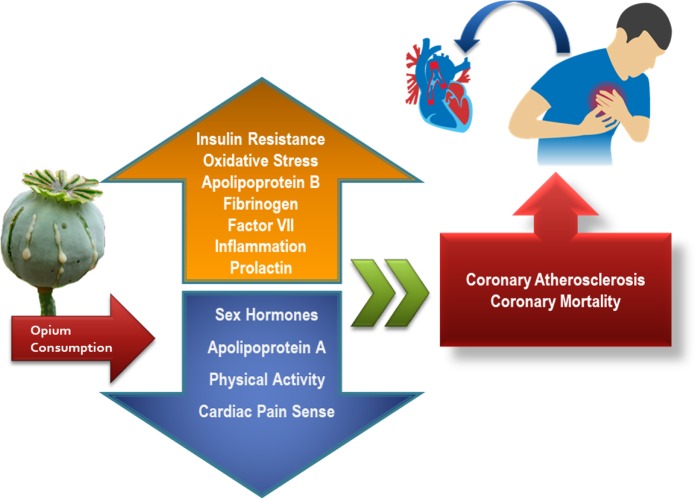
Opiates are the second most prevalent abused illicit substance after cannabis in the world. The latest United Nations Office on Drugs and Crime (UNODC) report estimated 30% increment in opium cultivation worldwide. High prevalence of opium consumption in eastern countries may be due to the high availability and traditional misconceptions. Opium consumption has been linked to hypertension, diabetes mellitus, dyslipidemia, and coronary artery diseases (CAD). In this review, we will review the association between opium use, cardiovascular diseases, and clinical outcomes. The present evidence suggests that chronic opiate consumption may increase the risk of cardiovascular diseases and related mortality.
阿片类药物是全球仅次于大麻的第二大最常被滥用的非法物质。联合国毒品和犯罪问题办公室(UNODC)的最新报告估计,全球鸦片种植量增长了30%。东方国家鸦片消费量高可能是由于其易于获取以及传统的误解。鸦片消费与高血压、糖尿病、血脂异常和冠状动脉疾病(CAD)有关。在本综述中,我们将回顾鸦片使用、心血管疾病和临床结局之间的关联。目前的证据表明,长期使用阿片类药物可能会增加心血管疾病和相关死亡率的风险。