Choi Young-Jin, Fan Meiqi, Tang Yujiao, Moon Sangho, Lee Seung-Hyun, Lee Bokyung, Bae Sung Mun, Lee Sang Moo, Kim Eun-Kyung
Department of Food Science and Nutrition, Dong-A University, Busan 49315, Korea.
Center for Silver-targeted Biomaterials, Brain Busan 21 Plus Program, Dong-A University, Busan 49315, Korea.
Nutr Res Pract. 2022 Aug;16(4):419-434. doi: 10.4162/nrp.2022.16.4.419. Epub 2021 Oct 22.
BACKGROUND/OBJECTIVES: Benign prostatic hyperplasia (BPH) is the most common prostate disease and one of the most common chronic diseases caused by aging in men. On the other hand, there has been no research on BPH using Nakai (). Therefore, this study investigated the effects of on BPH.
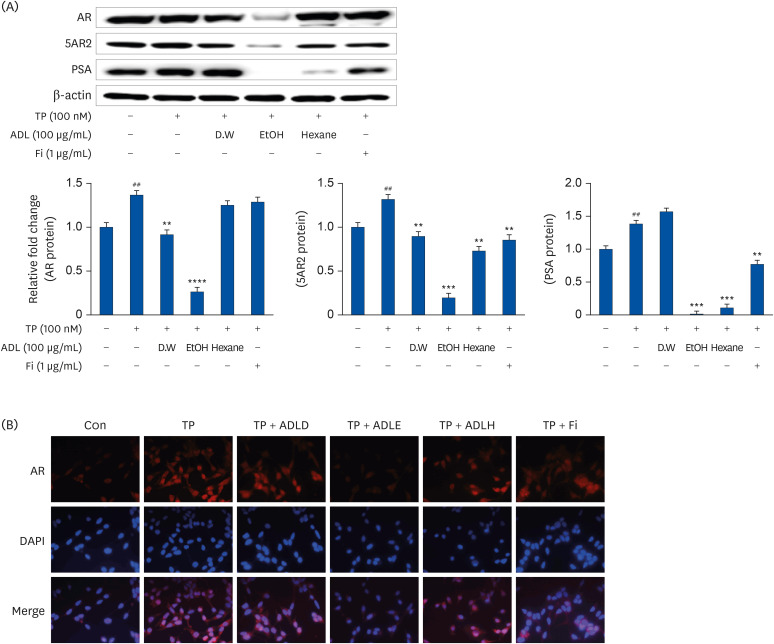
MATERIALS/METHODS: leaves were extracted with distilled water, 70% ethanol, and 95% hexane as solvents. Subsequently, the inhibitory effects of each extract on androgen receptor (AR) signaling were evaluated . The testosterone-induced BPH model was then used to confirm the efficacy of leaves in 70% ethanol extract (ADLE).
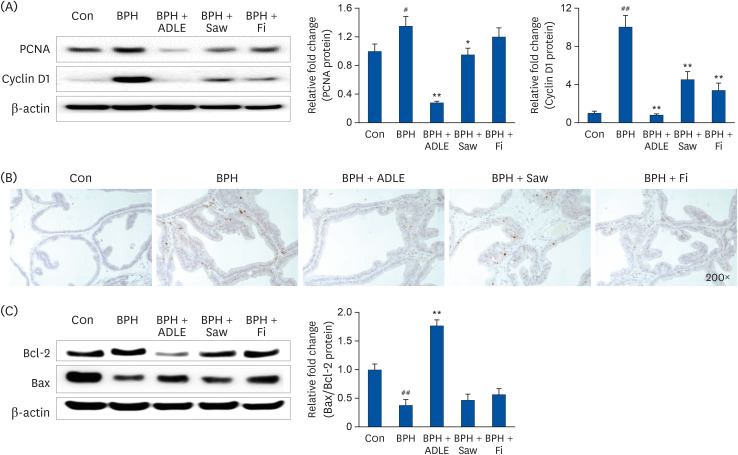
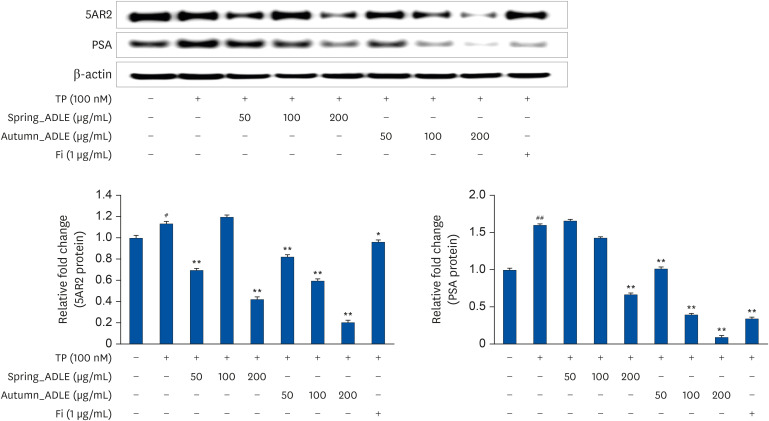
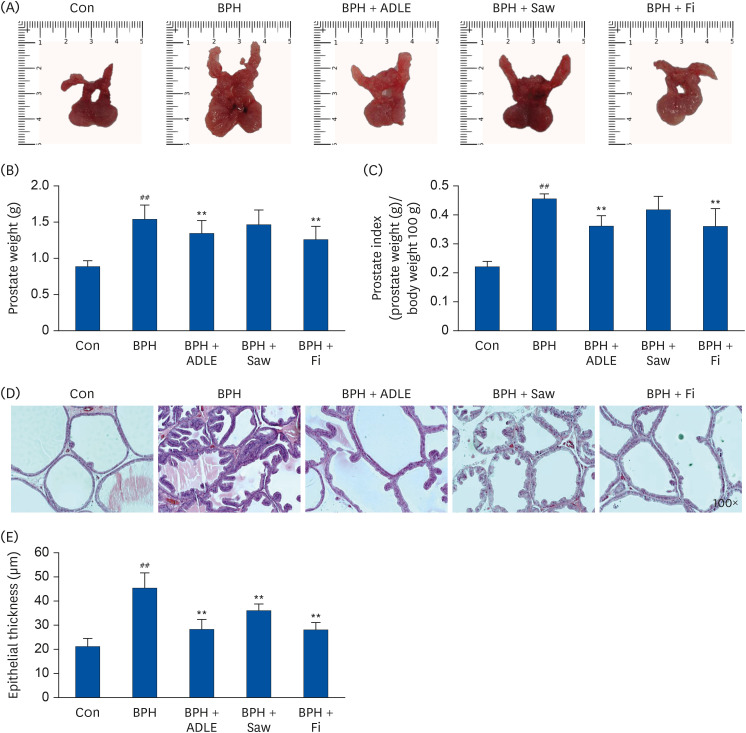
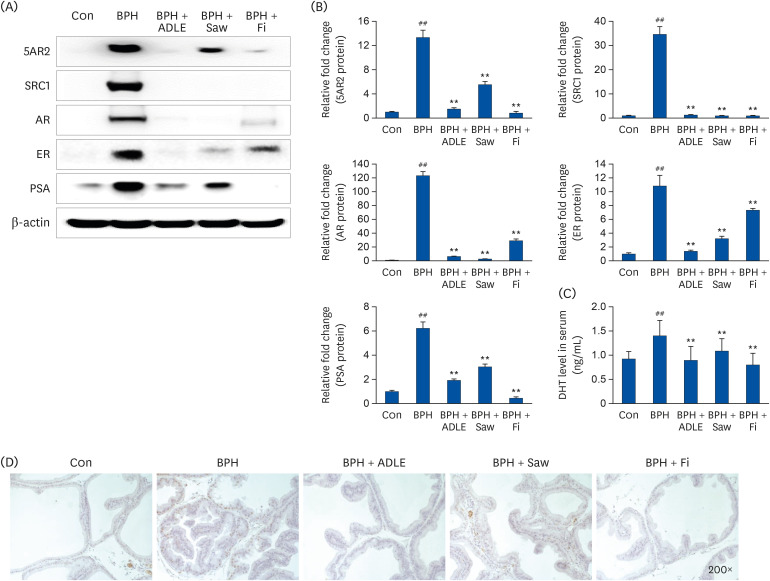
ADLE had the strongest inhibitory effect on AR signaling. A comparison of the activity of ADLE by harvest time showed that the leaves of harvested in autumn had a superior inhibitory effect on AR signaling to those harvested at other times. In the BPH rat model, the administration of ADLE reduced the prostate size and prostate epithelial cell thickness significantly and inhibited AR signaling. Subsequently, the administration of ADLE also reduced the expression of growth factors, thereby inactivating the PI3K/AKT pathway.
An analysis of the efficacy of ADLE to relieve BPH showed that the ethanol extract grown in autumn exhibited the highest inhibitory ability of the androgen-signaling related factors . ADLE also inhibited the expression of growth factors by inhibiting the expression of the androgen-signaling related factors . Overall, ADLE is proposed as a functional food that is effective in preventing BPH.
背景/目的:良性前列腺增生(BPH)是最常见的前列腺疾病,也是男性衰老引起的最常见慢性病之一。另一方面,尚未有使用中井()对BPH进行的研究。因此,本研究调查了 对BPH的影响。
材料/方法:以蒸馏水、70%乙醇和95%己烷为溶剂提取 叶。随后,评估每种 提取物对雄激素受体(AR)信号传导的抑制作用。然后使用睾酮诱导的BPH模型来确认70%乙醇提取物(ADLE)中叶的功效。
ADLE对AR信号传导具有最强的抑制作用。按收获时间比较ADLE的活性表明,秋季收获的 叶对AR信号传导的抑制作用优于其他时间收获的叶。在BPH大鼠模型中,给予ADLE可显著减小前列腺大小和前列腺上皮细胞厚度,并抑制AR信号传导。随后,给予ADLE还降低了生长因子的表达,从而使PI3K/AKT途径失活。
对ADLE缓解BPH功效的分析表明,秋季生长的乙醇提取物对雄激素信号相关因子的抑制能力最高。ADLE还通过抑制雄激素信号相关因子的表达来抑制生长因子的表达。总体而言,ADLE被提议作为一种对预防BPH有效的功能性食品。