Jin Hongbin, Han Yang, Wang Huasong, Li J Xiao He, Shen Weimin, Zhang Lin, Chen Luxi, Jia Shunji, Yuan Ping, Chen Hui, Meng Anming
Laboratory of Molecular Developmental Biology, State Key Laboratory of Membrane Biology, Tsinghua-Peking Center for Life Sciences, School of Life Sciences, Tsinghua University, Beijing 100084, China.
Center for Reproductive Genetics and Reproductive Medicine, Sun Yat-sen Memorial Hospital, Sun Yat-sen University, Guangzhou 510120, China.
Natl Sci Rev. 2022 Jan 10;9(7):nwac003. doi: 10.1093/nsr/nwac003. eCollection 2022 Jul.
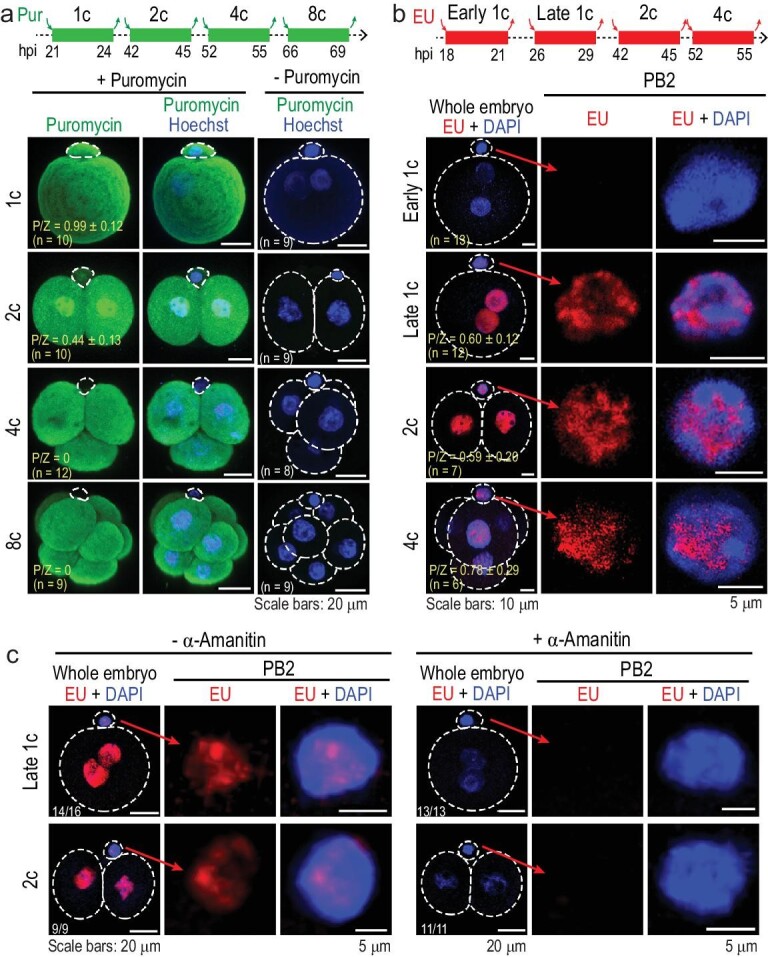
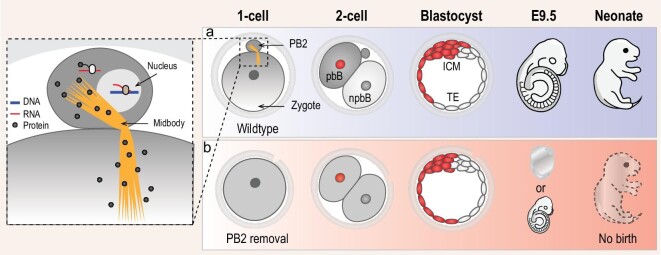
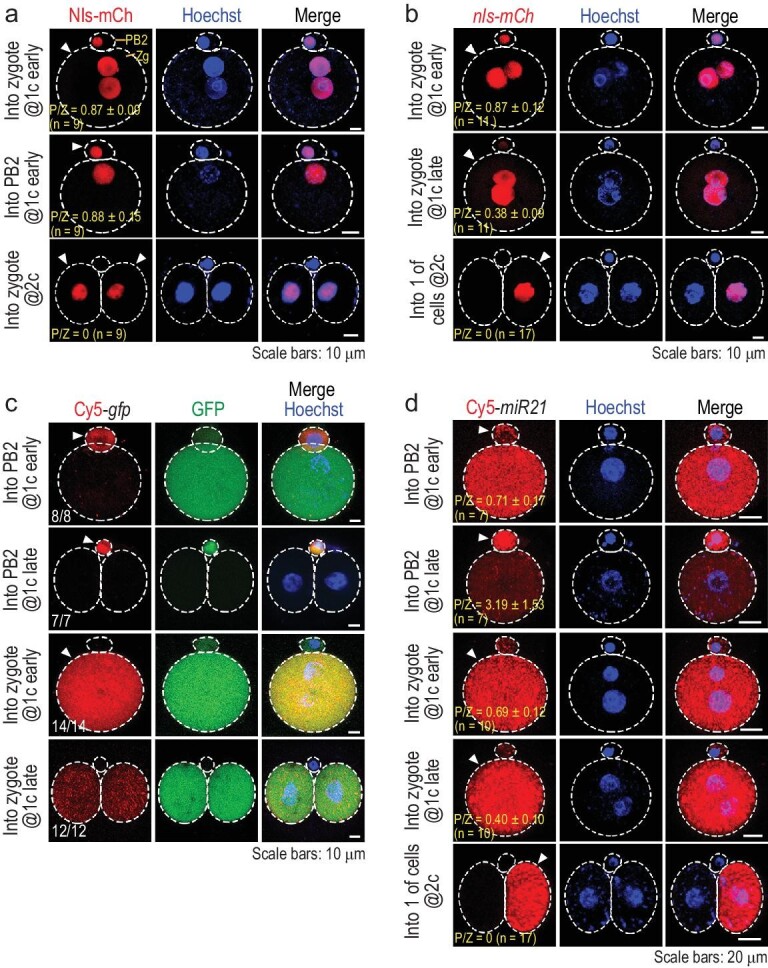
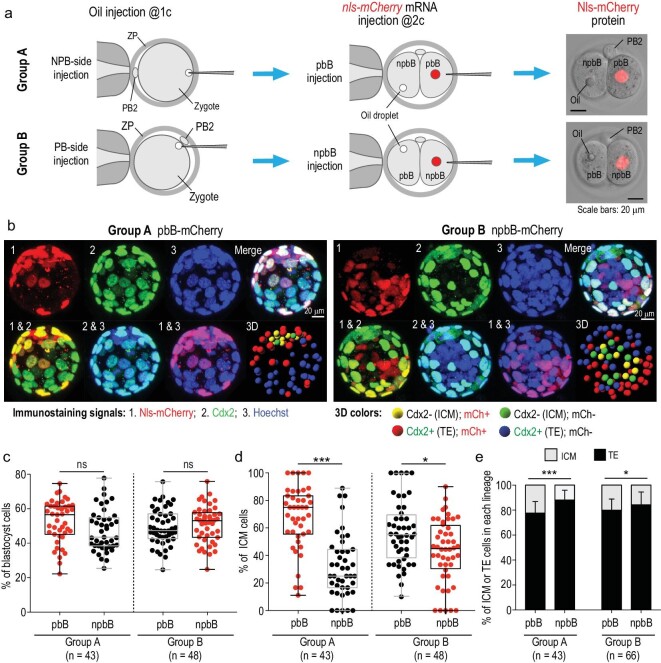
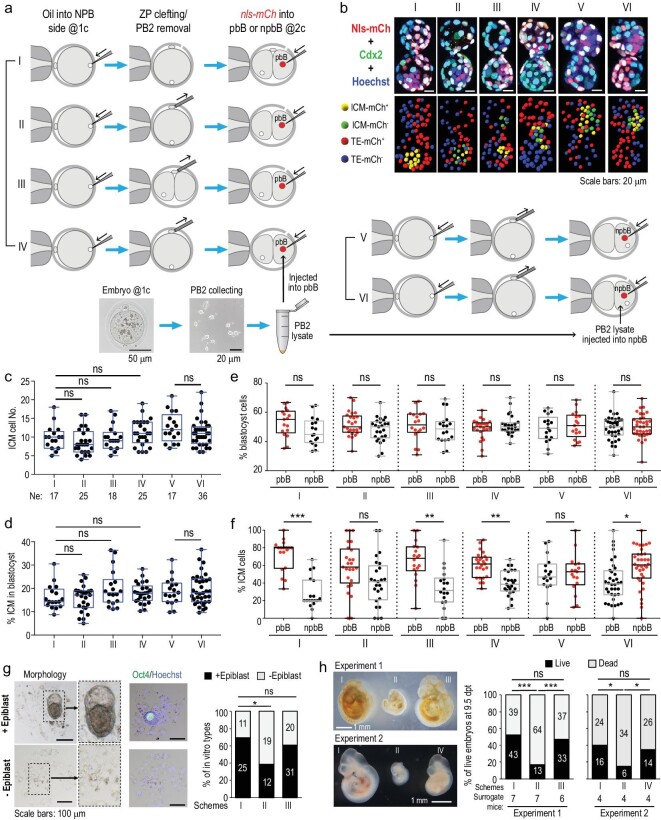
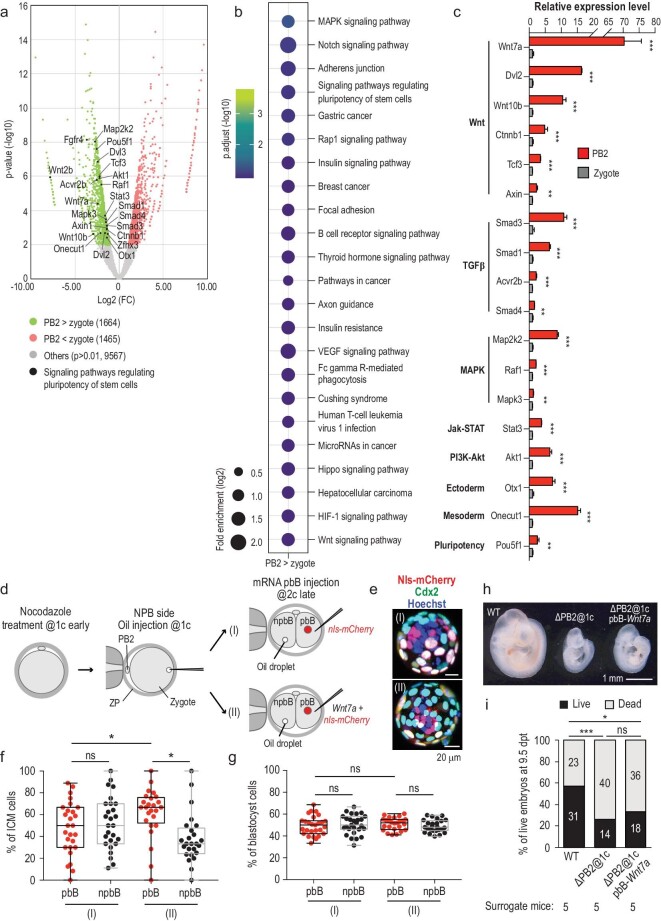
The polar bodies (PBs) are extruded microcells during oocyte meiosis and generally regarded as inessentials for embryonic development. Therefore, PBs have been widely used as important materials for pre-implantation genetic diagnosis in human. Here we report that the second PB (PB2) in the mouse zygote may play roles in cell-fate specification and post-implantation development. A subset of mRNAs encoding pluripotency-related factors are enriched in PB2. Nascent proteins may be synthesized in PB2 after fertilization and transport from PB2 to the zygote before the two-cell stage. The PB2-attached blastomere (pbB) at the two-cell stage, compared to the other blastomere (npbB), likely contributes more descendants to the inner cell mass (ICM) lineage in the blastocyst. Removal of PB2 from the zygote or transient blockage of material exchange between PB2 and the zygote by nocodazole treatment appears to cause a loss of the ICM fate bias of pbB. PB2 removal or nocodazole treatment also results in abnormal post-implantation development. Injection of PB2 lysate into pbB of PB2-removed two-cell-stage embryos may reset the cell-fate preference and rescue post-implantation development. Our data collectively suggest that PB2 would demarcate the earliest cell-fate asymmetry of the mouse zygote and be required for post-implantation development.
极体(PBs)是卵母细胞减数分裂过程中排出的微小细胞,通常被认为对胚胎发育无关紧要。因此,极体已被广泛用作人类植入前基因诊断的重要材料。在此我们报告,小鼠受精卵中的第二极体(PB2)可能在细胞命运决定和植入后发育中发挥作用。一组编码多能性相关因子的mRNA在PB2中富集。受精后,新生蛋白质可能在PB中合成,并在二细胞阶段之前从PB2转运到受精卵中。与另一个卵裂球(npbB)相比,二细胞阶段附着PB2的卵裂球(pbB)可能对囊胚中的内细胞团(ICM)谱系贡献更多的后代。从受精卵中去除PB2或通过诺考达唑处理暂时阻断PB2与受精卵之间的物质交换,似乎会导致pbB的ICM命运偏向性丧失。去除PB2或诺考达唑处理也会导致植入后发育异常。将PB2裂解物注射到去除PB2的二细胞期胚胎的pbB中,可能会重置细胞命运偏好并挽救植入后发育。我们的数据共同表明,PB2将界定小鼠受精卵最早的细胞命运不对称性,并且是植入后发育所必需的。