Department of Sciences and Innovative Technology, Università del Piemonte Orientale, Viale T. Michel 11, 15121, Alessandria, Italy.
Department of Sciences and Innovative Technology, Università del Piemonte Orientale, Piazza San Eusebio 5, 13100, Vercelli, Italy.
Aging Clin Exp Res. 2022 Oct;34(10):2345-2353. doi: 10.1007/s40520-022-02201-0. Epub 2022 Aug 3.
NETosis is a neutrophil-mediated defense mechanism during which DNA and enzymes are extruded forming a network (NETs) trapping and killing different pathogens. NETosis is reduced in both mice and humans during aging.
We explored the difference in the efficacy of NETs released in elderly (> 65 years) versus adults (20-50 years) subjects in inhibiting Staphylococcus aureus growth and activating the growth of keratinocytes.
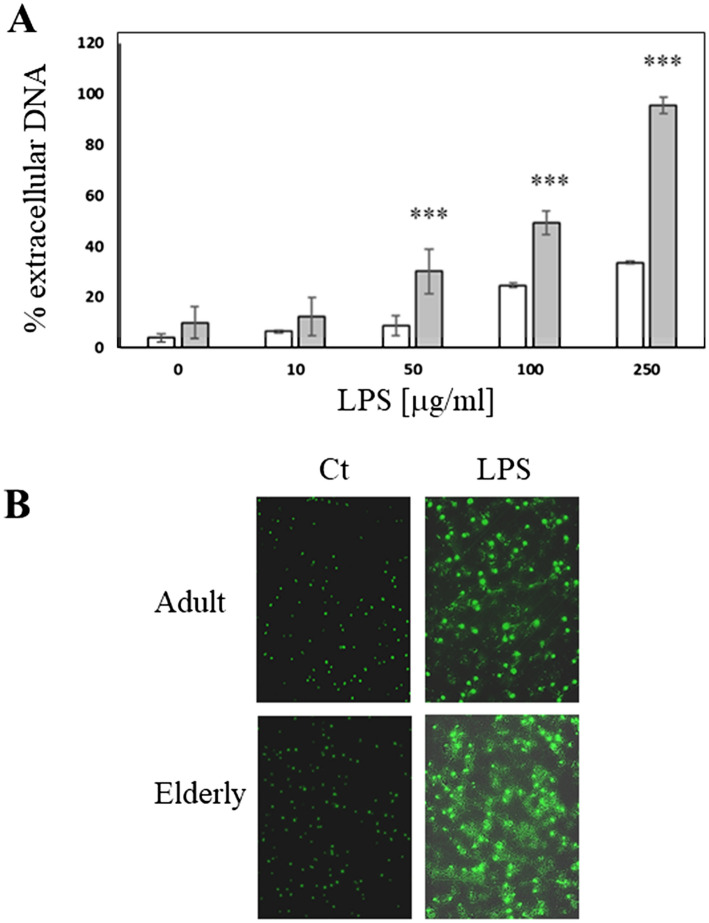
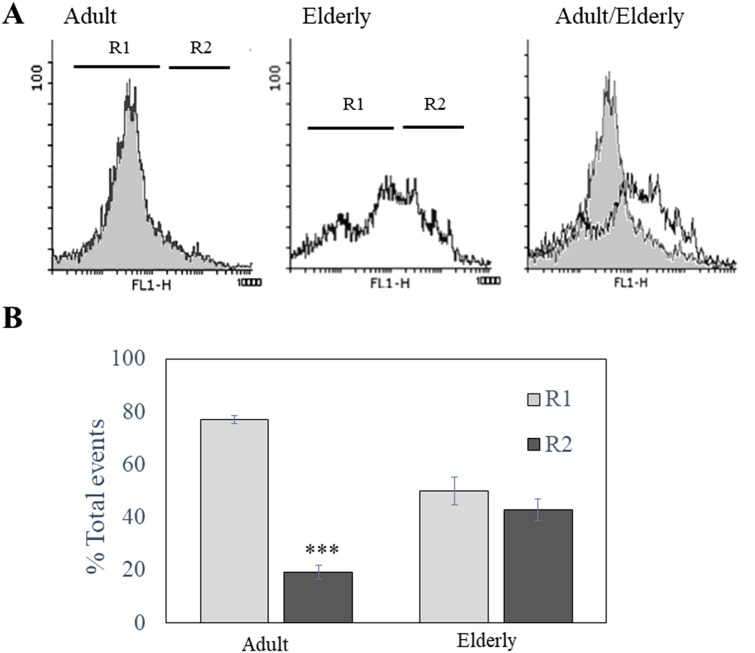
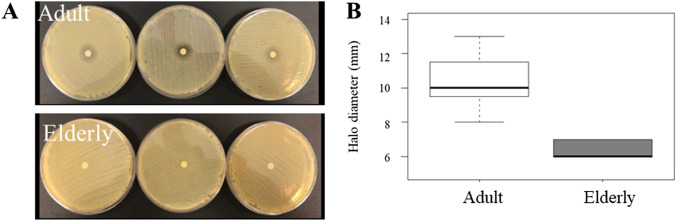
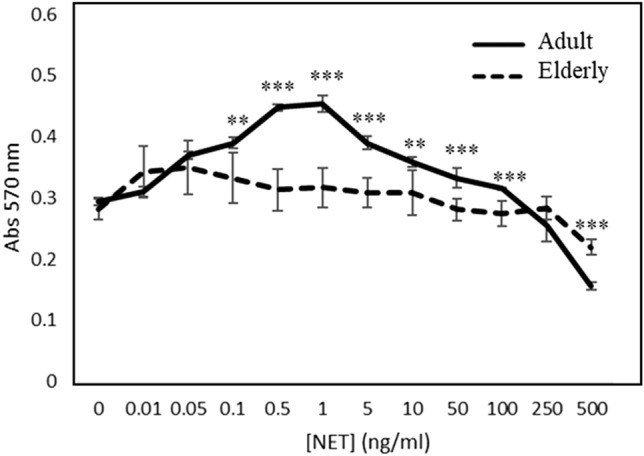
Neutrophil granulocytes, obtained from venous blood both in healthy elderly and adult subjects, were stimulated by LPS (0-250 µg/ml) to induce the formation of NET. NETs were quantified by SYBR Green staining and growth inhibition of S. aureus was evaluated by disk diffusion test. Furthermore, NETs (0-500 ng/ml) were added to immortalized human keratinocytes (HaCaT cells), and their proliferation was evaluated by MTT assay after 24 h. Finally, the DNA size of NETs was evaluated by flow cytometry after SYBR Green staining.
Greater production of NETs was observed in elderly subjects than in adults, but these NETs showed reduced bactericidal capacity and HaCaT cells' proliferation stimulation. The activities of the NETs are related to the size of the extruded DNA threads, and when NETs size was analyzed, DNA from elderly showed a higher size compared to that obtained by adults.
Unexpected results showed aging-related NETs structural modification resulting in both a lower antimicrobial activity and keratinocyte proliferation stimulation compared to NETs obtained from adults.
The NETs DNA size observed in elderly subjects has not been previously reported and could be part of other pathogenic mechanisms observed in aging.
NETosis 是一种中性粒细胞介导的防御机制,在此过程中 DNA 和酶被挤出形成网络(NETs),捕获并杀死不同的病原体。在衰老过程中,小鼠和人类的 NETosis 都会减少。
我们探讨了老年(>65 岁)和成年(20-50 岁)受试者释放的 NETs 在抑制金黄色葡萄球菌生长和激活角质形成细胞生长方面的功效差异。
从健康的老年和成年受试者的静脉血中获得中性粒细胞粒细胞,用 LPS(0-250μg/ml)刺激它们形成 NET。通过 SYBR Green 染色定量 NETs,通过圆盘扩散试验评估金黄色葡萄球菌生长抑制。此外,将 NETs(0-500ng/ml)添加到永生化的人角质形成细胞(HaCaT 细胞)中,通过 MTT 测定法在 24 小时后评估其增殖。最后,通过 SYBR Green 染色后通过流式细胞术评估 NETs 的 DNA 大小。
与成年人相比,老年受试者产生的 NETs 更多,但这些 NETs 的杀菌能力和 HaCaT 细胞增殖刺激作用降低。NETs 的活性与挤出的 DNA 线的大小有关,当分析 NETs 的大小时,与成年人获得的相比,老年人的 DNA 显示出更高的大小。
出乎意料的结果表明,衰老相关的 NETs 结构修饰导致其抗菌活性和角质形成细胞增殖刺激作用均低于成年人获得的 NETs。
在老年受试者中观察到的 NETs DNA 大小以前尚未报道过,可能是衰老过程中观察到的其他致病机制的一部分。