Xia Dong, Quan Wenxiang, Wu Tongning
China Academy of Information and Communications Technology, Beijing, China.
Peking University Sixth Hospital, Peking University Institute of Mental Health, NHC Key Laboratory of Mental Health (Peking University), National Clinical Research Center for Mental Disorders (Peking University Sixth Hospital), Beijing, China.
Front Psychiatry. 2022 Jul 18;13:939411. doi: 10.3389/fpsyt.2022.939411. eCollection 2022.
We aimed to reduce the complexity of the 52-channel functional near-infrared spectroscopy (fNIRS) system to facilitate its usage in discriminating schizophrenia during a verbal fluency task (VFT).
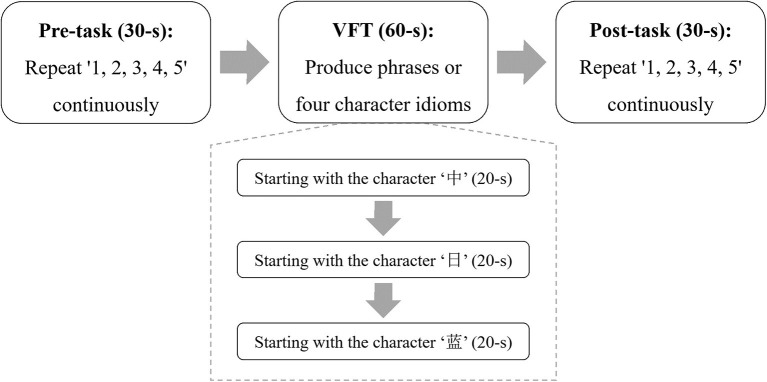
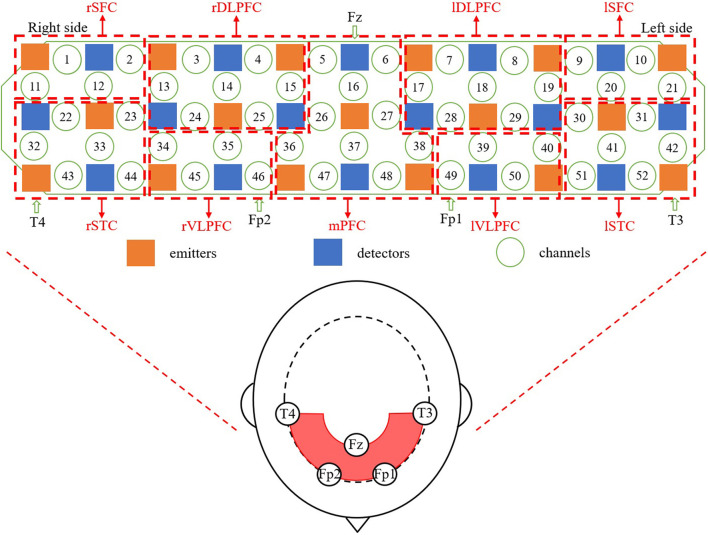
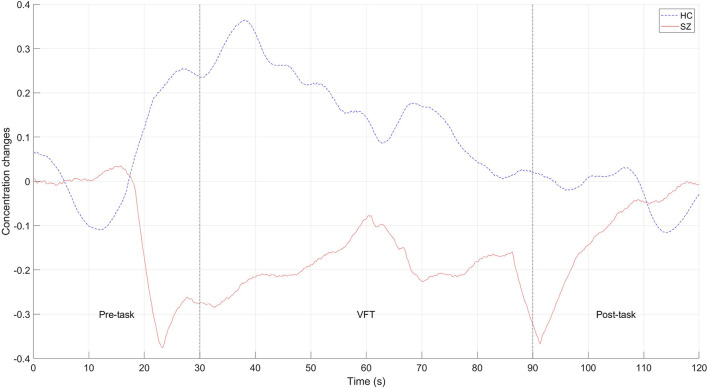
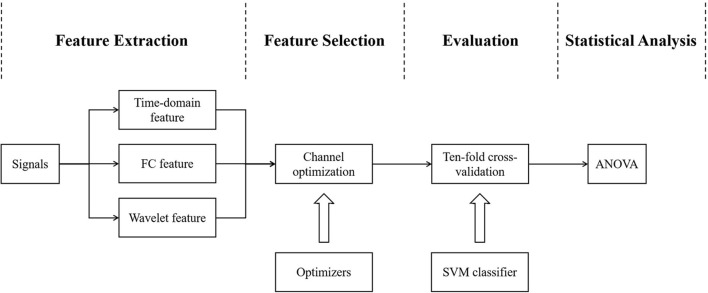
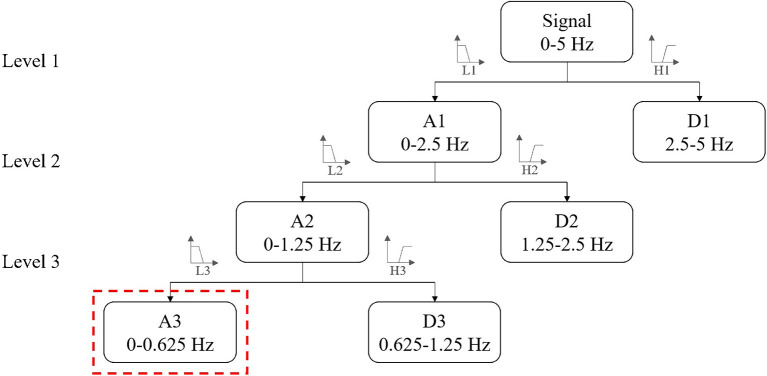
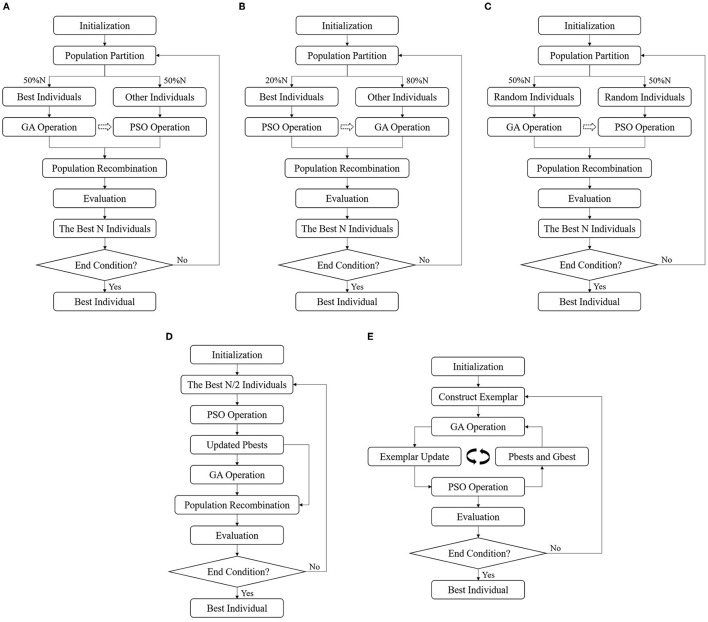
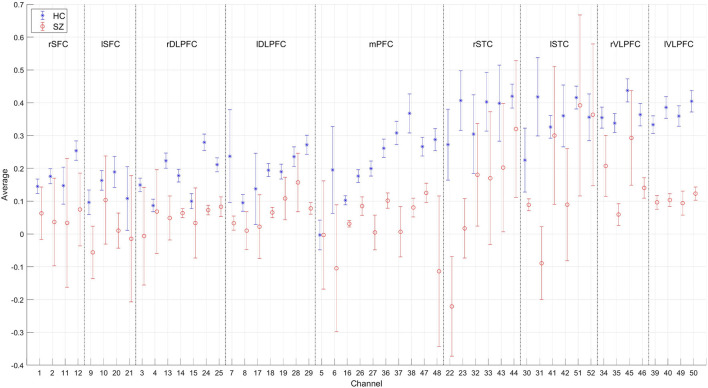
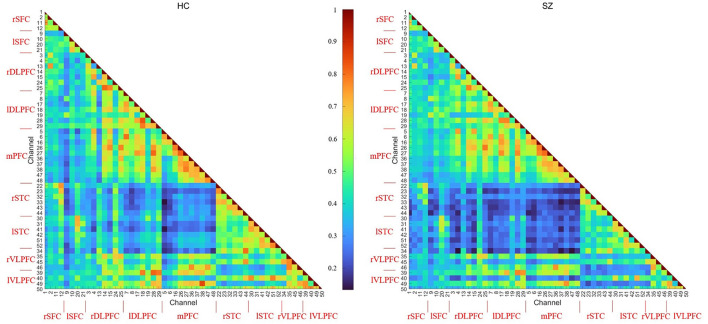
Oxygenated hemoglobin signals obtained using 52-channel fNIRS from 100 patients with schizophrenia and 100 healthy controls during a VFT were collected and processed. Three features frequently used in the analysis of fNIRS signals, namely time average, functional connectivity, and wavelet, were extracted and optimized using various metaheuristic operators, i.e., genetic algorithm (GA), particle swarm optimization (PSO), and their parallel and serial hybrid algorithms. Support vector machine (SVM) was used as the classifier, and the performance was evaluated by ten-fold cross-validation.
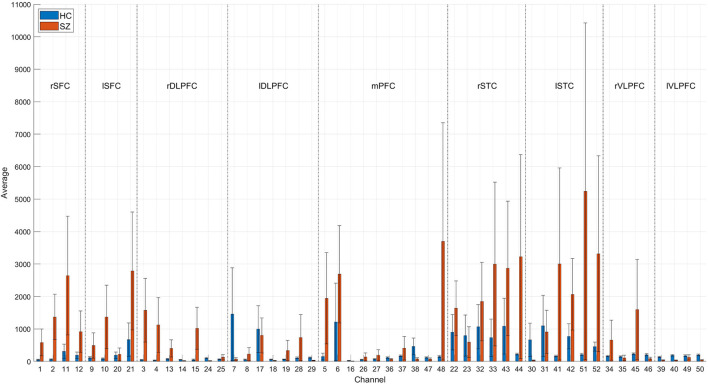
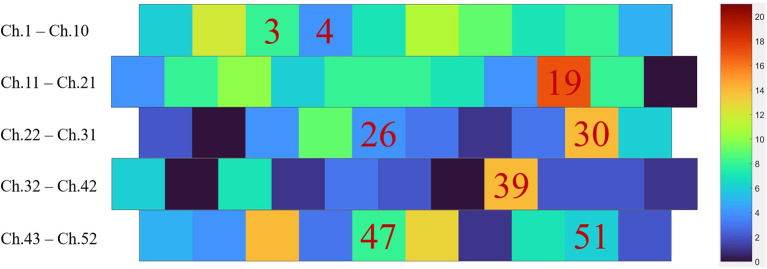
GA and GA-dominant algorithms achieved higher accuracy compared to PSO and PSO-dominant algorithms. An optimal accuracy of 87.00% using 16 channels was obtained by GA and wavelet analysis. A parallel hybrid algorithm (the best 50% individuals assigned to GA) achieved an accuracy of 86.50% with 8 channels on the time-domain feature, comparable to the reported accuracy obtained using 52 channels.
The fNIRS system can be greatly simplified while retaining accuracy comparable to that of the 52-channel system, thus promoting its applications in the diagnosis of schizophrenia in low-resource environments. Evolutionary algorithm-dominant optimization of time-domain features is promising in this regard.
我们旨在降低52通道功能近红外光谱(fNIRS)系统的复杂性,以促进其在言语流畅性任务(VFT)期间用于鉴别精神分裂症。
收集并处理了100例精神分裂症患者和100名健康对照在VFT期间使用52通道fNIRS获得的氧合血红蛋白信号。使用各种元启发式算子,即遗传算法(GA)、粒子群优化(PSO)及其并行和串行混合算法,提取并优化了fNIRS信号分析中常用的三个特征,即时平均、功能连接性和小波。使用支持向量机(SVM)作为分类器,并通过十折交叉验证评估性能。
与PSO及其主导算法相比,GA和以GA为主导的算法实现了更高的准确率。通过GA和小波分析,使用16个通道获得了87.00%的最佳准确率。一种并行混合算法(将最佳的50%个体分配给GA)在时域特征上使用8个通道时实现了86.50%的准确率,与使用52个通道获得的报道准确率相当。
fNIRS系统可以在很大程度上简化,同时保持与52通道系统相当的准确性,从而促进其在资源匮乏环境中精神分裂症诊断中的应用。在这方面,时域特征的进化算法主导优化很有前景。