Mshweshwe-Pakela Nolundi T, Mabuto Tonderai, Shankland Luke, Fischer Alex, Tsukudu Dikeledi, Hoffmann Christopher J
Department of Implementation Research, The Aurum Institute, Johannesburg, South Africa.
School of Public Health, University of the Witwatersrand Johannesburg, South Africa.
South Afr J HIV Med. 2022 Jun 13;23(1):1352. doi: 10.4102/sajhivmed.v23i1.1352. eCollection 2022.
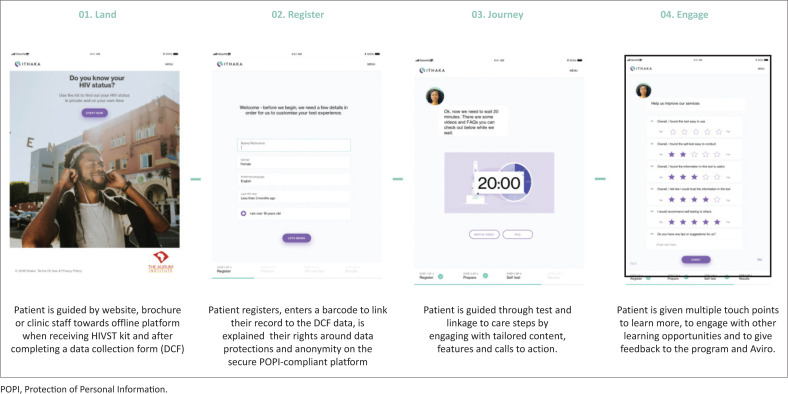
HIV testing is the first step for linkage to HIV prevention or treatment services. Facility-based HIV testing is the most utilised method, but faces challenges such as limited work space and human resources. Digitally supported HIV self-testing (HIVST) provided in clinics shifts testing to the client, potentially empowering the client, and addresses such constraints.
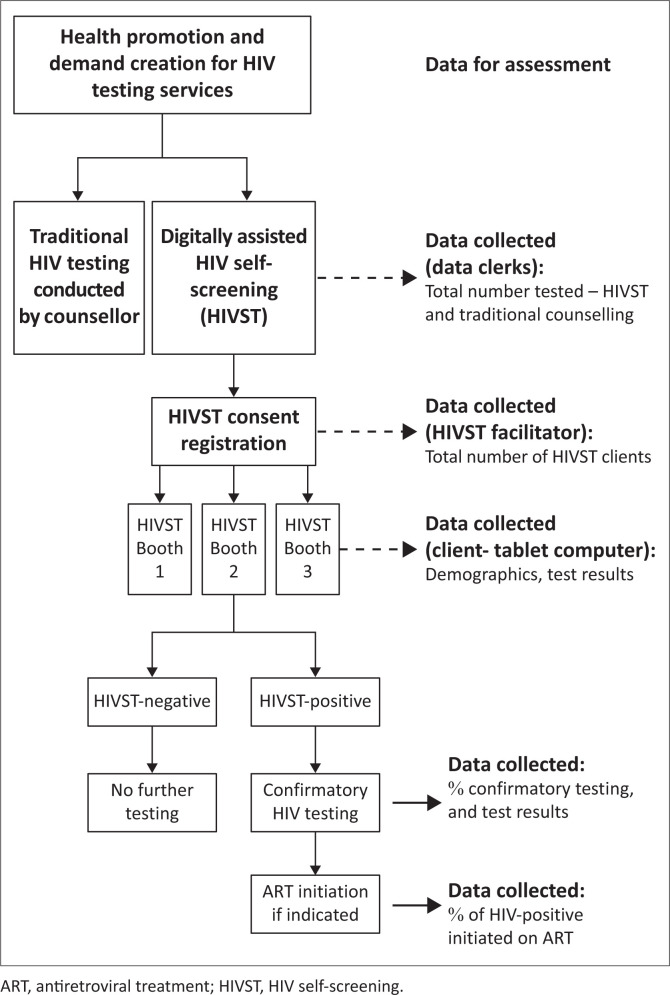
The study primary objective was to determine the feasibility of integrating digitally supported HIVST into the clinic. Secondary objectives were to describe HIV testing volume, populations reached, and antiretroviral treatment (ART) initiation.
We conducted an analysis of prospectively collected data during implementation of digitally supported HIVST in two healthcare facilities based in South Africa from June 2019 to September 2019. We described implementation and client characteristics using HIVST and compared testing before and during implementation.
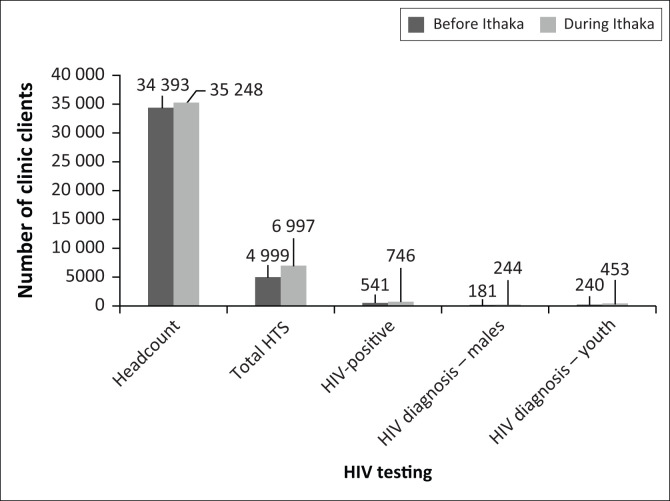
During the 4-month implementation period there were 35 248 client visits. A total of 6997 (19.9%) of these visits involved HIV testing. Of those testing, 2278 (32.5%) used HIVST. Of the 2267 analysed, 264 (11.6%) were positive: 182 (12%) women and 82 (11%) men. Of those, 230 (95.4%) were confirmed HIV positive and 150 (65%) initiated ART within 14 days. During a four-month pre-implementation period, 14.5% of the clients tested for HIV. Compared to the pre-implementation period, we observed a 25% increase in HIV testing.
Digitally supported HIVST increased the number of clients completing HIV testing in the health facility, without a need to significantly increase staff or space. Facility-based digitally assisted HIVST has the potential to increase HIV testing in high HIV prevalence clinic populations.
艾滋病毒检测是与艾滋病毒预防或治疗服务建立联系的第一步。基于机构的艾滋病毒检测是最常用的方法,但面临着工作空间和人力资源有限等挑战。诊所提供的数字支持的艾滋病毒自我检测(HIVST)将检测工作转移到客户身上,有可能增强客户的能力,并解决此类限制。
该研究的主要目的是确定将数字支持的HIVST整合到诊所的可行性。次要目的是描述艾滋病毒检测量、覆盖人群以及抗逆转录病毒治疗(ART)的启动情况。
我们对2019年6月至2019年9月在南非两家医疗机构实施数字支持的HIVST期间前瞻性收集的数据进行了分析。我们使用HIVST描述了实施情况和客户特征,并比较了实施前和实施期间的检测情况。
在4个月的实施期内,有35248人次客户就诊。其中共有6997人次(19.9%)进行了艾滋病毒检测。在这些检测者中,2278人(32.5%)使用了HIVST。在分析的2267人中,264人(11.6%)呈阳性:182名女性(12%)和82名男性(11%)。其中,230人(95.4%)被确诊为艾滋病毒阳性,150人(65%)在14天内开始接受抗逆转录病毒治疗。在实施前的四个月期间,14.5%的客户进行了艾滋病毒检测。与实施前相比,我们观察到艾滋病毒检测增加了25%。
数字支持的HIVST增加了在医疗机构完成艾滋病毒检测的客户数量,而无需大幅增加工作人员或空间。基于机构的数字辅助HIVST有可能增加艾滋病毒高流行诊所人群的艾滋病毒检测。