• 文献检索
  • 文档翻译
  • 深度研究
  • 学术资讯
  • Suppr Zotero 插件Zotero 插件
  • 邀请有礼
  • 套餐&价格
  • 历史记录
应用&插件
Suppr Zotero 插件Zotero 插件浏览器插件Mac 客户端Windows 客户端微信小程序
定价
高级版会员购买积分包购买API积分包
服务
文献检索文档翻译深度研究API 文档MCP 服务
关于我们
关于 Suppr公司介绍联系我们用户协议隐私条款
关注我们

Suppr 超能文献

核心技术专利:CN118964589B侵权必究
粤ICP备2023148730 号-1Suppr @ 2026

文献检索

告别复杂PubMed语法,用中文像聊天一样搜索,搜遍4000万医学文献。AI智能推荐,让科研检索更轻松。

立即免费搜索

文件翻译

保留排版,准确专业,支持PDF/Word/PPT等文件格式,支持 12+语言互译。

免费翻译文档

深度研究

AI帮你快速写综述,25分钟生成高质量综述,智能提取关键信息,辅助科研写作。

立即免费体验

美国国家职业安全与健康研究所(NIOSH)声级计智能设备应用程序在采矿作业中的潜在用途。

The potential use of a NIOSH sound level meter smart device application in mining operations.

作者信息

Sun Kan, Kardous Chucri A, Shaw Peter B, Kim Brian, Mechling Jessie, Azman Amanda S

机构信息

Pittsburgh Mining Research Division, NIOSH, Pittsburgh.

Division of Applied Research and Technology, NIOSH, Cincinnati, OH, USA.

出版信息

Noise Control Eng J. 2019 Jan 1;67(1):23-30. doi: 10.3397/1/37673.

DOI:10.3397/1/37673
PMID:35923643
原文链接:https://pmc.ncbi.nlm.nih.gov/articles/PMC9345572/
Abstract

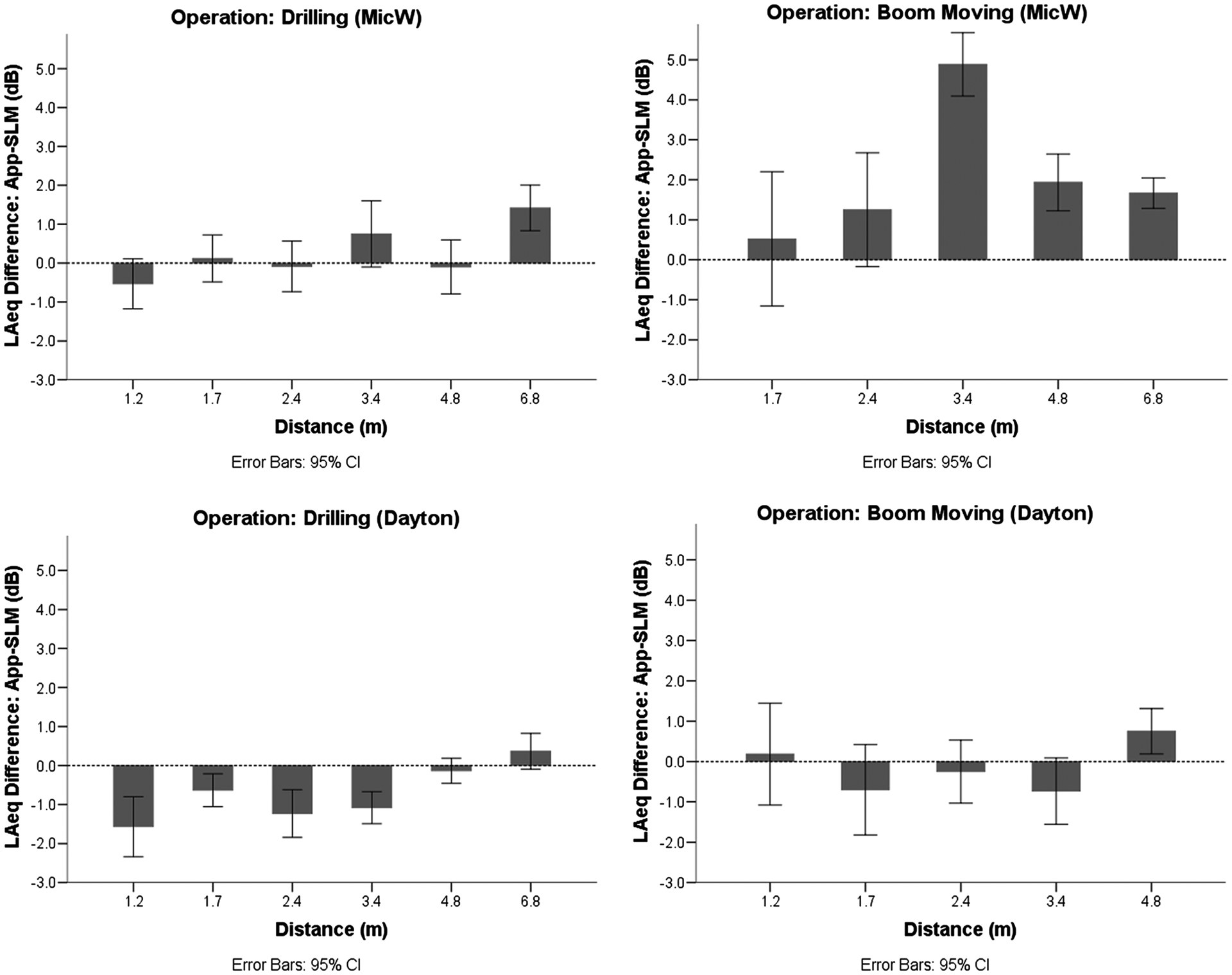
Many mobile sound measurement applications (apps) have been developed to take advantage of the built-in or fit-in sensors of the smartphone. One of the concerns is the accuracy of these apps when compared to professional sound measurement instruments. Previously, a research team from the National Institute for Occupational Safety and Health (NIOSH) developed the NIOSH Sound Level Meter (SLM) app for iOS smart devices. The team found the average accuracy of this app to be within ±1 dBA when using calibrated external microphones with a type 1 reference device and measuring pink noise at levels from 65 to 95 dBA in 5-dBA increments. The studies were conducted in a reverberant noise chamber at the NIOSH Acoustics Laboratory in Cincinnati. However, it is still unknown how this app performs in measuring industrial/mining sound levels outside of a controlled laboratory environment. The current NIOSH study evaluates the NIOSH SLM app to measure sound levels from a jumbo drill (a large mining machine). The study was conducted in a hemi-anechoic chamber at the NIOSH Pittsburgh Mining Research Division and followed by a field evaluation in an underground metal mine. Six different iOS smart devices were used with two types of external microphones chosen from previous studies to measure sound levels during jumbo drill operations, and the results were compared with a reference device. Results show that the average sound levels measured by the NIOSH SLM app are within ±1 dBA of the reference device both in the laboratory and field. However, the type of operation being performed, the selection and use of external microphones, distance from a noise source, and environmental factors (e.g., air movement) may all influence the accuracy of the app's performance. Although additional validation is still needed, the results from this study suggest a potential for using the NIOSH SLM app, with calibrated external microphones, to measure sound levels in mining operations.

摘要

许多移动声音测量应用程序(应用)已被开发出来,以利用智能手机的内置或适配传感器。其中一个担忧是,与专业声音测量仪器相比,这些应用的准确性如何。此前,美国国家职业安全与健康研究所(NIOSH)的一个研究团队为iOS智能设备开发了NIOSH声级计(SLM)应用。该团队发现,当使用经过校准的外部麦克风和1型参考设备,并在65至95 dBA的范围内以5 dBA的增量测量粉红噪声时,该应用的平均准确度在±1 dBA以内。这些研究是在辛辛那提的NIOSH声学实验室的混响噪声室中进行的。然而,该应用在受控实验室环境之外测量工业/采矿声级时的表现仍不清楚。当前的NIOSH研究评估了NIOSH SLM应用在测量大型钻机(一种大型采矿机器)声级方面的性能。该研究在NIOSH匹兹堡采矿研究部的半消声室中进行,随后在一个地下金属矿中进行了现场评估。使用了六种不同的iOS智能设备,搭配从之前研究中挑选出的两种外部麦克风,在大型钻机作业期间测量声级,并将结果与参考设备进行比较。结果表明,无论是在实验室还是现场,NIOSH SLM应用测量的平均声级都在参考设备的±1 dBA以内。然而,正在执行的操作类型、外部麦克风的选择和使用、与噪声源的距离以及环境因素(如空气流动)都可能影响该应用性能的准确性。尽管仍需要进一步验证,但这项研究的结果表明,使用配备经过校准的外部麦克风的NIOSH SLM应用来测量采矿作业中的声级具有潜力。
https://cdn.ncbi.nlm.nih.gov/pmc/blobs/da69/9345572/e5c1c266d80b/nihms-1790306-f0002.jpg
https://cdn.ncbi.nlm.nih.gov/pmc/blobs/da69/9345572/a4cf22968b94/nihms-1790306-f0001.jpg
https://cdn.ncbi.nlm.nih.gov/pmc/blobs/da69/9345572/e5c1c266d80b/nihms-1790306-f0002.jpg
https://cdn.ncbi.nlm.nih.gov/pmc/blobs/da69/9345572/a4cf22968b94/nihms-1790306-f0001.jpg
https://cdn.ncbi.nlm.nih.gov/pmc/blobs/da69/9345572/e5c1c266d80b/nihms-1790306-f0002.jpg

相似文献

1
The potential use of a NIOSH sound level meter smart device application in mining operations.美国国家职业安全与健康研究所(NIOSH)声级计智能设备应用程序在采矿作业中的潜在用途。
Noise Control Eng J. 2019 Jan 1;67(1):23-30. doi: 10.3397/1/37673.
2
Assessing the Usefulness of Mobile Apps for Noise Management in Occupational Health and Safety: Quantitative Measurement and Expert Elicitation Study.评估移动应用程序在职业健康与安全噪声管理中的实用性:定量测量和专家启发研究。
JMIR Mhealth Uhealth. 2023 Nov 14;11:e46846. doi: 10.2196/46846.
3
The Accuracy of Smartphone Sound Level Meter Applications (SLMAs) in Measuring Sound Levels in Clinical Rooms.智能手机声级计应用程序(SLMAs)在临床环境中测量声级的准确性。
J Am Acad Audiol. 2021 Jan;32(1):27-34. doi: 10.1055/s-0040-1719137. Epub 2021 Jan 14.
4
Evaluation of mobile smartphones app as a screening tool for environmental noise monitoring.评估移动智能手机应用程序作为环境噪声监测筛查工具的效果。
J Occup Environ Hyg. 2016;13(2):D31-6. doi: 10.1080/15459624.2015.1093134.
5
Smartphone applications for measuring noise in the intensive care unit: A feasibility study.用于测量重症监护病房噪音的智能手机应用程序:一项可行性研究。
J Crit Care. 2024 Feb;79:154435. doi: 10.1016/j.jcrc.2023.154435. Epub 2023 Sep 25.
6
Improving the accuracy of smart devices to measure noise exposure.提高智能设备测量噪声暴露的准确性。
J Occup Environ Hyg. 2016 Nov;13(11):840-6. doi: 10.1080/15459624.2016.1183014.
7
Evaluation of smartphone sound level meter applications as a reliable tool for noise monitoring.评估智能手机声级计应用程序作为可靠的噪声监测工具。
J Occup Environ Hyg. 2019 Sep;16(9):620-627. doi: 10.1080/15459624.2019.1639718. Epub 2019 Jul 29.
8
Hazardous sound outputs of white noise devices intended for infants.针对婴儿的白噪声设备的危险声音输出。
Int J Pediatr Otorhinolaryngol. 2021 Jul;146:110757. doi: 10.1016/j.ijporl.2021.110757. Epub 2021 May 11.
9
The Accuracy of Smartphone Sound Level Meter Applications With and Without Calibration.智能手机声级计在未经校准和校准情况下的准确性。
Am J Speech Lang Pathol. 2018 Nov 21;27(4):1319-1328. doi: 10.1044/2018_AJSLP-17-0171.
10
Alternative audiometric calibration methods: Evaluation of sound level measuring apps for audiometric calibration.替代听力校准方法:用于听力校准的声级测量应用程序评估
J Commun Disord. 2023 Sep-Oct;105:106351. doi: 10.1016/j.jcomdis.2023.106351. Epub 2023 Jul 13.

引用本文的文献

1
Innovative Technologies to Improve Occupational Safety in Mining and Construction Industries-Part I.改善采矿和建筑行业职业安全的创新技术——第一部分。
Sensors (Basel). 2025 Aug 21;25(16):5201. doi: 10.3390/s25165201.
2
Musician-Advantage on Listening Effort for Speech in Noise Perception: A Dual-Task Paradigm Measure.音乐家在噪声环境中言语感知的听力努力方面的优势:一种双任务范式测量
J Audiol Otol. 2023 Oct;27(4):227-234. doi: 10.7874/jao.2023.00038. Epub 2023 Aug 31.
3
Smartphone Apps in the Context of Tinnitus: Systematic Review.智能手机应用程序在耳鸣中的应用:系统评价。

本文引用的文献

1
Evaluation of smartphone sound measurement applications (apps) using external microphones-A follow-up study.使用外部麦克风对智能手机声音测量应用程序(应用)的评估——一项随访研究。
J Acoust Soc Am. 2016 Oct;140(4):EL327. doi: 10.1121/1.4964639.
2
Improving the accuracy of smart devices to measure noise exposure.提高智能设备测量噪声暴露的准确性。
J Occup Environ Hyg. 2016 Nov;13(11):840-6. doi: 10.1080/15459624.2016.1183014.
3
Trends in worker hearing loss by industry sector, 1981-2010.1981 - 2010年各行业部门工人听力损失趋势。
Sensors (Basel). 2020 Mar 19;20(6):1725. doi: 10.3390/s20061725.
Am J Ind Med. 2015 Apr;58(4):392-401. doi: 10.1002/ajim.22429. Epub 2015 Feb 17.
4
Evaluation of smartphone sound measurement applications.智能手机声音测量应用程序的评估。
J Acoust Soc Am. 2014 Apr;135(4):EL186-92. doi: 10.1121/1.4865269.
5
Prevalence of hearing loss in the United States by industry.美国各行业听力损失的流行率。
Am J Ind Med. 2013 Jun;56(6):670-81. doi: 10.1002/ajim.22082. Epub 2012 Jul 5.
6
Hearing difficulty attributable to employment by industry and occupation: an analysis of the National Health Interview Survey--United States, 1997 to 2003.按行业和职业划分的因就业导致的听力困难:对1997年至2003年美国国家健康访谈调查的分析
J Occup Environ Med. 2008 Jan;50(1):46-56. doi: 10.1097/JOM.0b013e3181579316.
7
Survey of noise in coal preparation plants.选煤厂噪声调查
J Acoust Soc Am. 2007 Jan;121(1):197-205. doi: 10.1121/1.2372587.
8
Health standards for occupational noise exposure. Mine Safety and Health Administration (MSHA), Labor. Final rule.职业噪声暴露健康标准。劳工部矿山安全与健康管理局(MSHA)。最终规则。
Fed Regist. 1999 Sep 13;64(176):49548-634.