Mattisson Jenny, Linnell John D C, Anders Ole, Belotti Elisa, Breitenmoser-Würsten Christine, Bufka Ludek, Fuxjäger Christian, Heurich Marco, Ivanov Gjorge, Jędrzejewski Włodzimierz, Kont Radio, Kowalczyk Rafał, Krofel Miha, Melovski Dime, Mengüllüoğlu Deniz, Middelhoff Tomma Lilli, Molinari-Jobin Anja, Odden John, Ozoliņš Jānis, Okarma Henryk, Persson Jens, Schmidt Krzysztof, Vogt Kristina, Zimmermann Fridolin, Andrén Henrik
Norwegian Institute for Nature Research Trondheim Norway.
Department of Forestry and Wildlife Management Inland Norway University of Applied Sciences Koppang Norway.
Ecol Evol. 2022 Jul 31;12(8):e9147. doi: 10.1002/ece3.9147. eCollection 2022 Aug.
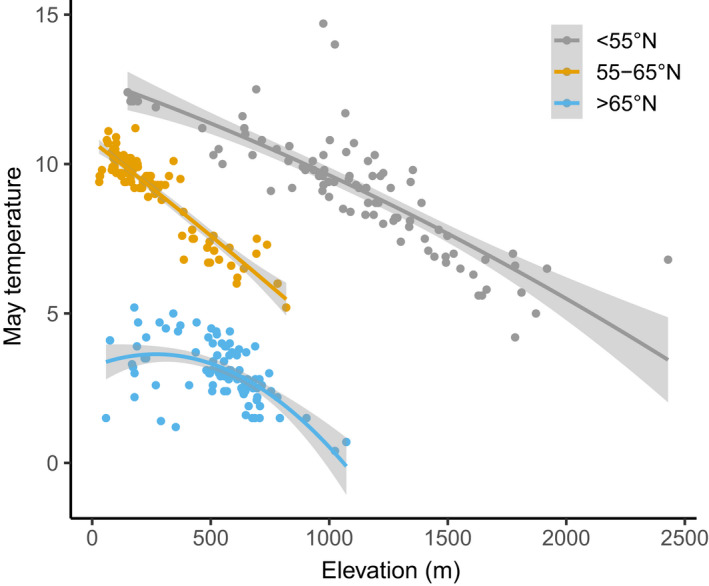
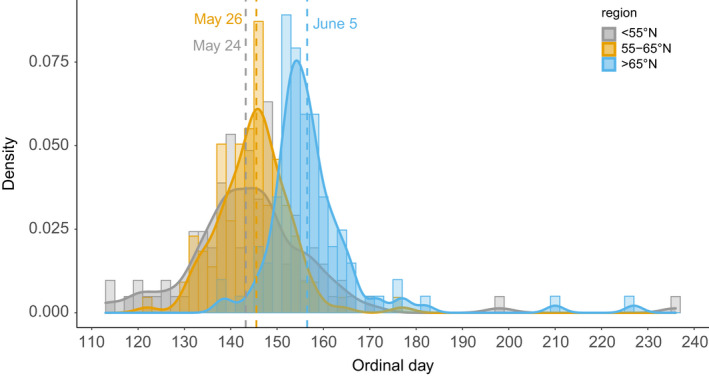
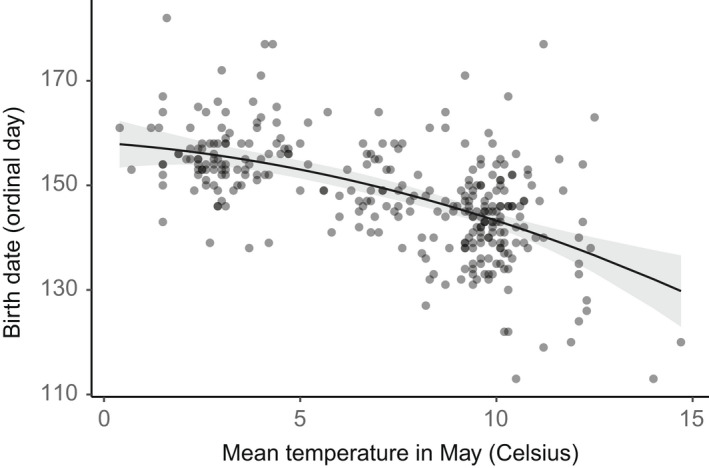
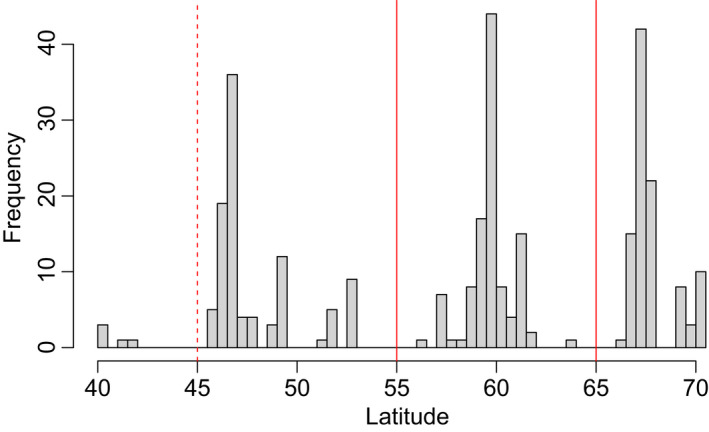
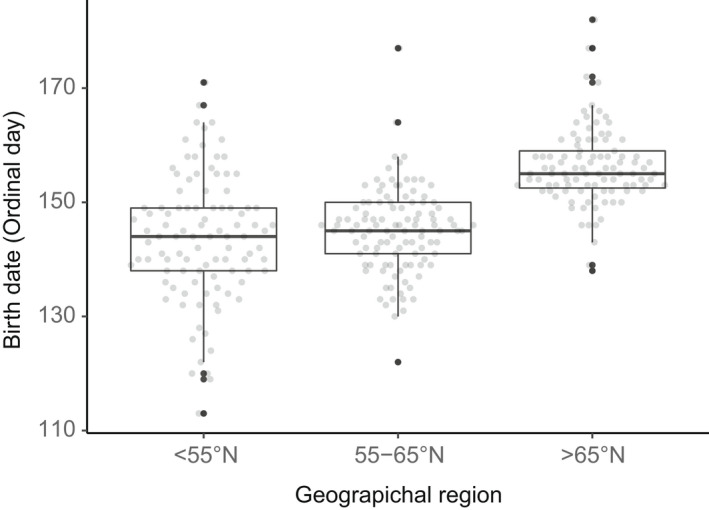
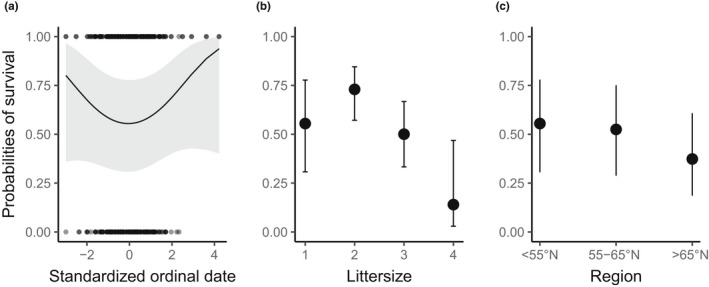
The ecology and evolution of reproductive timing and synchrony have been a topic of great interest in evolutionary ecology for decades. Originally motivated by questions related to behavioral and reproductive adaptation to environmental conditions, the topic has acquired new relevance in the face of climate change. However, there has been relatively little research on reproductive phenology in mammalian carnivores. The Eurasian lynx () occurs across the Eurasian continent, covering three of the four main climate regions of the world. Thus, their distribution includes a large variation in climatic conditions, making it an ideal species to explore reproductive phenology. Here, we used data on multiple reproductive events from 169 lynx females across Europe. Mean birth date was May 28 (April 23 to July 1), but was ~10 days later in northern Europe than in central and southern Europe. Birth dates were relatively synchronized across Europe, but more so in the north than in the south. Timing of birth was delayed by colder May temperatures. Severe and cold weather may affect neonatal survival via hypothermia and avoiding inclement weather early in the season may select against early births, especially at northern latitudes. Overall, only about half of the kittens born survived until onset of winter but whether kittens were born relatively late or early did not affect kitten survival. Lynx are strict seasonal breeders but still show a degree of flexibility to adapt the timing of birth to surrounding environmental conditions. We argue that lynx give birth later when exposed to colder spring temperatures and have more synchronized births when the window of favorable conditions for raising kittens is shorter. This suggests that lynx are well adapted to different environmental conditions, from dry and warm climates to alpine, boreal, and arctic climates. This variation in reproductive timing will be favorable in times of climate change, as organisms with high plasticity are more likely to adjust to new environmental conditions.
几十年来,繁殖时间和同步性的生态与进化一直是进化生态学中备受关注的话题。该话题最初源于与行为和繁殖对环境条件的适应相关的问题,在气候变化的背景下又有了新的意义。然而,关于哺乳动物食肉动物繁殖物候的研究相对较少。欧亚猞猁分布于欧亚大陆,涵盖了世界四大主要气候区域中的三个。因此,它们的分布包括了气候条件的巨大差异,使其成为探索繁殖物候的理想物种。在这里,我们使用了来自欧洲各地169只雌性猞猁的多次繁殖事件的数据。平均出生日期为5月28日(4月23日至7月1日),但在北欧比中欧和南欧晚约10天。整个欧洲的出生日期相对同步,但在北方比南方更同步。5月较冷的气温会推迟分娩时间。严寒天气可能通过体温过低影响新生幼崽的存活,而在季节早期避开恶劣天气可能会不利于早产,尤其是在高纬度地区。总体而言,出生的幼崽中只有约一半存活到冬季开始,但幼崽出生时间相对早晚并不影响其存活。猞猁是严格的季节性繁殖者,但仍表现出一定程度的灵活性,能使分娩时间适应周围环境条件。我们认为,当暴露于较冷的春季气温时,猞猁会推迟分娩,而当养育幼崽的有利条件窗口较短时,它们的分娩会更加同步。这表明猞猁能很好地适应从干燥温暖气候到高山、寒带和北极气候等不同的环境条件。在气候变化时期,这种繁殖时间的变化将是有利的,因为具有高可塑性的生物更有可能适应新的环境条件。