Department of Central Laboratory, The Affiliated Hospital of Jiangsu University, 438 Jiefang Road, Zhenjiang, 212001, China.
Department of Clinical Laboratory, The Affiliated Hospital of Jiangsu University, Zhenjiang, 212001, China.
Clin Rheumatol. 2022 Dec;41(12):3837-3849. doi: 10.1007/s10067-022-06315-8. Epub 2022 Aug 4.
Rheumatoid arthritis (RA) is a chronic inflammatory disease involving a variety of immune cells, including adaptive T and B cells and innate lymphoid cells (ILCs). Understanding the pathogenic role of these immune cells in RA provides new insights into the intervention and treatment of RA.
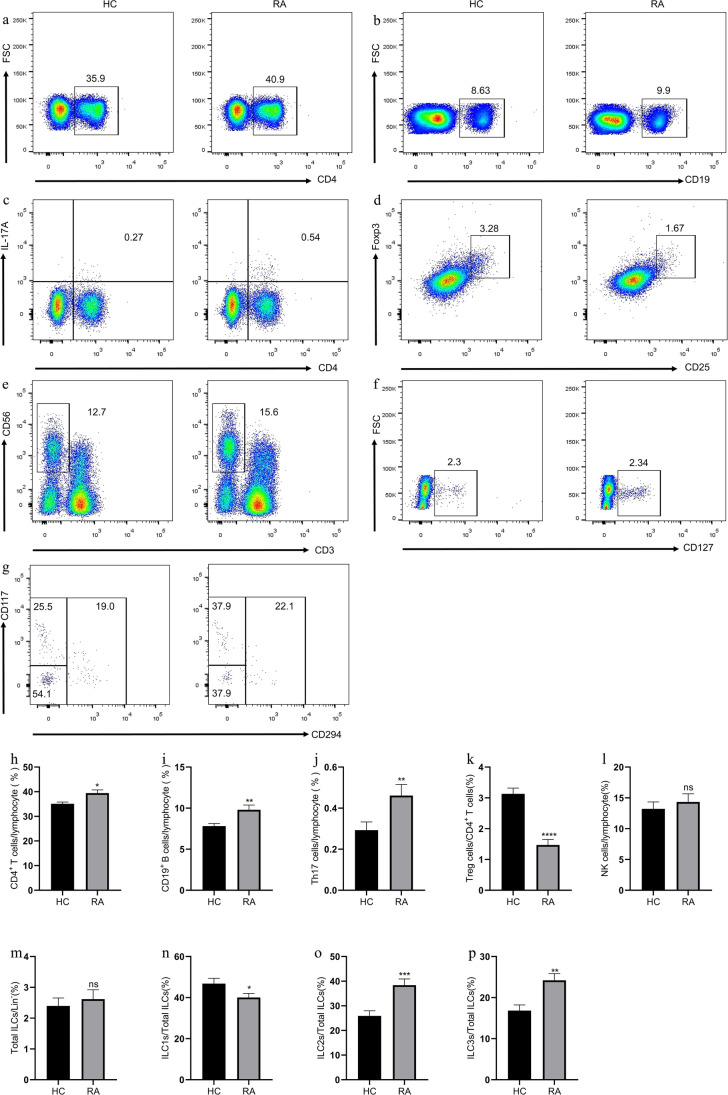
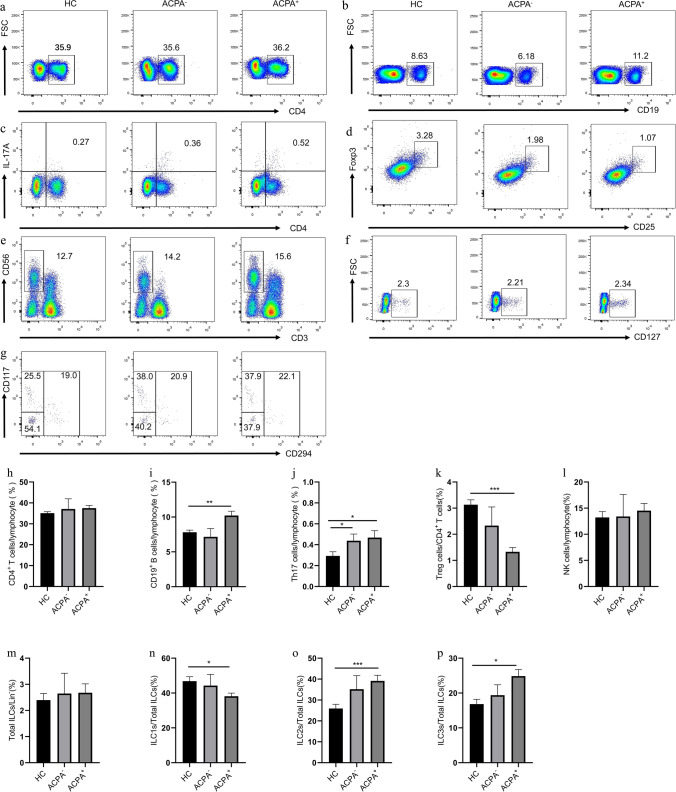
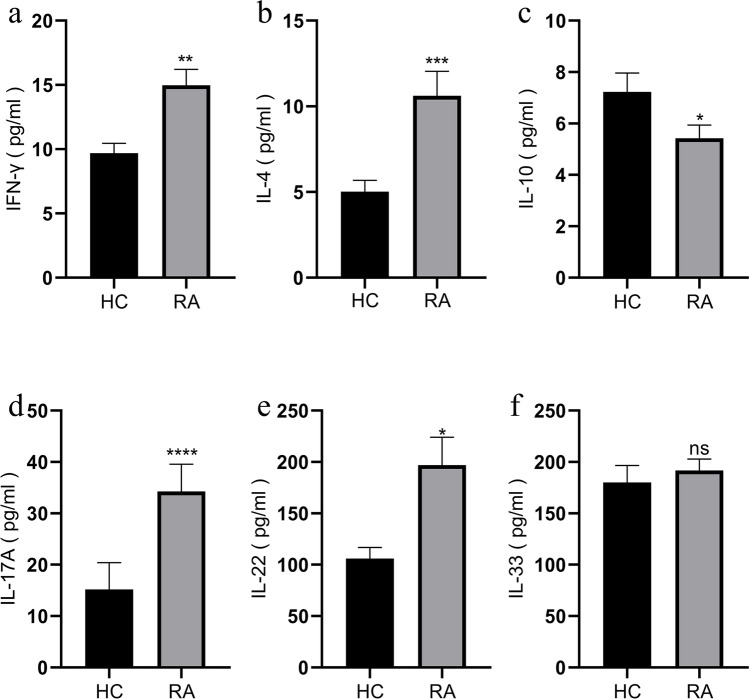
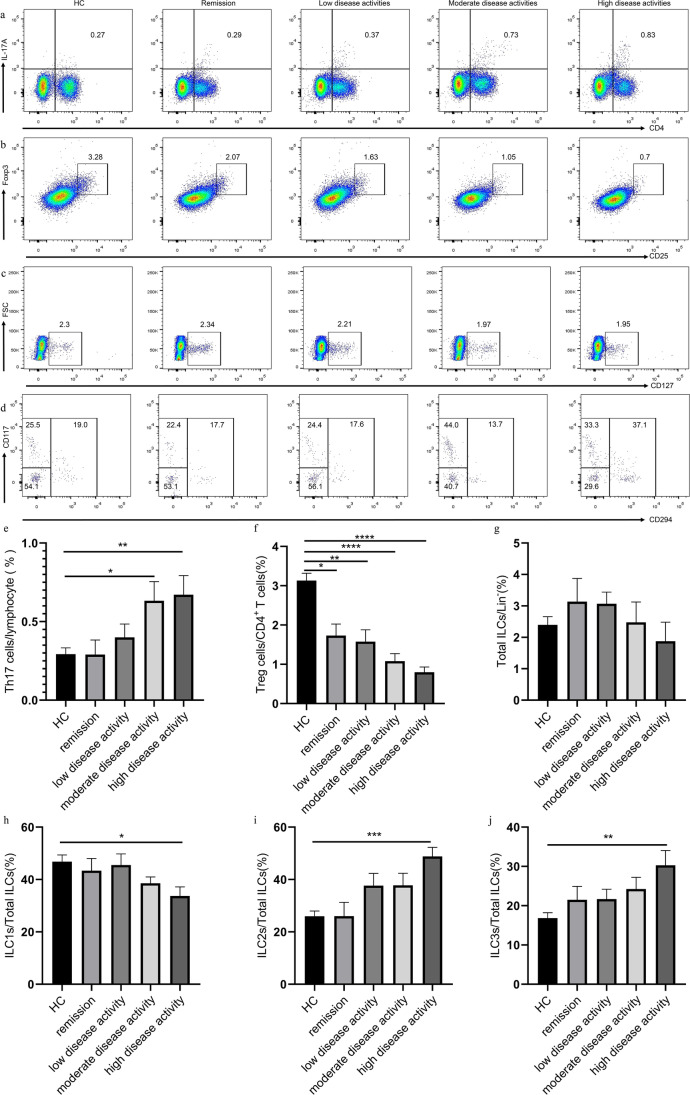
A total of 86 patients with RA (RA group) and 50 healthy controls (HC) were included in the study. The immune cells of CD4, CD19 B, NK, Th17, Treg, ILCs, and their subsets (i.e., ILC1s, ILC2s, and ILC3s) were characterized in peripheral blood mononuclear cells by flow cytometry. Cytokines (i.e., IFN-γ, IL-4, IL-10, IL-17A, IL-22, and IL-33) in sera were detected using ELISA. The above immune cells and cytokines were analyzed in patients with different disease activity status and positive ( +) or negative ( -) rheumatoid factor (RF)/anti-citrullinated protein antibodies (ACPA).
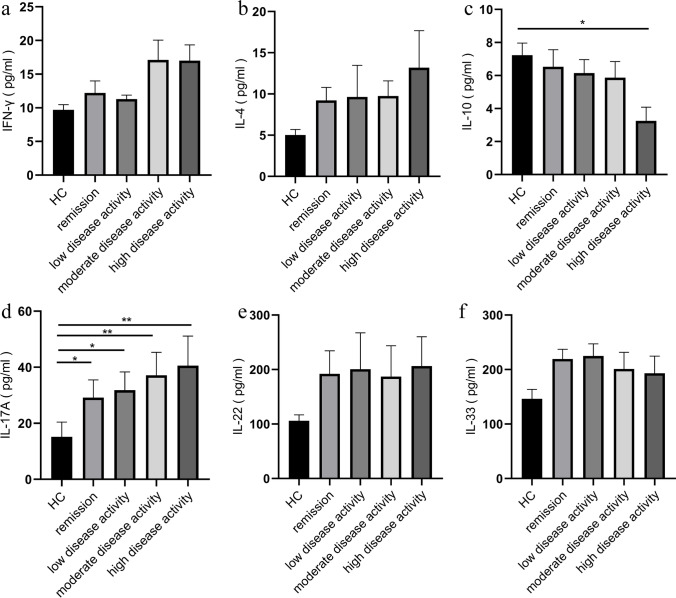
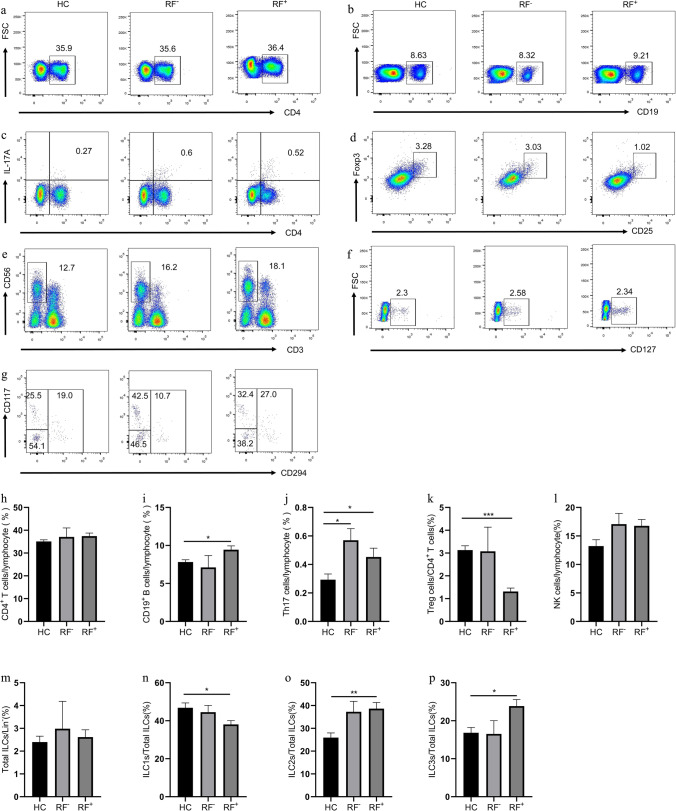
Patients with RA had higher percentages of CD4 T, CD19 B, Th17, ILC2s, and ILC3s and lower percentages of Treg and ILC1s than HC. Patients with RA had elevated levels of IFN-γ, IL-4, IL-17A, and IL-22 and decreased level of IL-10. Compared with HC, patients with high disease activity had higher percentages of Th17, ILC2s, and ILC3s; lower percentages of ILC1s; and lower level of IL-10. The percentage of Treg cells in remission, low, moderate, and high disease activities decreased, whereas the level of IL-17A increased compared with HC. Furthermore, RF or ACPA patients exhibited elevated percentages of CD19 B, ILC2s, and ILC3s and had decreased percentage of ILC1s and Treg cells than HC. The percentage of Th17 cells increased in RF/ACPA and RF/ACPA patients. However, the above immune cells between RF or ACPA positive and negative patients were not significantly different.
Th17, Treg, and ILC subset dysregulations are present in patients with RA but may not be associated with conventionally defined seropositive RF and ACPA. Key Points • Th17, Treg, and ILC subset dysregulations are present in patients with RA but may reflect inflammation rather than specific diseases and stages. • No difference for the distribution of Th17, Treg, and ILC subsets between RF and RF patients and between ACPA and ACPA patients. The screening spectrum of RF and ACPA serology should be expanded to elucidate the role of immune cells in RA pathogenesis.
类风湿关节炎(RA)是一种慢性炎症性疾病,涉及多种免疫细胞,包括适应性 T 和 B 细胞以及固有淋巴细胞(ILC)。了解这些免疫细胞在 RA 中的致病作用,为 RA 的干预和治疗提供了新的思路。
本研究共纳入 86 例 RA 患者(RA 组)和 50 例健康对照者(HC)。采用流式细胞术检测外周血单个核细胞中 CD4、CD19 B、NK、Th17、Treg、ILC 及其亚群(即 ILC1、ILC2 和 ILC3)。采用 ELISA 法检测血清细胞因子(IFN-γ、IL-4、IL-10、IL-17A、IL-22 和 IL-33)。分析不同疾病活动状态及类风湿因子(RF)/抗瓜氨酸蛋白抗体(ACPA)阳性( +)或阴性( -)患者的上述免疫细胞和细胞因子。
与 HC 相比,RA 患者的 CD4 T、CD19 B、Th17、ILC2s 和 ILC3s 比例较高,Treg 和 ILC1s 比例较低;IFN-γ、IL-4、IL-17A 和 IL-22 水平升高,IL-10 水平降低。与 HC 相比,高疾病活动度患者 Th17、ILC2s 和 ILC3s 比例较高,ILC1s 比例较低,IL-10 水平较低;缓解、低、中、高疾病活动度患者 Treg 细胞比例降低,IL-17A 水平升高。此外,RF 或 ACPA 患者的 CD19 B、ILC2s 和 ILC3s 比例升高,而 ILC1s 和 Treg 细胞比例降低,RF/ACPA 患者的 Th17 细胞比例升高。然而,RF 或 ACPA 阳性和阴性患者之间的上述免疫细胞没有显著差异。
RA 患者存在 Th17、Treg 和 ILC 亚群失调,但可能与传统定义的血清阳性 RF 和 ACPA 无关。关键点 • RA 患者存在 Th17、Treg 和 ILC 亚群失调,但可能反映炎症而非特定疾病和阶段。• RF 和 RF 患者以及 ACPA 和 ACPA 患者之间 Th17、Treg 和 ILC 亚群分布无差异。应扩大 RF 和 ACPA 血清学筛查谱,以阐明免疫细胞在 RA 发病机制中的作用。