Institute of Marine Research, His, Norway.
UWA Oceans Institute & School of Biological Sciences, The University of Western Australia, Perth, Australia.
PLoS Biol. 2022 Aug 4;20(8):e3001702. doi: 10.1371/journal.pbio.3001702. eCollection 2022 Aug.
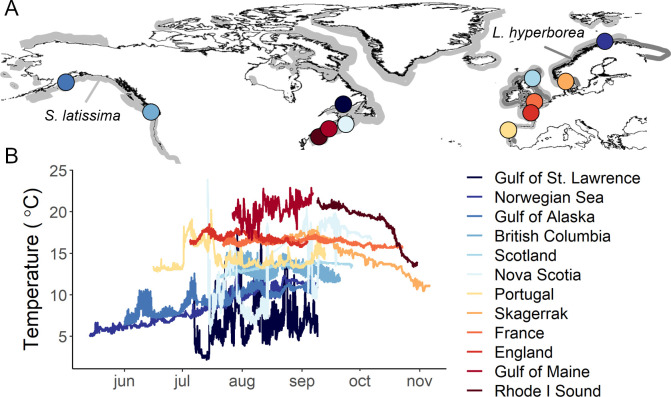
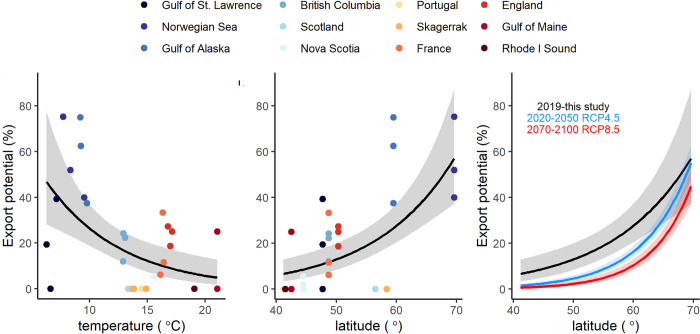
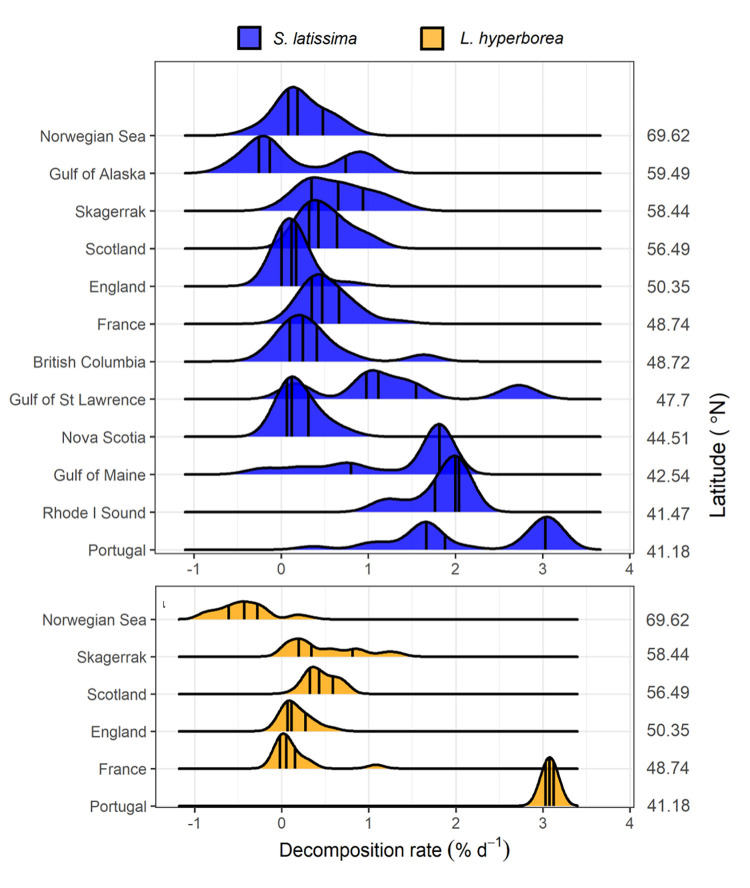
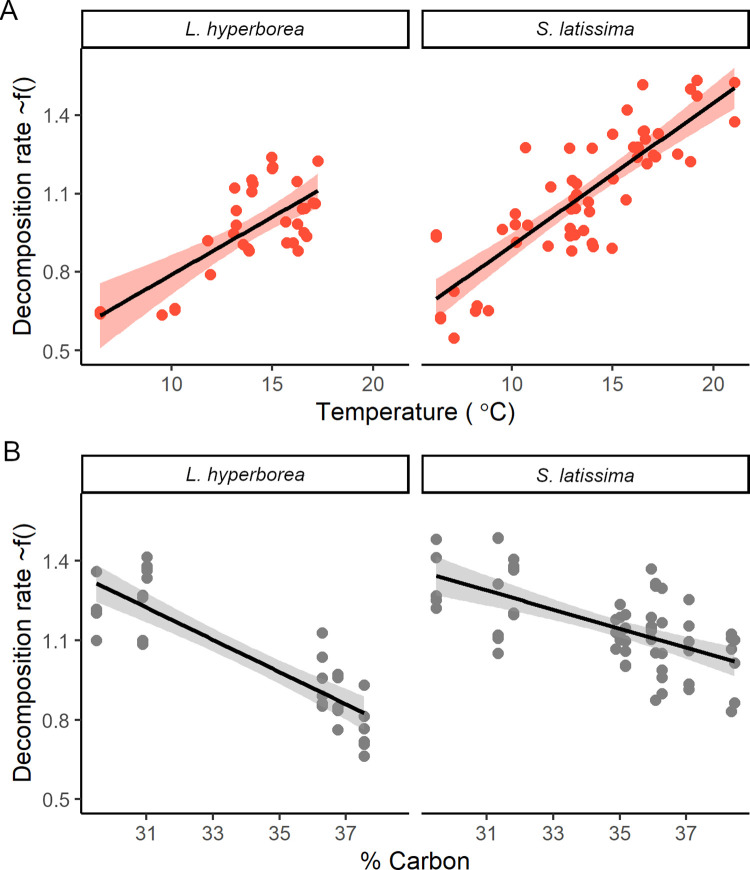
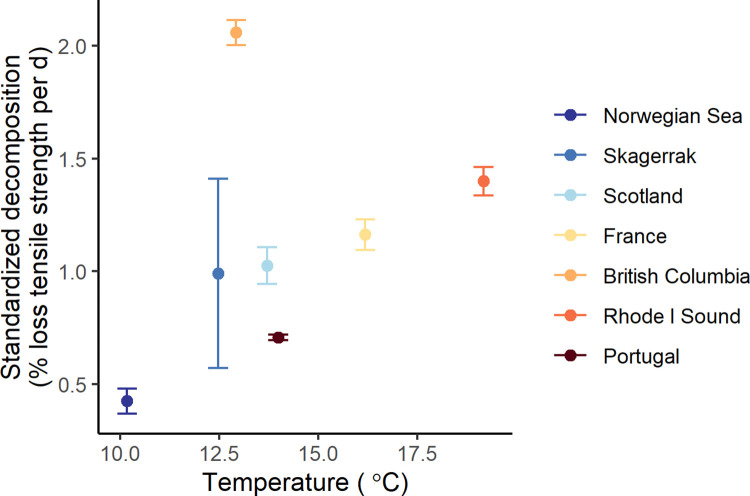
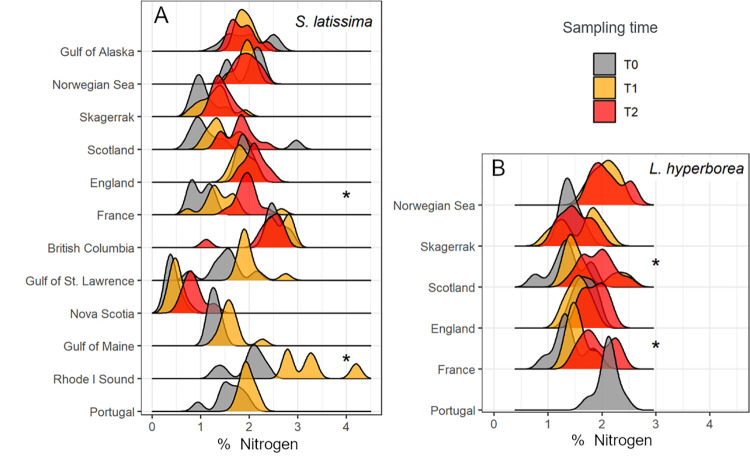
Cycling of organic carbon in the ocean has the potential to mitigate or exacerbate global climate change, but major questions remain about the environmental controls on organic carbon flux in the coastal zone. Here, we used a field experiment distributed across 28° of latitude, and the entire range of 2 dominant kelp species in the northern hemisphere, to measure decomposition rates of kelp detritus on the seafloor in relation to local environmental factors. Detritus decomposition in both species were strongly related to ocean temperature and initial carbon content, with higher rates of biomass loss at lower latitudes with warmer temperatures. Our experiment showed slow overall decomposition and turnover of kelp detritus and modeling of coastal residence times at our study sites revealed that a significant portion of this production can remain intact long enough to reach deep marine sinks. The results suggest that decomposition of these kelp species could accelerate with ocean warming and that low-latitude kelp forests could experience the greatest increase in remineralization with a 9% to 42% reduced potential for transport to long-term ocean sinks under short-term (RCP4.5) and long-term (RCP8.5) warming scenarios. However, slow decomposition at high latitudes, where kelp abundance is predicted to expand, indicates potential for increasing kelp-carbon sinks in cooler (northern) regions. Our findings reveal an important latitudinal gradient in coastal ecosystem function that provides an improved capacity to predict the implications of ocean warming on carbon cycling. Broad-scale patterns in organic carbon decomposition revealed here can be used to identify hotspots of carbon sequestration potential and resolve relationships between carbon cycling processes and ocean climate at a global scale.
海洋有机碳的循环具有缓解或加剧全球气候变化的潜力,但关于沿海地区有机碳通量的环境控制因素仍存在许多问题。在这里,我们使用了一个跨越 28°纬度的野外实验,以及北半球两种主要巨藻的整个分布范围,来测量海底巨藻碎屑的分解速率与当地环境因素之间的关系。两种巨藻的碎屑分解都与海洋温度和初始碳含量密切相关,在较低纬度地区,温度较高,生物量损失率较高。我们的实验表明,巨藻碎屑的总体分解和周转速度较慢,对我们研究地点的沿海停留时间进行建模表明,这些初级生产力的很大一部分可以保持完整足够长的时间,到达深海汇。研究结果表明,这些巨藻物种的分解可能会随着海洋变暖而加速,低纬度的巨藻林在短期内(RCP4.5)和长期(RCP8.5)变暖情景下,向长期海洋汇的运输潜力降低 9%至 42%,再矿化的速度将加快,而在高纬度地区,巨藻丰度预计会增加,分解速度较慢,这表明在较冷(北部)地区,巨藻碳汇的潜力可能会增加。我们的研究结果揭示了沿海生态系统功能的一个重要纬度梯度,这为预测海洋变暖对碳循环的影响提供了更大的能力。这里揭示的有机碳分解的广泛模式可用于确定碳封存潜力的热点,并在全球范围内解决碳循环过程与海洋气候之间的关系。