Sage Bionetworks, Seattle, Washington, United States of America.
PLoS One. 2022 Aug 4;17(8):e0271766. doi: 10.1371/journal.pone.0271766. eCollection 2022.
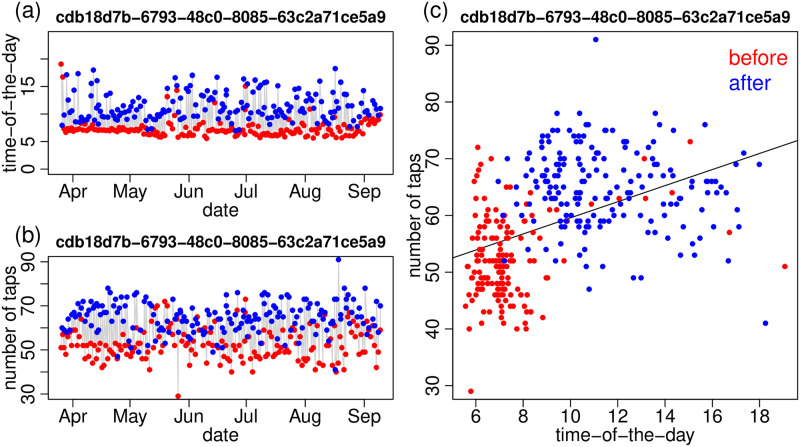
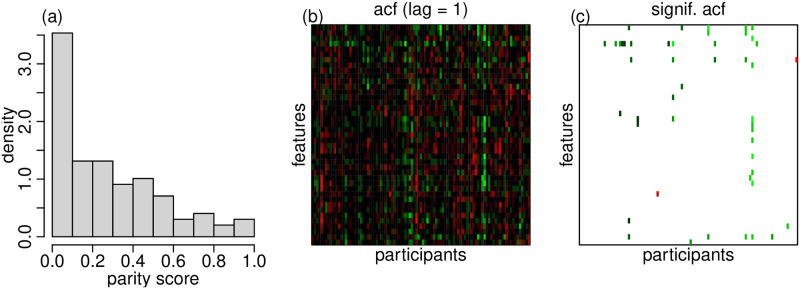
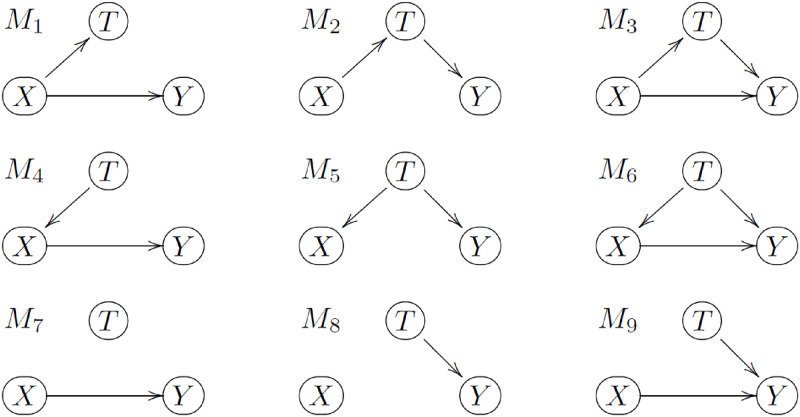
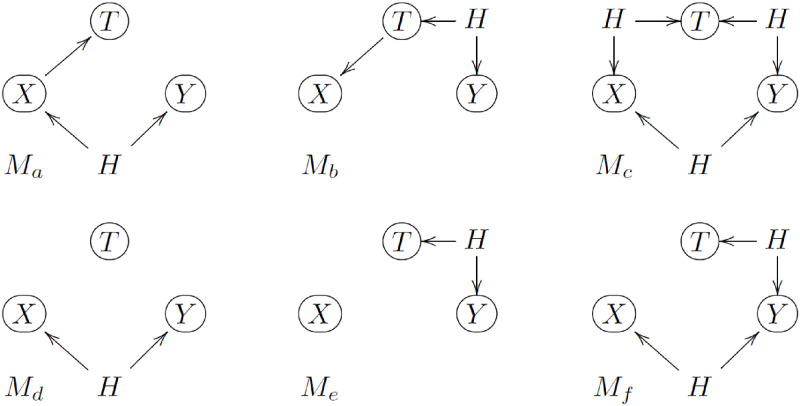
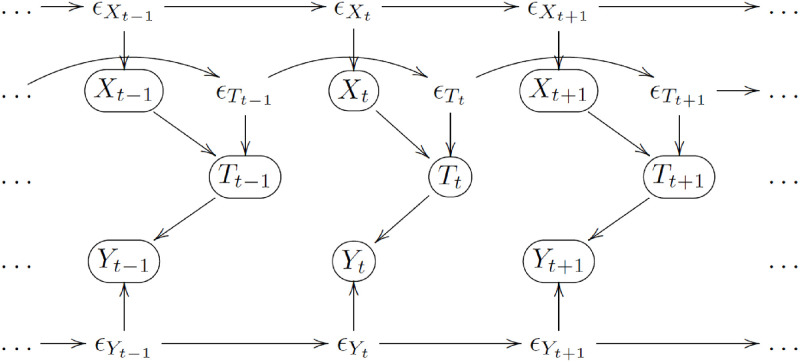
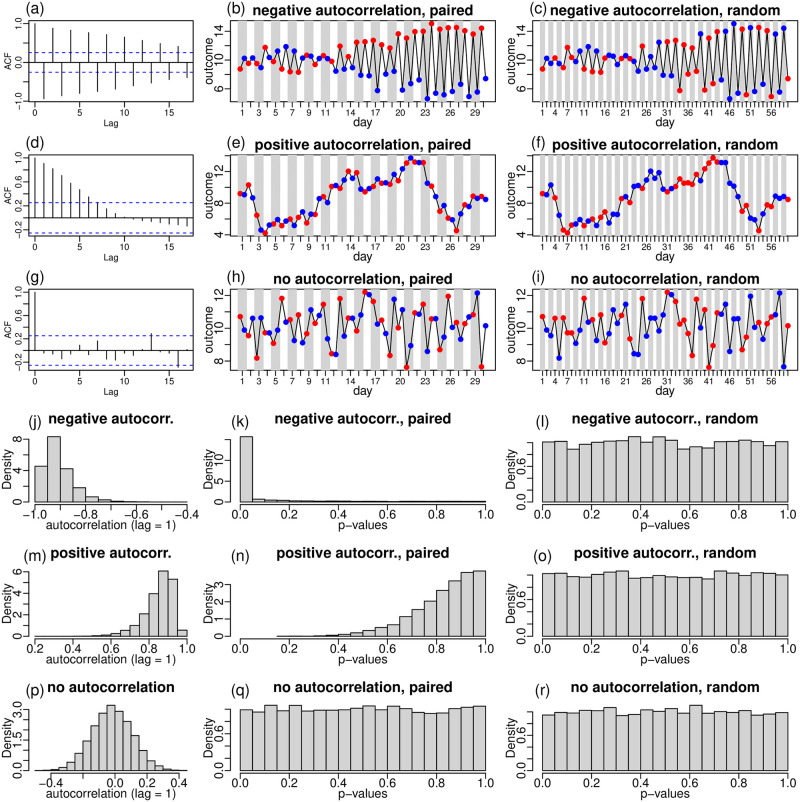
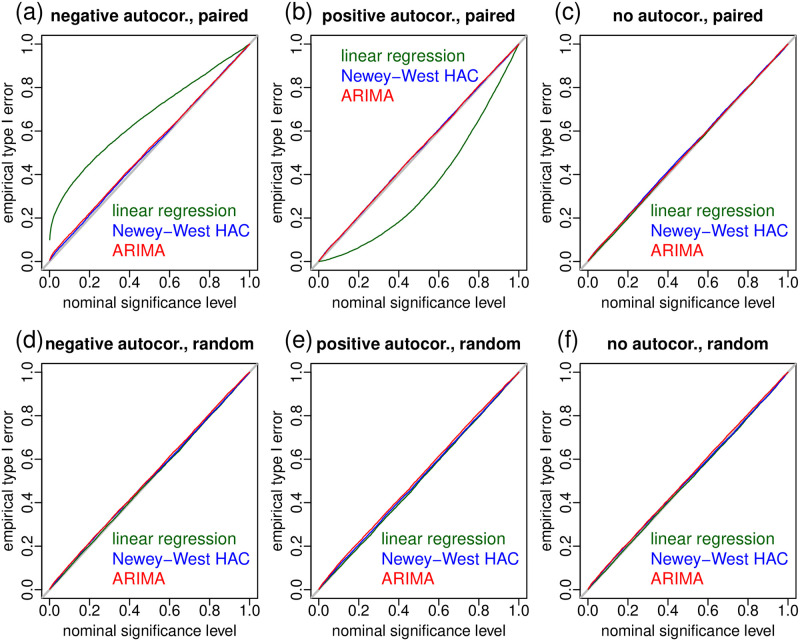
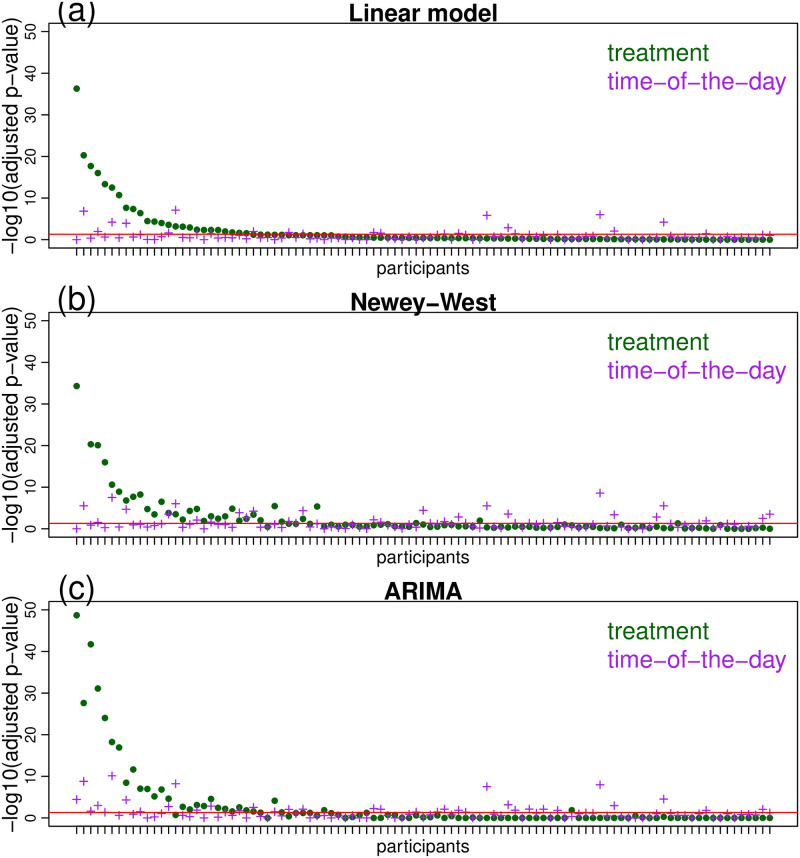
Ideally, a patient's response to medication can be monitored by measuring changes in performance of some activity. In observational studies, however, any detected association between treatment ("on-medication" vs "off-medication") and the outcome (performance in the activity) might be due to confounders. In particular, causal inferences at the personalized level are especially vulnerable to confounding effects that arise in a cyclic fashion. For quick acting medications, effects can be confounded by circadian rhythms and daily routines. Using the time-of-the-day as a surrogate for these confounders and the performance measurements as captured on a smartphone, we propose a personalized statistical approach to disentangle putative treatment and "time-of-the-day" effects, that leverages conditional independence relations spanned by causal graphical models involving the treatment, time-of-the-day, and outcome variables. Our approach is based on conditional independence tests implemented via standard and temporal linear regression models. Using synthetic data, we investigate when and how residual autocorrelation can affect the standard tests, and how time series modeling (namely, ARIMA and robust regression via HAC covariance matrix estimators) can remedy these issues. In particular, our simulations illustrate that when patients perform their activities in a paired fashion, positive autocorrelation can lead to conservative results for the standard regression approach (i.e., lead to deflated true positive detection), whereas negative autocorrelation can lead to anticonservative behavior (i.e., lead to inflated false positive detection). The adoption of time series methods, on the other hand, leads to well controlled type I error rates. We illustrate the application of our methodology with data from a Parkinson's disease mobile health study.
理想情况下,可以通过测量某些活动表现的变化来监测患者对药物的反应。然而,在观察性研究中,治疗(“用药”与“停药”)与结果(活动中的表现)之间任何检测到的关联都可能是由于混杂因素造成的。特别是,个性化水平的因果推断特别容易受到以循环方式出现的混杂效应的影响。对于作用迅速的药物,效果可能会受到昼夜节律和日常作息的影响。我们使用一天中的时间作为这些混杂因素的替代变量,并使用智能手机记录表现测量值,提出了一种个性化的统计方法,以分离潜在的治疗和“时间”效应,该方法利用涉及治疗、时间和结果变量的因果图形模型所跨越的条件独立性关系。我们的方法基于通过标准和时间线性回归模型实现的条件独立性检验。使用合成数据,我们研究了残留自相关在何时以及如何影响标准检验,以及时间序列建模(即,通过 HAC 协方差矩阵估计器的 ARIMA 和稳健回归)如何解决这些问题。特别是,我们的模拟表明,当患者以配对的方式进行活动时,正自相关会导致标准回归方法的保守结果(即,导致真实阳性检测值偏低),而负自相关会导致反保守行为(即,导致假阳性检测值偏高)。另一方面,采用时间序列方法会导致良好控制的Ⅰ型错误率。我们用帕金森病移动健康研究的数据说明了我们方法的应用。