Curriculum in Genetics and Molecular Biology, University of North Carolina at Chapel Hill, Chapel Hill, NC, USA.
Lineberger Comprehensive Cancer Center, University of North Carolina at Chapel Hill, Chapel Hill, NC, USA.
Nat Commun. 2022 Aug 4;13(1):4547. doi: 10.1038/s41467-022-32166-7.
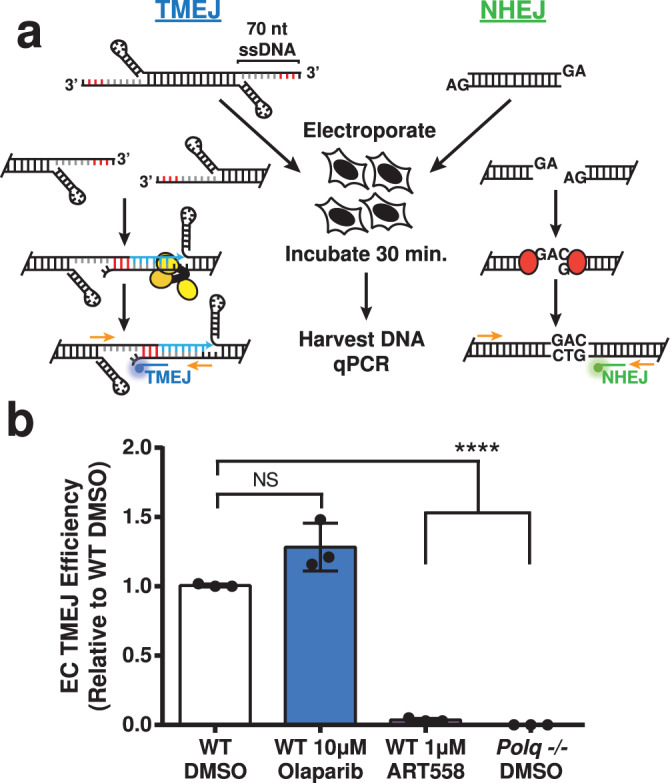
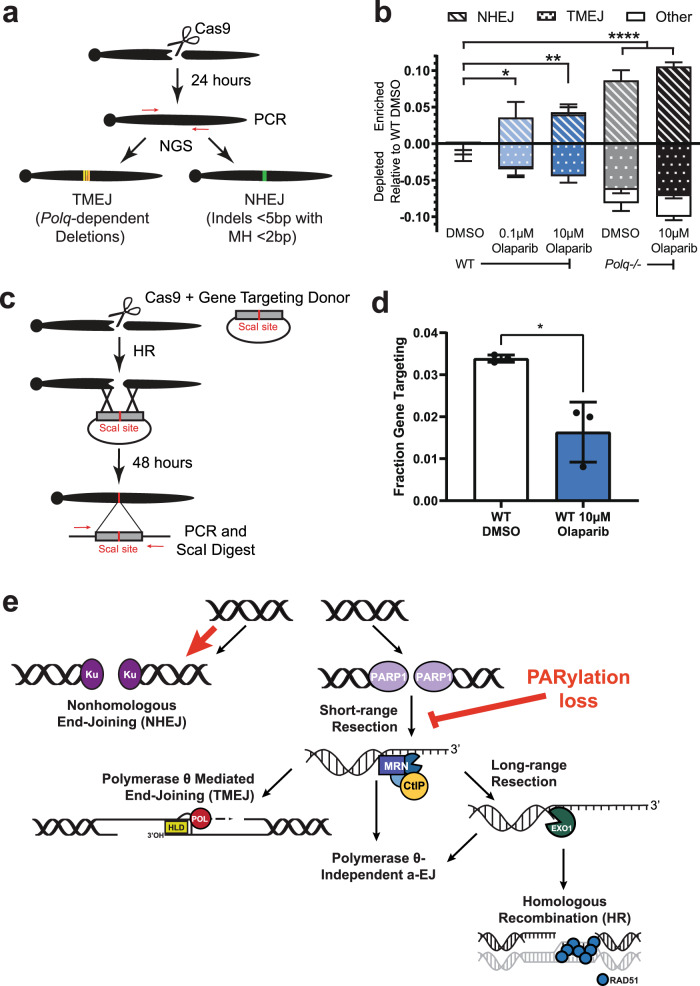
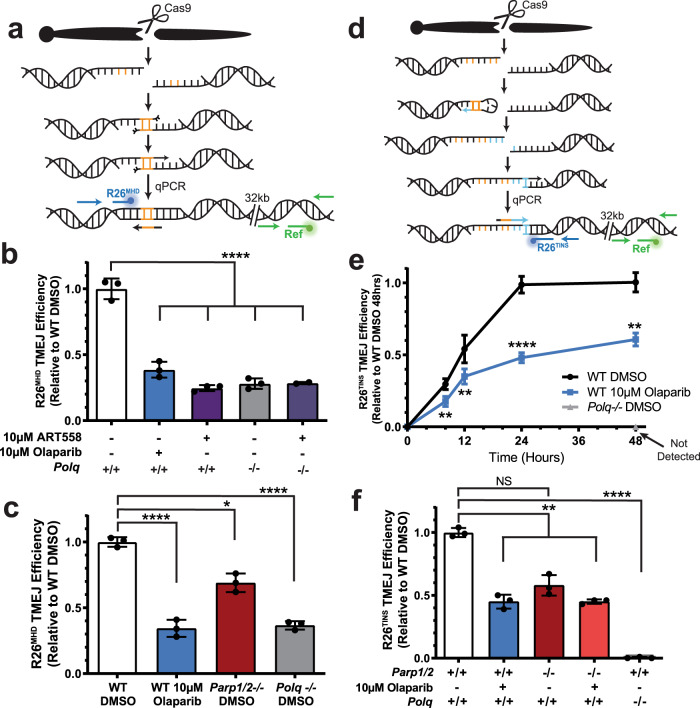
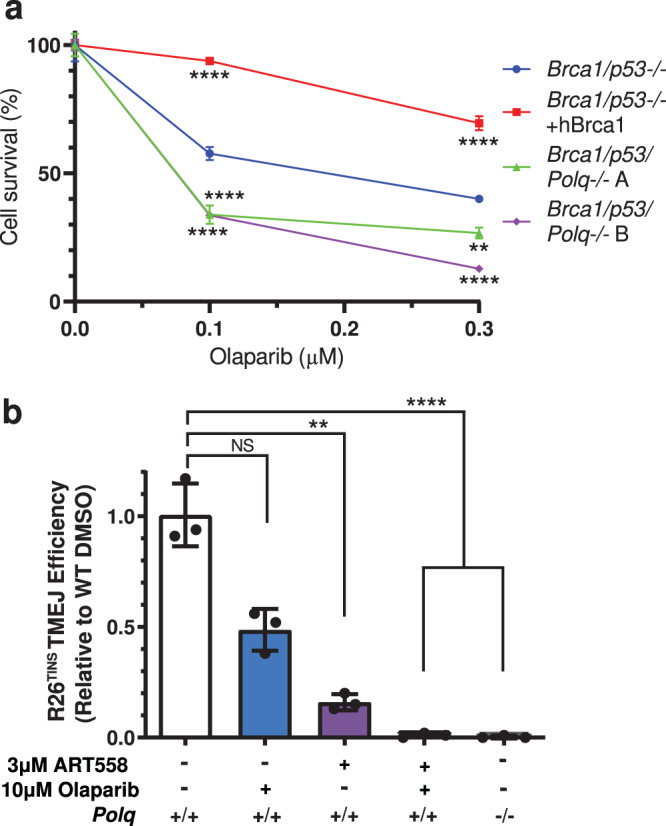
The DNA polymerase theta (Polθ)-mediated end joining (TMEJ) pathway for repair of chromosomal double strand breaks (DSBs) is essential in cells deficient in other DSB repair pathways, including hereditary breast cancers defective in homologous recombination. Strand-break activated poly(ADP) ribose polymerase 1 (PARP1) has been implicated in TMEJ, but the modest specificity of existing TMEJ assays means the extent of effect and the mechanism behind it remain unclear. We describe here a series of TMEJ assays with improved specificity and show ablation of PARP activity reduces TMEJ activity 2-4-fold. The reduction in TMEJ is attributable to a reduction in the 5' to 3' resection of DSB ends that is essential for engagement of this pathway and is compensated by increased repair by the nonhomologous-end joining pathway. This limited role for PARP activity in TMEJ helps better rationalize the combined employment of inhibitors of PARP and Polθ in cancer therapy.
DNA 聚合酶 theta(Polθ)介导的末端连接(TMEJ)途径是修复染色体双链断裂(DSB)所必需的,在其他 DSB 修复途径缺陷的细胞中尤为重要,包括同源重组缺陷的遗传性乳腺癌。链断裂激活的聚(ADP-核糖)聚合酶 1(PARP1)已被牵连到 TMEJ 中,但现有的 TMEJ 检测方法的适度特异性意味着其影响的程度和背后的机制仍不清楚。我们在这里描述了一系列具有改进特异性的 TMEJ 检测方法,并显示 PARP 活性的缺失将 TMEJ 活性降低 2-4 倍。TMEJ 的减少归因于 DSB 末端 5'到 3'切除的减少,这对于该途径的结合至关重要,并且通过非同源末端连接途径的修复得到了补偿。PARP 活性在 TMEJ 中的这种有限作用有助于更好地合理化 PARP 和 Polθ 抑制剂在癌症治疗中的联合应用。