Hematology Research Unit Helsinki, Department of Clinical Chemistry and Hematology, University of Helsinki and Helsinki University Hospital Comprehensive Cancer Center, Haartmaninkatu 8, N00290, Helsinki, Finland.
Translational Immunology Research Program, University of Helsinki, Helsinki, Finland.
Sci Rep. 2022 Aug 4;12(1):13416. doi: 10.1038/s41598-022-17592-3.
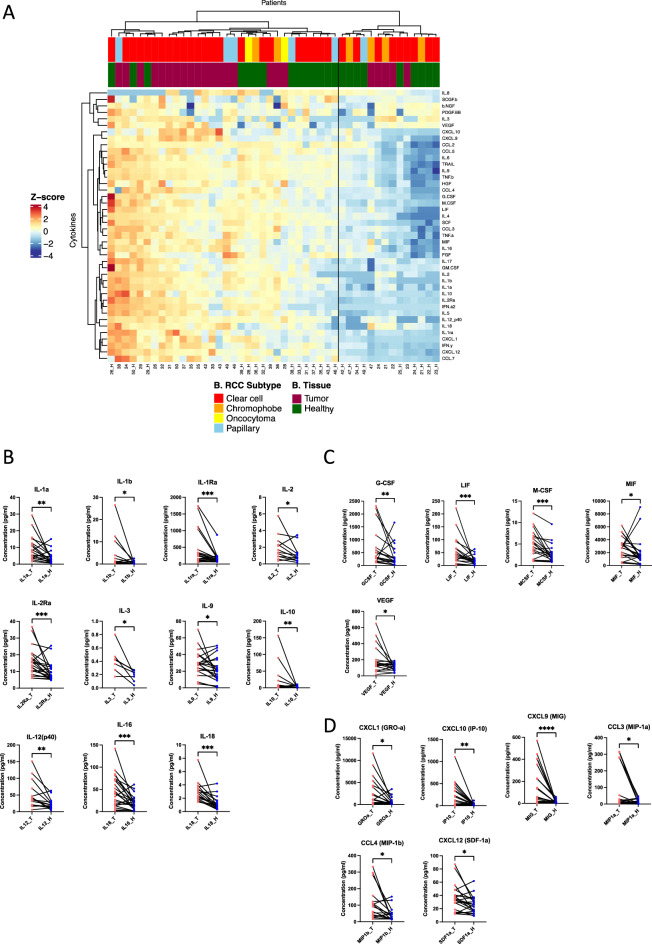
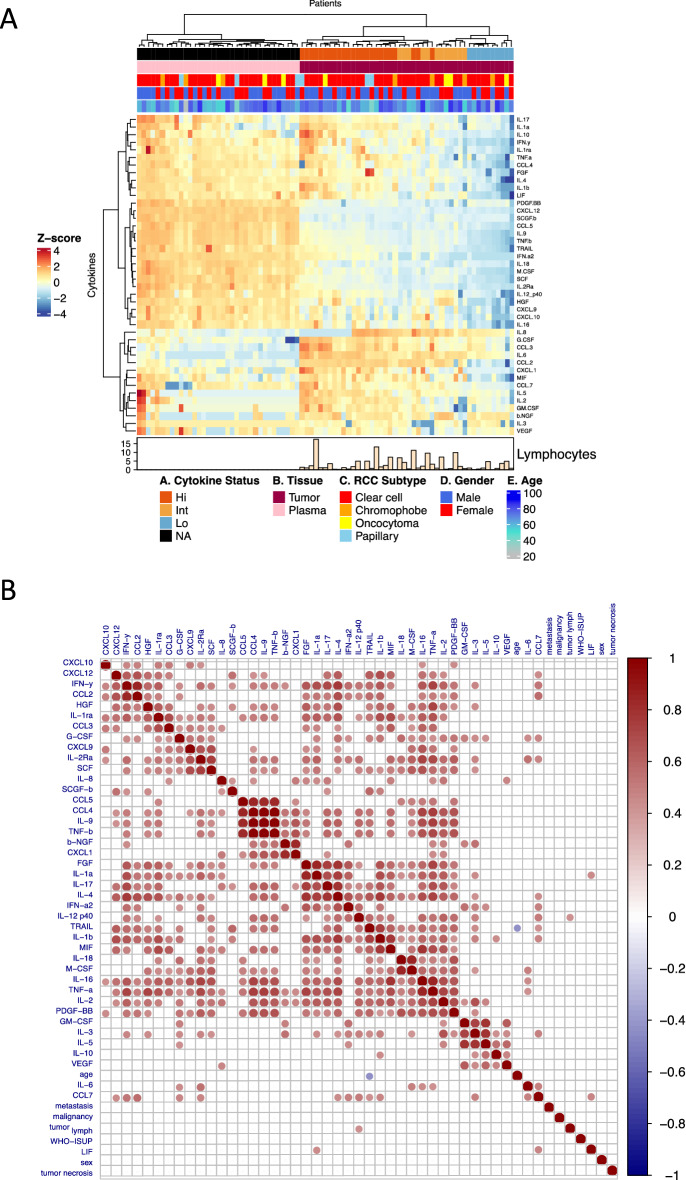
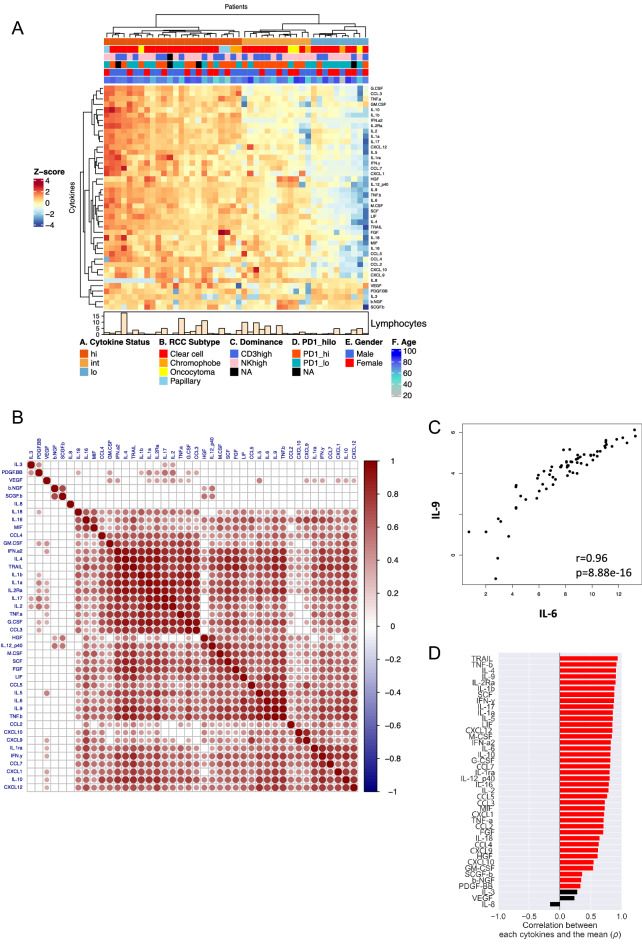
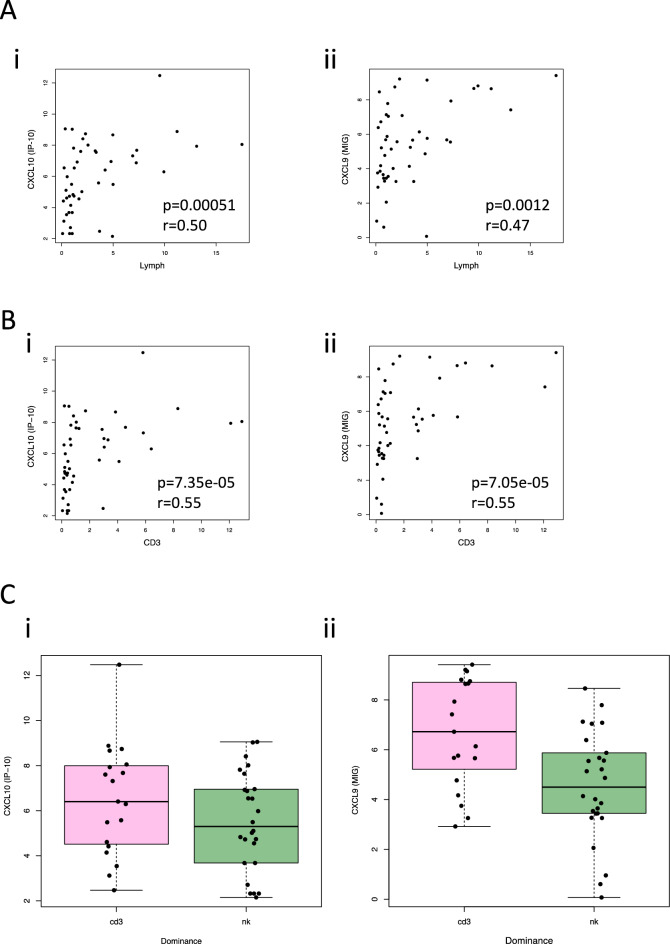
Renal cell carcinoma (RCC) accounts for 90% of all renal cancers and is considered highly immunogenic. Although many studies have reported the circulating peripheral cytokine profiles, the signatures between the tumor tissue and matching healthy adjacent renal tissue counterparts have not been explored. We aimed to comprehensively investigate the cytokine landscape of RCC tumors and its correlation between the amount and phenotype of the tumor infiltrating lymphocytes (TILs). We analyzed the secretion of 42 cytokines from the tumor (n = 46), adjacent healthy kidney tissues (n = 23) and matching plasma samples (n = 33) with a Luminex-based assay. We further explored the differences between the tissue types, as well as correlated the findings with clinical data and detailed immunophenotyping of the TILs. Using an unsupervised clustering approach, we observed distinct differences in the cytokine profiles between the tumor and adjacent renal tissue samples. The tumor samples clustered into three distinct profiles based on the cytokine expressions: high (52.2% of the tumors), intermediate (26.1%), and low (21.7%). Most of the tumor cytokines positively correlated with each other, except for IL-8 that showed no correlation with any of the measured cytokine expressions. Furthermore, the quantity of lymphocytes in the tumor samples analyzed with flow cytometry positively correlated with the chemokine-family of cytokines, CXCL10 (IP-10) and CXCL9 (MIG). No significant correlations were found between the tumor and matching plasma cytokines, suggesting that circulating cytokines poorly mirror the tumor cytokine environment. Our study highlights distinct cytokine profiles in the RCC tumor microenvironment and provides insights to potential biomarkers for the treatment of RCC.
肾细胞癌(RCC)占所有肾癌的 90%,被认为具有高度的免疫原性。尽管许多研究已经报道了循环外周细胞因子谱,但肿瘤组织与匹配的健康相邻肾组织对照物之间的特征尚未得到探索。我们旨在全面研究 RCC 肿瘤的细胞因子景观及其与肿瘤浸润淋巴细胞(TIL)数量和表型之间的相关性。我们使用基于 Luminex 的测定法分析了 46 个肿瘤(n=46)、23 个相邻健康肾脏组织(n=23)和匹配的血浆样本(n=33)中 42 种细胞因子的分泌情况。我们进一步探讨了组织类型之间的差异,并将这些发现与临床数据和 TIL 的详细免疫表型相关联。使用无监督聚类方法,我们观察到肿瘤和相邻肾组织样本之间的细胞因子谱存在明显差异。肿瘤样本根据细胞因子表达聚类为三种不同的类型:高(52.2%的肿瘤)、中(26.1%)和低(21.7%)。除了 IL-8 与任何测量的细胞因子表达均无相关性外,大多数肿瘤细胞因子之间呈正相关。此外,用流式细胞术分析的肿瘤样本中的淋巴细胞数量与趋化因子家族细胞因子 CXCL10(IP-10)和 CXCL9(MIG)呈正相关。肿瘤和匹配的血浆细胞因子之间未发现显著相关性,这表明循环细胞因子不能很好地反映肿瘤细胞因子环境。我们的研究突出了 RCC 肿瘤微环境中的独特细胞因子谱,并为 RCC 的治疗提供了潜在的生物标志物。