Department of Orthopaedics and Traumatology, With Spinal Surgery Ward. Scanmed St. Raphael Hospital, ul. Adama Bochenka 12, 30-693, Cracow, Poland.
Faculty of Medicine, Jagiellonian University Medical College, Cracow, Poland.
BMC Musculoskelet Disord. 2022 Aug 4;23(1):750. doi: 10.1186/s12891-022-05698-8.
Implant subsidence is an undesirable effect after anterior cervical discectomy and fusion (ACDF). We investigated the relation between the rate of implant subsidence and the ratio of the implant surface area to the surface area of the adjacent bone.
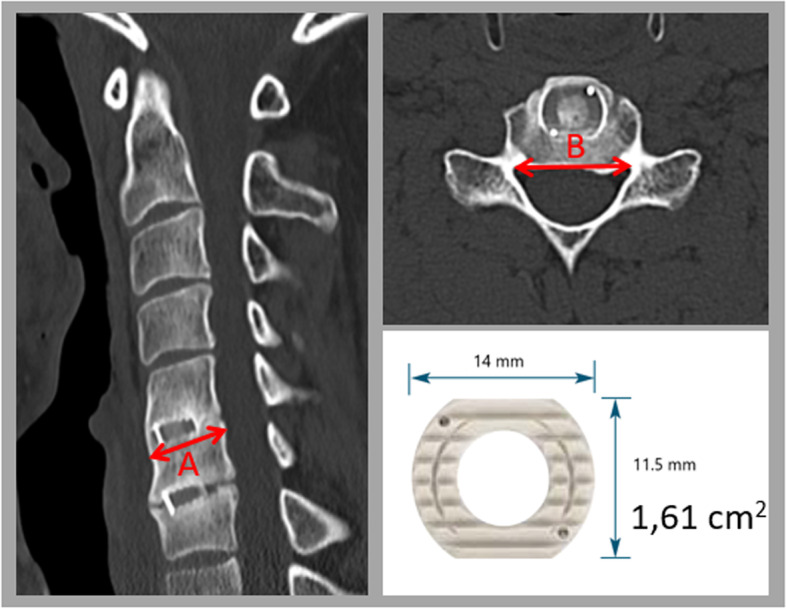
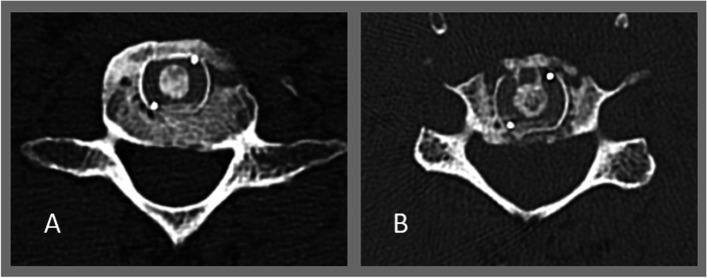
We operated 170 disc spaces in a group of 104 patients. Two types of implants were used: 1) PEEK (polyetheretherketone) cages and 2) titanium-coated (TC) PEEK cages. Patients were randomised to receive a specific implant using a randomisation table. All implants had a surface area of 1.61 cm. Based on computed tomography images, bone surface areas were calculated for vertebral bodies immediately adjacent to the interbody implants. The implant-to-bone surface ratio was then calculated for each disc space. Implant subsidence was assessed over 12 months of follow-up, and associations between implant subsidence, the type of implant, and the implant-to-bone surface ratio were investigated.
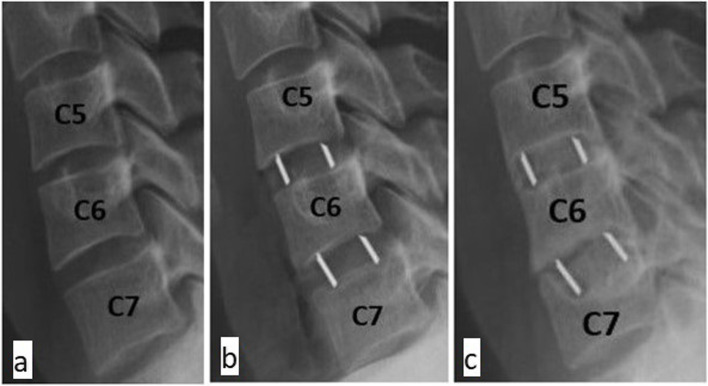
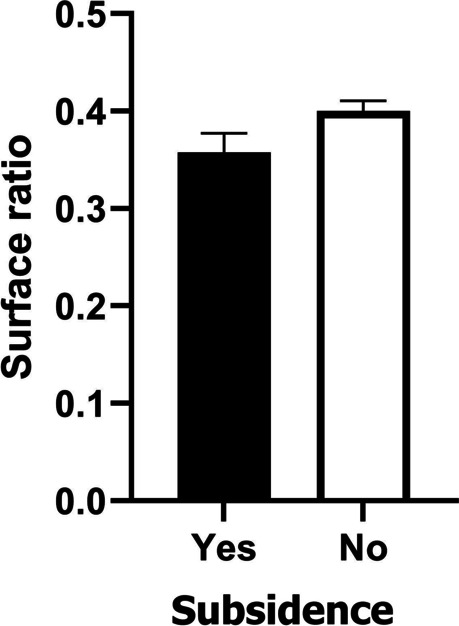
Twelve months after the surgery, computed tomography was performed on 86 patients (144 disc spaces). Furthermore, in 166 disc spaces and 102 patients, conventional radiographs were obtained. Subsidence was observed in 21% of the examined intervertebral spaces, and it was more frequently associated with higher values of bone surface area and lower values of the implant-to-bone surface ratio. The type of implant (PEEK vs TC-PEEK cages) did not significantly influence the rate of implant subsidence.
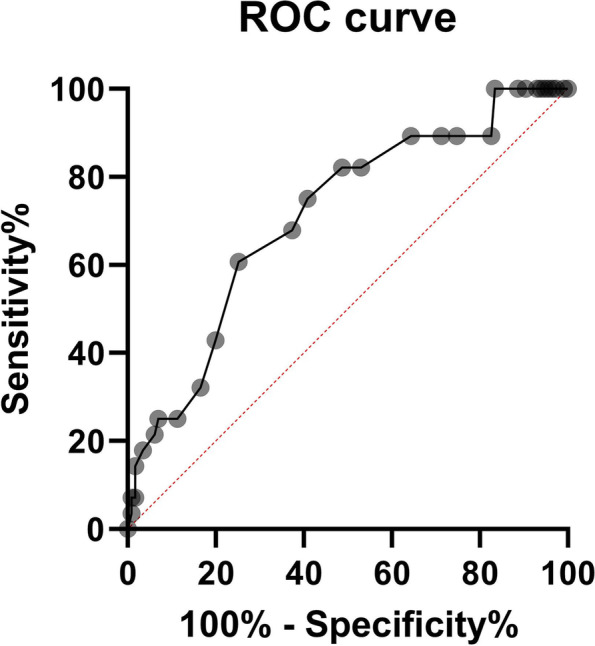
Implant subsidence was significantly related to the value of a coefficient representing the ratio of the implant's surface area to the bone surface area of the adjacent vertebral bodies, with subsidence occurring significantly more rarely for coefficient values ≥ 0.37.
颈椎前路椎间盘切除融合术(ACDF)后,植入物下沉是一种不理想的现象。我们研究了植入物下沉率与植入物表面积与相邻骨表面积的比值之间的关系。
我们对 104 例患者的 170 个椎间盘空间进行了手术。使用了两种类型的植入物:1)PEEK(聚醚醚酮)笼和 2)钛涂层(TC)PEEK 笼。患者使用随机表随机分配接受特定的植入物。所有植入物的表面积均为 1.61cm。基于 CT 图像,计算椎体与椎间植入物相邻的骨表面积。然后计算每个椎间盘空间的植入物与骨表面积的比值。在 12 个月的随访期间评估植入物下沉情况,并研究植入物下沉、植入物类型和植入物与骨表面积比值之间的关系。
手术后 12 个月,对 86 例患者(144 个椎间盘空间)进行了 CT 检查。此外,在 166 个椎间盘空间和 102 例患者中获得了常规 X 线片。在检查的椎间空间中,有 21%观察到下沉,并且与骨表面积较大和植入物与骨表面积比值较低的情况更相关。植入物类型(PEEK 与 TC-PEEK 笼)并未显著影响植入物下沉率。
植入物下沉与代表植入物表面积与相邻椎体骨表面积比值的系数值显著相关,当系数值≥0.37 时,下沉发生的频率显著降低。