Warsame Rahma, Cook Joselle, Fruth Briant, Hubbard Joleen, Croghan Katrina, Price Katharine A R, Jatoi Aminah, Kumar Shaji, Thompson Carrie, Buckner Jan, Dispenzieri Angela, Sloan Jeff, Dueck Amylou C
Division of Hematology, Mayo Clinic, Rochester, MN, USA.
Patricia and Robert Kern Center for the Science of Health Care Delivery, Mayo Clinic, Rochester, MN, USA.
Contemp Clin Trials Commun. 2022 Jul 13;29:100964. doi: 10.1016/j.conctc.2022.100964. eCollection 2022 Oct.
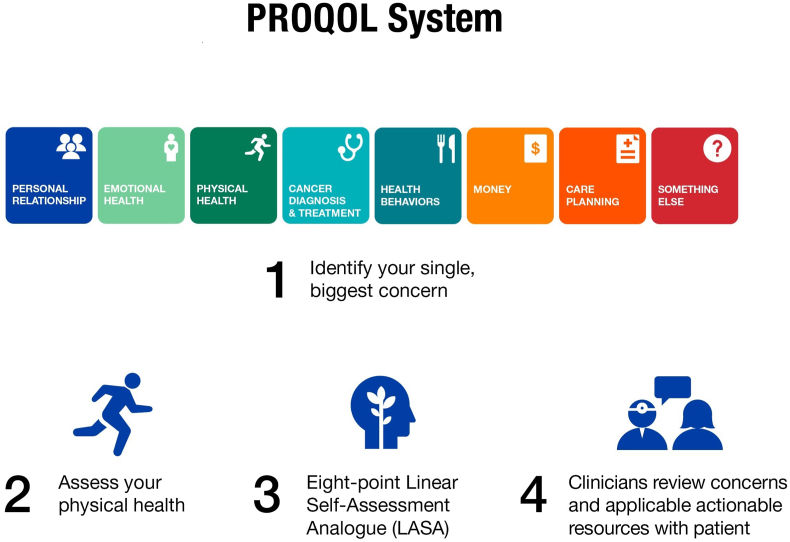
Clinicians have limited time during patient encounters which can result in patients' concerns not being addressed. This study's objective was to test whether an electronic patient-reported outcome quality of life tool (PROQOL) in which patients identify their primary concern during clinic visits improves cancer patient quality of life (QOL).
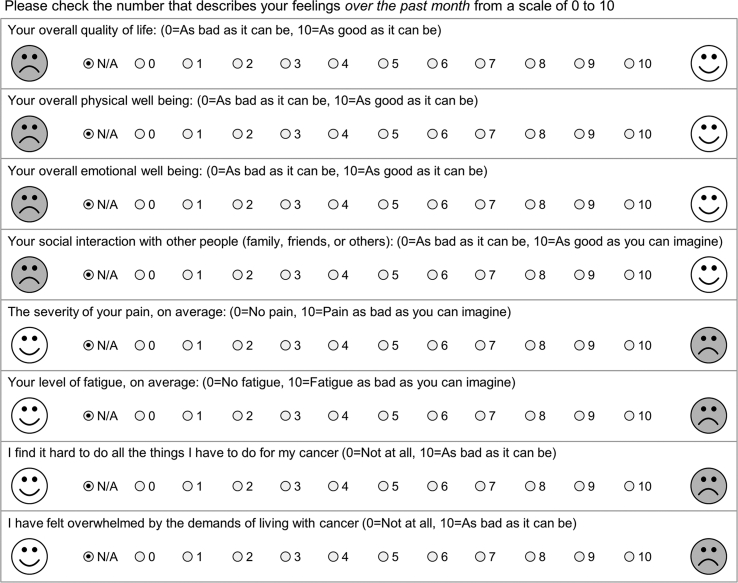
This single center non-blinded prospective clinical trial randomized patients (2:1) to PROQOL versus usual care (UC). Two patient cohorts were enrolled: those with hematologic malignancies (multiple myeloma [MM] or light chain amyloidosis [AL]) and solid tumors (head and neck [H/N] or gynecologic [GYN] malignancies). Primary endpoint was patient-reported QOL at 12 months measured by a single-item Linear Analog Self-Assessment. Value to patients and impact on clinician workflow was measured using a "was it worth it" survey. The study was powered to detect a 0.5 standard deviation difference between groups.
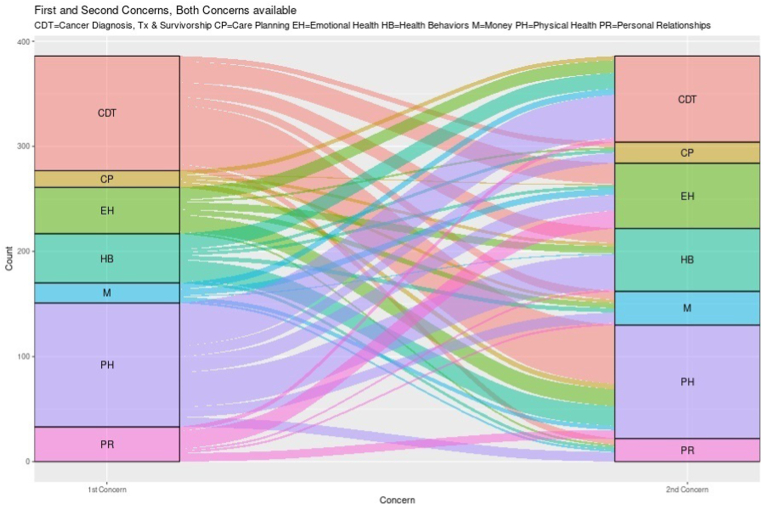
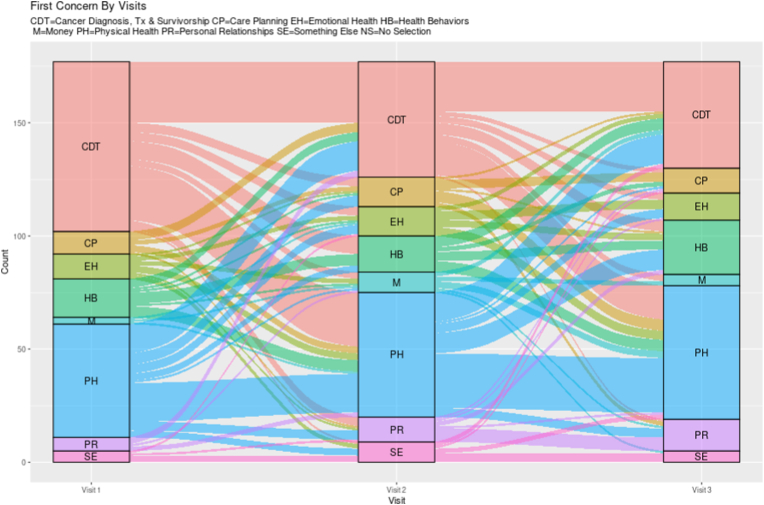
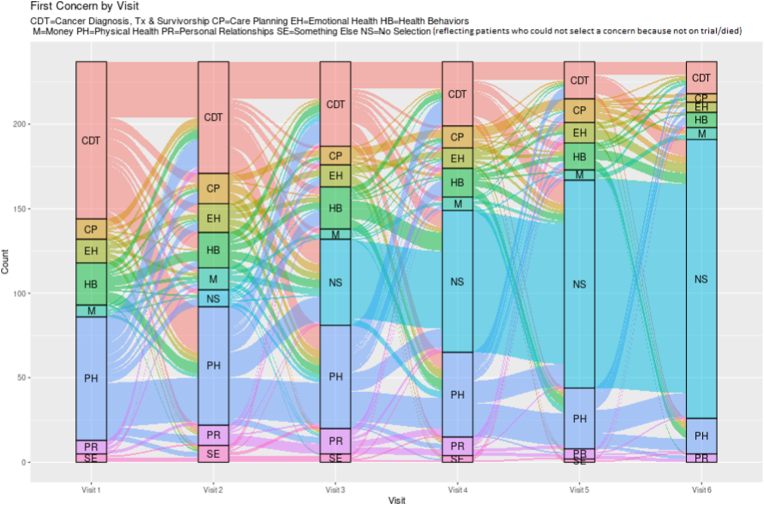
Overall 383 patients were enrolled, 171 with MM, 62 AL, 113 GYN, and 37 H/N between July 2016 and April 2018, with 12-month follow-up. There were 171 (44.6%) male patients and median age was 62 years (range 31-87). The most often selected concern was physical health (30.9%), and second was cancer diagnosis and treatment (29.1%). Mean QOL was 7.12 for PROQOL and 6.98 for UC (0-10 scale) at 12 months, with no between-group difference overall (p = 0.56) or within hematologic or solid tumor cohorts, respectively. Among patients, 74% thought the PROQOL tool was worthwhile, 86% would choose PROQOL again, and 81% would recommend it to others. Among clinicians, 95% responded that PROQOL was worthwhile and did not think that PROQOL negatively impacted their workflow.
Although we did not demonstrate a QOL difference between PROQOL and UC groups; the PROQOL tool held considerable value in identifying patients' main concerns over time and was worthwhile for patients and clinicians.
临床医生在与患者接触的过程中时间有限,这可能导致患者的担忧得不到解决。本研究的目的是测试一种电子患者报告的生活质量工具(PROQOL),即患者在门诊就诊时确定其主要担忧,是否能改善癌症患者的生活质量(QOL)。
这项单中心、非盲法前瞻性临床试验将患者按2:1随机分为PROQOL组和常规护理(UC)组。纳入了两个患者队列:血液系统恶性肿瘤患者(多发性骨髓瘤[MM]或轻链淀粉样变性[AL])和实体瘤患者(头颈部[H/N]或妇科[GYN]恶性肿瘤)。主要终点是12个月时通过单项线性模拟自我评估测量的患者报告的生活质量。使用“是否值得”调查来衡量对患者的价值以及对临床医生工作流程的影响。该研究旨在检测两组之间0.5标准差的差异。
2016年7月至2018年4月期间,共纳入383例患者,其中171例为MM患者,62例为AL患者,113例为GYN患者,37例为H/N患者,并进行了12个月的随访。男性患者有171例(44.6%),中位年龄为62岁(范围31 - 87岁)。最常被选择的担忧是身体健康(30.9%),其次是癌症诊断和治疗(29.1%)。12个月时,PROQOL组的平均生活质量评分为7.12,UC组为6.98(0 - 10分制),总体上两组之间无差异(p = 0.56),在血液系统恶性肿瘤或实体瘤队列中也无差异。在患者中,74%认为PROQOL工具是值得的,86%会再次选择PROQOL,81%会向他人推荐。在临床医生中,95%回应称PROQOL是值得的,且不认为PROQOL会对他们的工作流程产生负面影响。
虽然我们没有证明PROQOL组和UC组在生活质量上存在差异;但PROQOL工具在长期识别患者的主要担忧方面具有相当大的价值,对患者和临床医生来说都是值得的。