Institute of Science, Giresun University, Giresun, Turkey.
Department of Biology, Faculty of Science and Art, Giresun University, Giresun, Turkey.
Sci Rep. 2022 Aug 5;12(1):13504. doi: 10.1038/s41598-022-17838-0.
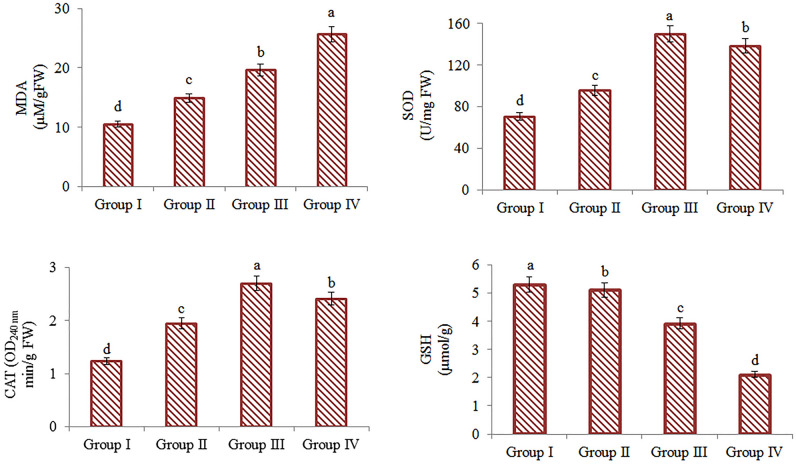
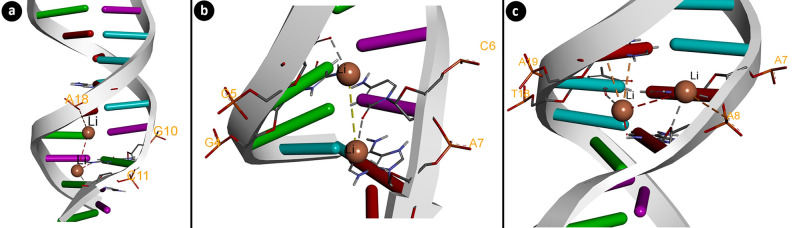
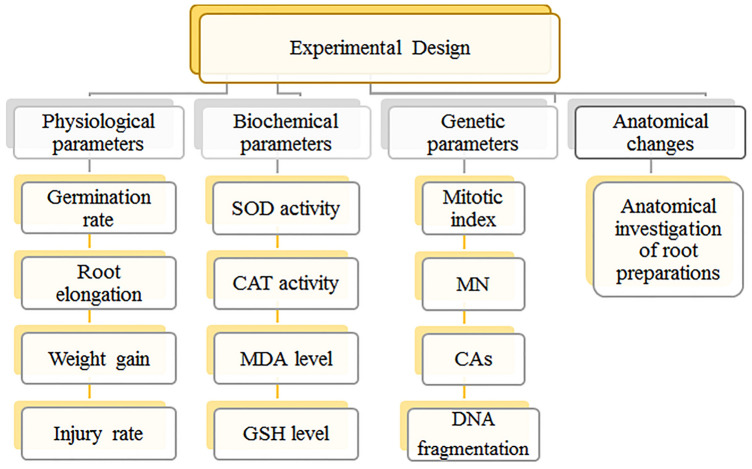
The increasing widespread use of lithium, which is preferred as an energy source in batteries produced for electric vehicles and in many electronic vehicles such as computers and mobile phones, has made it an important environmental pollutant. In this study, the toxicity profile of lithium carbonate (LiCO) was investigated with the Allium test, which is a bio-indicator test. Dose-related toxic effects were investigated using LiCO at doses of 25 mg/L, 50 mg/L, and 100 mg/L. The toxicity profile was determined by examining physiological, cytotoxic, genotoxic, biochemical and anatomical effects. Physiological effects of LiCO were determined by root length, injury rate, germination percentage and weight gain while cytotoxic effects were determined by mitotic index (MI) ratio and genotoxic effects were determined by micronucleus (MN) and chromosomal aberrations (CAs). The effect of LiCO on antioxidant and oxidant dynamics was determined by examining glutathione (GSH), malondialdehyde (MDA), catalase (CAT) and superoxide dismutase (SOD) levels, and anatomical changes were investigated in the sections of root meristematic tissues. As a result, LiCO exhibited a dose-dependent regression in germination-related parameters. This regression is directly related to the MI and 100 mg/L LiCO reduced MI by 38% compared to the control group. MN and CAs were observed at high rates in the groups treated with LiCO. Fragments were found with the highest rate among CAs. Other damages were bridge, unequal distribution of chromatin, sticky chromosome, vagrant chromosome, irregular mitosis, reverse polarization and multipolar anaphase. The genotoxic effects were associated with LiCO-DNA interactions determined by molecular docking. The toxic effects of LiCO are directly related to the deterioration of the antioxidant/oxidant balance in the cells. While MDA, an indicator of lipid peroxidation, increased by 59.1% in the group administered 100 mg/L LiCO, GSH, which has an important role in cell defense, decreased by 60.8%. Significant changes were also detected in the activities of SOD and CAT, two important enzymes in antioxidant defense, compared to the control. These toxic effects, which developed in the cells belonging to the lithium-treated groups, were also reflected in the tissue anatomy, and anatomical changes such as epidermis cell damage, cortex cell damage, flattened cell nucleus, thickening of the cortex cell wall and unclear vascular tissue were observed in the anatomical sections. The frequency of these changes also increased depending on the LiCO dose. As a result, LiCO, which is one of the lithium compounds, and has become an important contaminant in the environment with increasing technological developments, caused a combined and versatile toxicity in Allium cepa L. meristematic cells, especially by causing deterioration in antioxidant/oxidant dynamics.
随着锂离子电池在电动汽车和许多电子设备(如计算机和手机)中的广泛应用,作为首选能源的锂已成为一种重要的环境污染物。在这项研究中,使用 Allium 测试(一种生物指示剂测试)研究了碳酸锂 (LiCO) 的毒性特征。使用 25mg/L、50mg/L 和 100mg/L 的 LiCO 剂量研究了剂量相关的毒性作用。通过检查生理、细胞毒性、遗传毒性、生化和解剖学效应来确定毒性特征。LiCO 的生理效应通过根长、损伤率、发芽率和体重增加来确定,而细胞毒性效应通过有丝分裂指数 (MI) 比值来确定,遗传毒性效应通过微核 (MN) 和染色体畸变 (CA) 来确定。通过检查谷胱甘肽 (GSH)、丙二醛 (MDA)、过氧化氢酶 (CAT) 和超氧化物歧化酶 (SOD) 水平来确定 LiCO 对抗氧化剂和氧化剂动态的影响,并对根尖分生组织的组织切片进行解剖学变化的研究。结果表明,LiCO 表现出剂量依赖性的发芽相关参数回归。这种回归与 MI 直接相关,与对照组相比,100mg/L LiCO 降低了 MI 38%。在 LiCO 处理组中,MN 和 CA 的发生率很高。在 CA 中,发现了最高发生率的片段。其他损伤包括桥、染色质不均匀分布、粘性染色体、流浪染色体、不规则有丝分裂、反向极化和多极后期。遗传毒性作用与通过分子对接确定的 LiCO-DNA 相互作用有关。LiCO 的毒性作用直接与细胞内抗氧化/氧化平衡的恶化有关。在给予 100mg/L LiCO 的组中,脂质过氧化的标志物 MDA 增加了 59.1%,而在细胞防御中起重要作用的 GSH 减少了 60.8%。与对照组相比,抗氧化防御中两种重要酶 SOD 和 CAT 的活性也发生了显著变化。这些在锂处理组细胞中发展的毒性作用也反映在组织解剖学中,在组织解剖学切片中观察到表皮细胞损伤、皮层细胞损伤、核扁平化、皮层细胞壁增厚和血管组织不清晰等解剖学变化。这些变化的频率也随着 LiCO 剂量的增加而增加。因此,随着技术的发展,LiCO 已成为环境中一种重要的污染物,它在洋葱根尖分生细胞中引起了联合和多样的毒性,特别是通过破坏抗氧化/氧化动态。