Centre for Neuroscience Studies, Queen's University, Kingston, ON, Canada.
Department of Biomedical and Molecular Sciences, Queen's University, Kingston, ON, Canada.
Neurorehabil Neural Repair. 2023 Jun;37(6):394-408. doi: 10.1177/15459683221115413. Epub 2022 Aug 5.
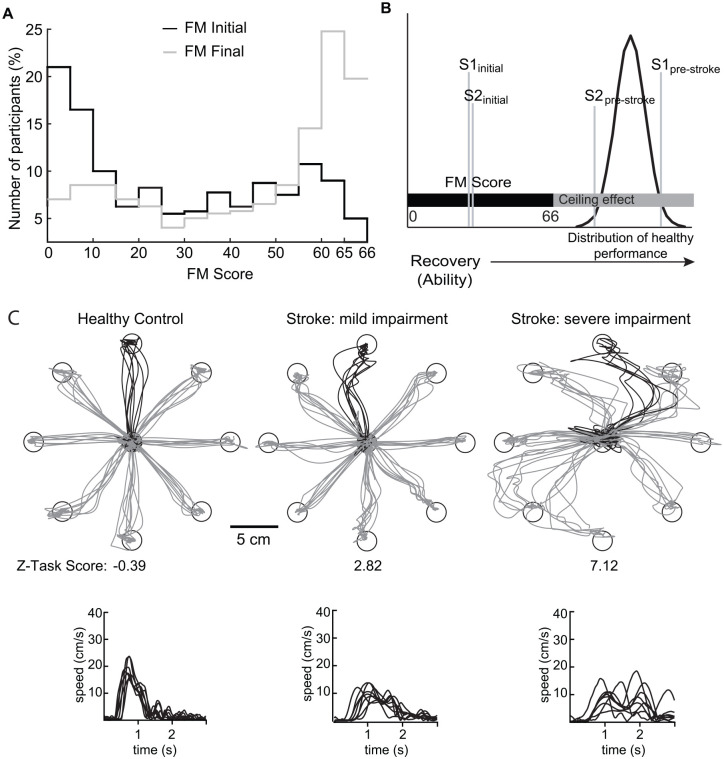
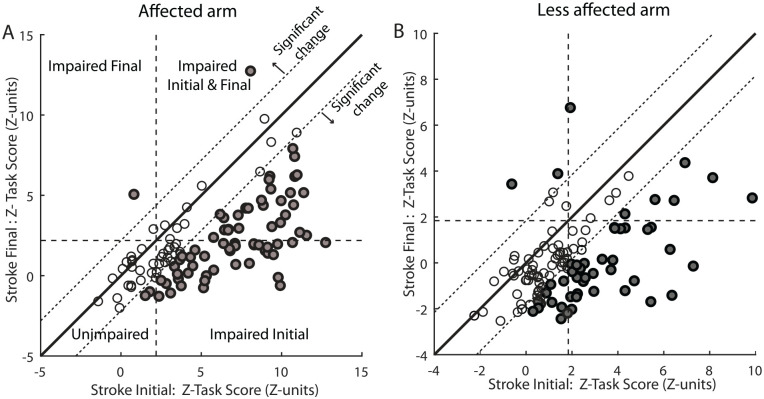
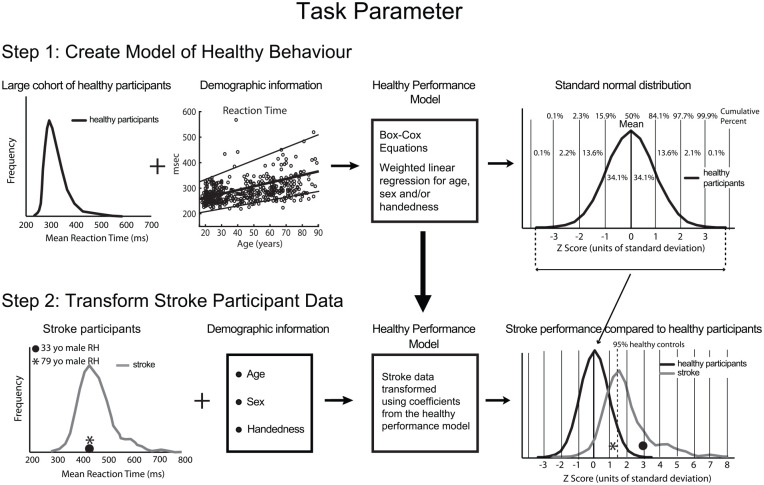
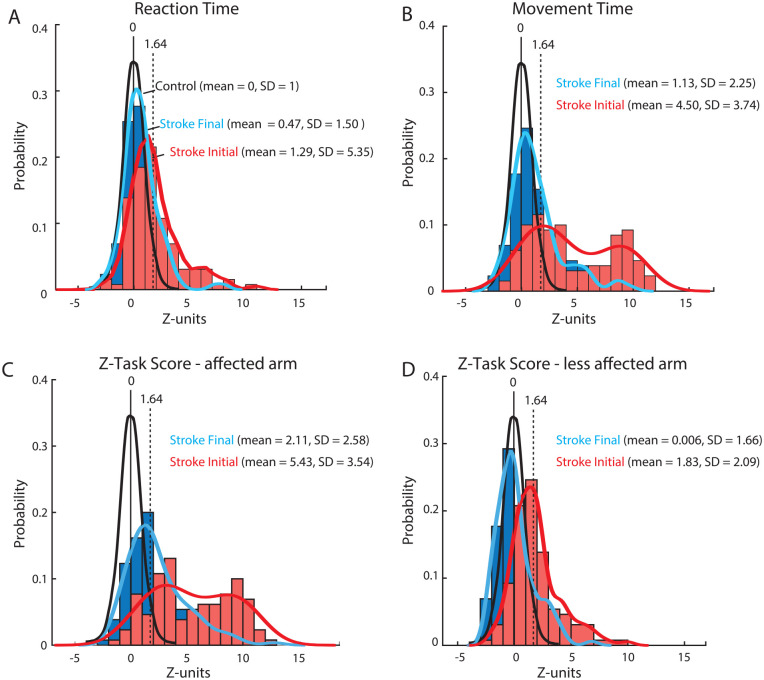
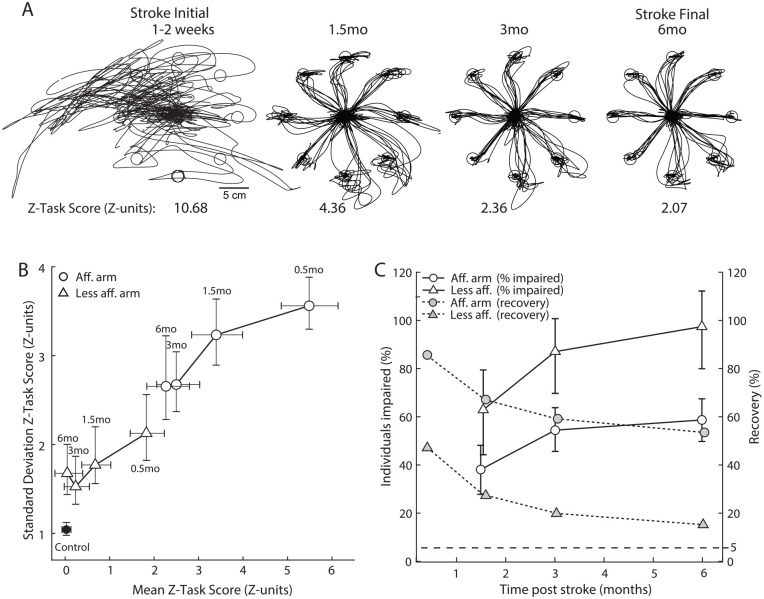
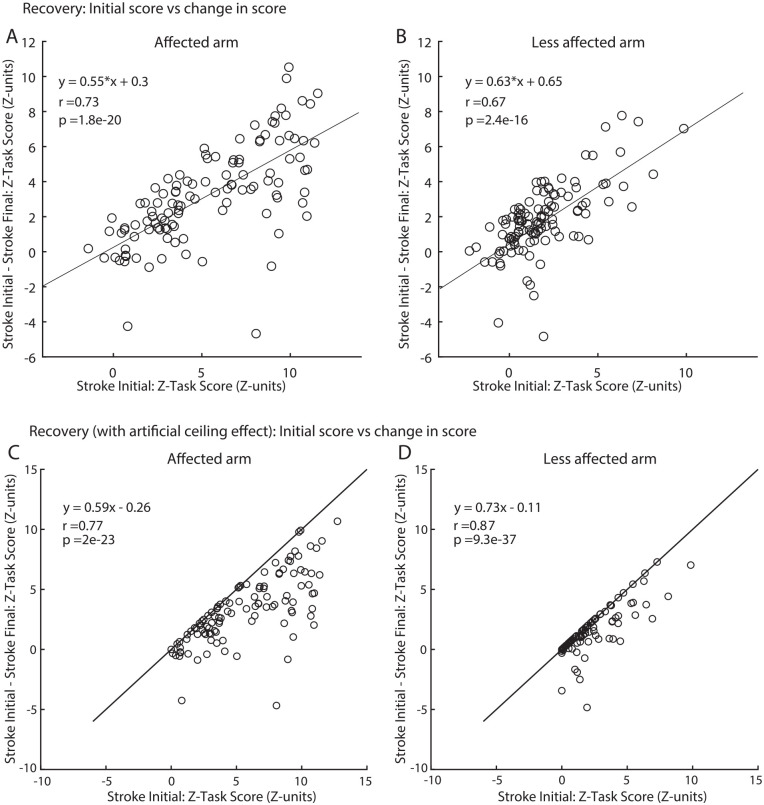
While many areas of medicine have benefited from the development of objective assessment tools and biomarkers, there have been comparatively few improvements in techniques used to assess brain function and dysfunction. Brain functions such as perception, cognition, and motor control are commonly measured using criteria-based, ordinal scales which can be coarse, have floor/ceiling effects, and often lack the precision to detect change. There is growing recognition that kinematic and kinetic-based measures are needed to quantify impairments following neurological injury such as stroke, in particular for clinical research and clinical trials. This paper will first consider the challenges with using criteria-based ordinal scales to quantify impairment and recovery. We then describe how kinematic-based measures can overcome many of these challenges and highlight a statistical approach to quantify kinematic measures of behavior based on performance of neurologically healthy individuals. We illustrate this approach with a visually-guided reaching task to highlight measures of impairment for individuals following stroke. Finally, there has been considerable controversy about the calculation of motor recovery following stroke. Here, we highlight how our statistical-based approach can provide an effective estimate of impairment and recovery.
虽然许多医学领域都受益于客观评估工具和生物标志物的发展,但用于评估大脑功能和功能障碍的技术却鲜有改进。感知、认知和运动控制等大脑功能通常使用基于标准的有序量表来衡量,这些量表可能比较粗糙,存在地板/天花板效应,并且通常缺乏检测变化的精度。人们越来越认识到,需要基于运动学和动力学的测量来量化神经损伤(如中风)后的损伤,特别是对于临床研究和临床试验。本文首先将考虑使用基于标准的有序量表来量化损伤和恢复的挑战。然后,我们描述了基于运动学的测量如何克服这些挑战,并强调了一种基于神经健康个体表现来量化运动学行为测量的统计方法。我们通过一个视觉引导的伸手任务来说明这种方法,以突出中风后个体的损伤测量。最后,中风后运动恢复的计算存在相当大的争议。在这里,我们强调我们基于统计的方法如何提供损伤和恢复的有效估计。