Joint Department of Biomedical Engineering, Marquette University and Medical College of Wisconsin, Milwaukee, WI, USA.
Neuroscience Research Labs, Clement J. Zablocki Veterans Affairs Medical Center, Research 151, 5000 W. National Ave., Milwaukee, WI, 53295, USA.
Ann Biomed Eng. 2022 Nov;50(11):1473-1487. doi: 10.1007/s10439-022-03032-w. Epub 2022 Aug 6.
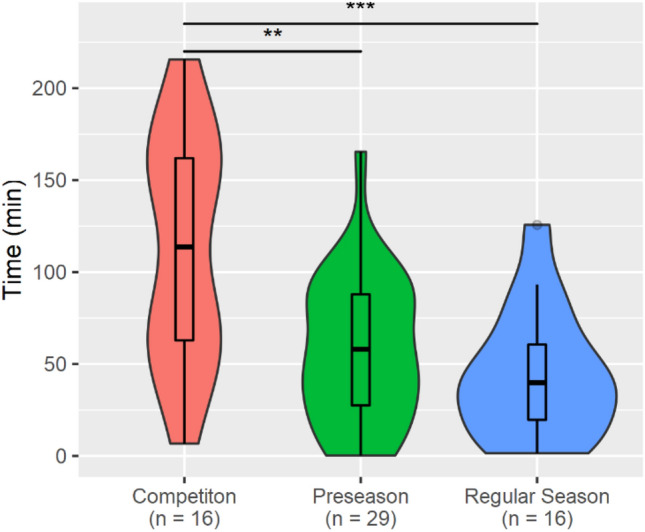
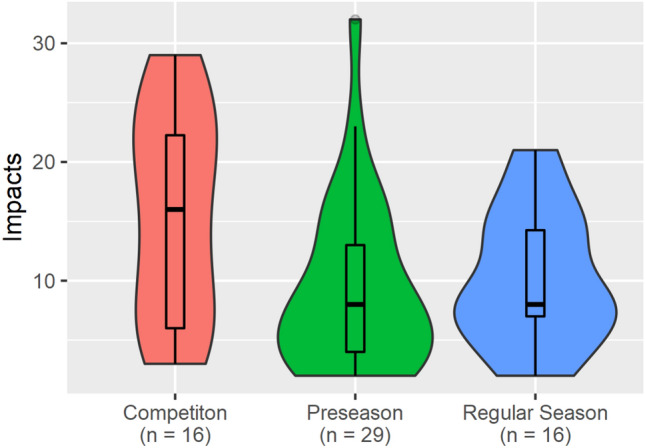
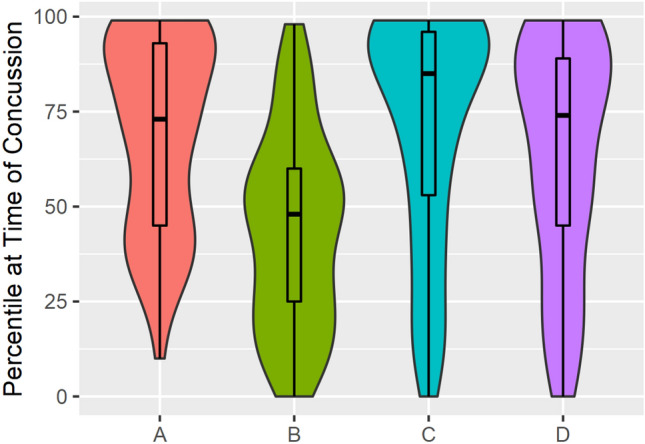
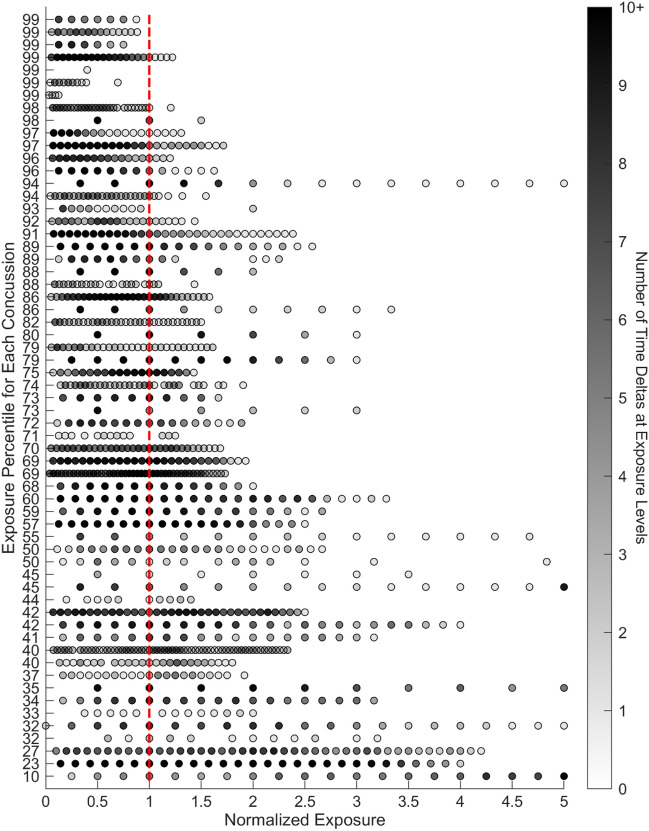
Sport-related concussions can result from a single high magnitude impact that generates concussive symptoms, repeated subconcussive head impacts aggregating to generate concussive symptoms, or a combined effect from the two mechanisms. The array of symptoms produced by these mechanisms may be clinically interpreted as a sport-related concussion. It was hypothesized that head impact exposure resulting in concussion is influenced by severity, total number, and frequency of subconcussive head impacts. The influence of total number and magnitude of impacts was previously explored, but frequency was investigated to a lesser degree. In this analysis, head impact frequency was investigated over a new metric called 'time delta', the time difference from the first recorded head impact of the day until the concussive impact. Four exposure metrics were analyzed over the time delta to determine whether frequency of head impact exposure was greater for athletes on their concussion date relative to other dates of contact participation. Those metrics included head impact frequency, head impact accrual rate, risk weighted exposure (RWE), and RWE accrual rate. Athletes experienced an elevated median number of impacts, RWE, and RWE accrual rate over the time delta on their concussion date compared to non-injury sessions. This finding suggests elevated frequency of head impact exposure on the concussion date compared to other dates that may precipitate the onset of concussion.
运动相关性脑震荡可由单次高强度撞击导致出现脑震荡症状、多次亚临床性头部撞击累积导致出现脑震荡症状,或由这两种机制共同作用导致。这些机制产生的一系列症状在临床上可能被解释为与运动相关的脑震荡。据推测,导致脑震荡的头部撞击暴露程度受严重程度、亚临床性头部撞击的总数和频率的影响。此前已经探讨了总撞击数和撞击强度的影响,但对频率的研究程度较小。在这项分析中,头部撞击频率是通过一个新的指标“时间差”来研究的,即从当天第一次记录到头部撞击到发生脑震荡撞击的时间差。分析了四个暴露指标在时间差上的情况,以确定在脑震荡日运动员头部撞击暴露的频率是否高于其他接触参与日。这些指标包括头部撞击频率、头部撞击累积率、风险加权暴露(RWE)和 RWE 累积率。与非受伤日相比,在脑震荡日,运动员的中位数头部撞击次数、RWE 和 RWE 累积率在时间差上更高。这一发现表明,在脑震荡日,头部撞击暴露的频率高于可能导致脑震荡发作的其他日期。