Sun Hua, Qi Xiaohui
Department of Geriatrics, Zhejiang Hospital of Integrated Traditional Chinese and Western Medicine, No.208 East Huancheng Road, Hangzhou, Zhejiang, China.
Department of Endocrine and Metabolic Diseases, Shanghai Institute of Endocrine and Metabolic Diseases, Ruijin Hospital, Shanghai Jiao Tong University School of Medicine, No.197 Ruijin Er Road, Shanghai, China.
Discov Oncol. 2022 Aug 7;13(1):70. doi: 10.1007/s12672-022-00536-8.
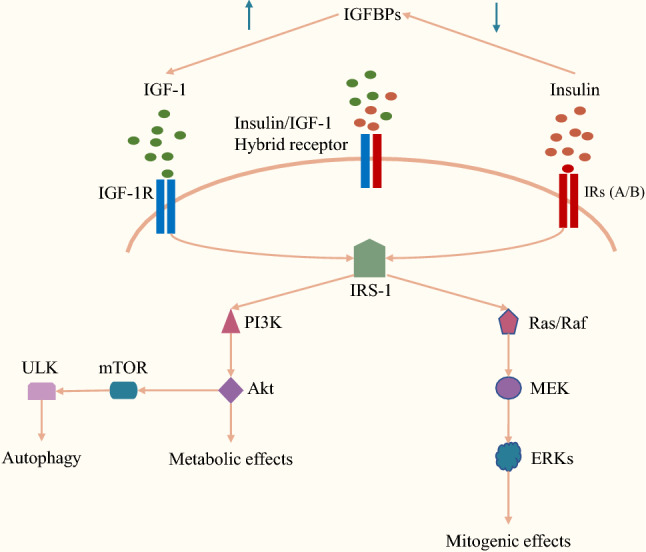
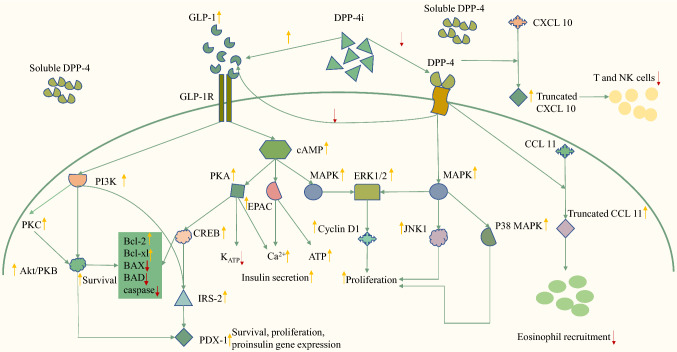
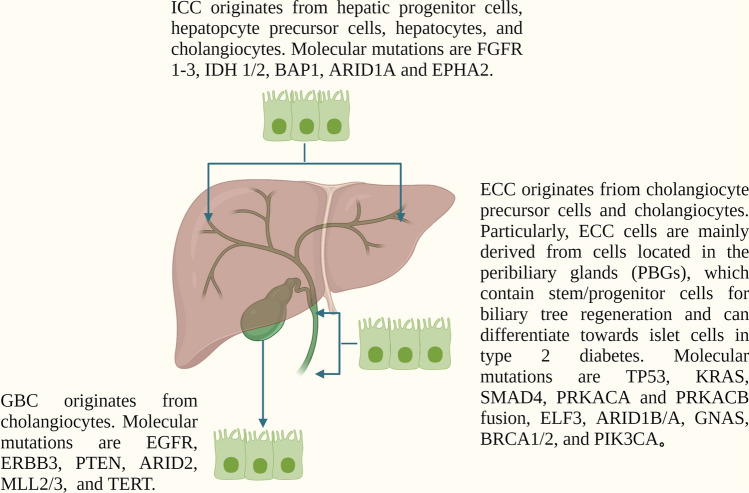
Insulin and incretin-based drugs are important antidiabetic agents with complex effects on cell growth and metabolism. Emerging evidence shows that insulin and incretin-based drugs are associated with altered risk of biliary tract cancer (BTC). Observational study reveals that insulin is associated with an increased risk of extrahepatic cholangiocarcinoma (ECC), but not intrahepatic cholangiocarcinoma (ICC) or gallbladder cancer (GBC). This type-specific effect can be partly explained by the cell of origin and heterogeneous genome landscape of the three subtypes of BTC. Similar to insulin, incretin-based drugs also exhibit very interesting contradictions and inconsistencies in response to different cancer phenotypes, including BTC. Both epidemiological and experimental evidence suggests that incretin-based drugs can be a promoter of some cancers and an inhibitor of others. It is now more apparent that this type of drugs has a broader range of physiological effects on the body, including regulation of endoplasmic reticulum stress, autophagy, metabolic reprogramming, and gene expression. In particular, dipeptidyl peptidase-4 inhibitors (DPP-4i) have a more complex effect on cancer due to the multi-functional nature of DPP-4. DPP-4 exerts both catalytic and non-enzymatic functions to regulate metabolic homeostasis, immune reaction, cell migration, and proliferation. In this review, we collate the epidemiological and experimental evidence regarding the effect of these two classes of drugs on BTC to provide valuable information.
胰岛素和基于肠促胰岛素的药物是重要的抗糖尿病药物,对细胞生长和代谢具有复杂的影响。新出现的证据表明,胰岛素和基于肠促胰岛素的药物与胆道癌(BTC)风险改变有关。观察性研究显示,胰岛素与肝外胆管癌(ECC)风险增加有关,但与肝内胆管癌(ICC)或胆囊癌(GBC)无关。这种类型特异性效应可以部分由BTC三种亚型的起源细胞和异质性基因组格局来解释。与胰岛素类似,基于肠促胰岛素的药物在对包括BTC在内的不同癌症表型的反应中也表现出非常有趣的矛盾和不一致。流行病学和实验证据均表明,基于肠促胰岛素的药物可能是某些癌症的促进剂,而对另一些癌症则是抑制剂。现在更明显的是,这类药物对身体具有更广泛的生理作用,包括对内质网应激、自噬、代谢重编程和基因表达的调节。特别是,二肽基肽酶-4抑制剂(DPP-4i)由于DPP-4的多功能性质而对癌症具有更复杂的作用。DPP-4发挥催化和非酶功能来调节代谢稳态、免疫反应、细胞迁移和增殖。在本综述中,我们整理了有关这两类药物对BTC影响的流行病学和实验证据,以提供有价值的信息。