Division of Cardiovascular Medicine and Nephrology, Department of Internal Medicine, Faculty of Medicine, University of Miyazaki.
J Atheroscler Thromb. 2022 Oct 1;29(10):1409-1420. doi: 10.5551/jat.RV17066. Epub 2022 Aug 6.
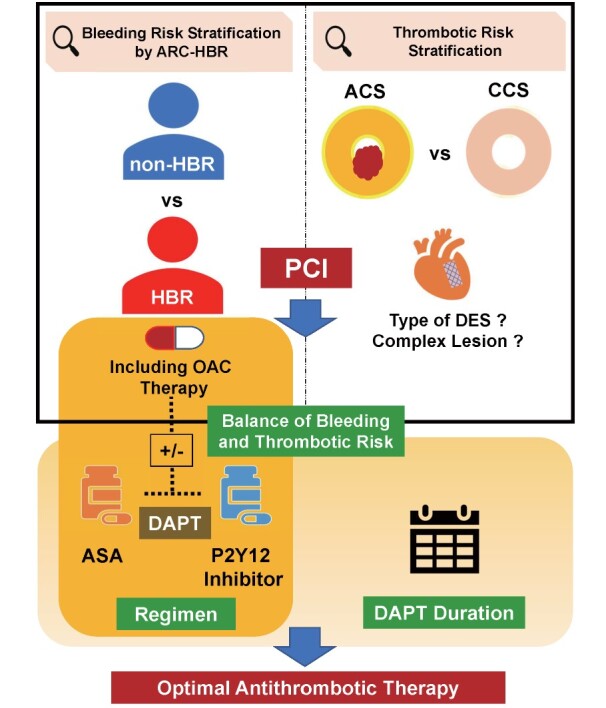
Dual antiplatelet therapy (DAPT) is a therapeutic cornerstone to prevent stent thrombosis following percutaneous coronary intervention (PCI) for coronary artery disease (CAD). However, the longer the DAPT duration, the higher the incidence of bleeding and mortality. Since the advent of second-generation drug-eluting stents (DES), the continuous evolution of DES has reduced the thrombotic risk and allowed for a shorter DAPT duration. On the other hand, concerns on the elevated risk of bleeding during antithrombotic therapy have been further raised due to the growing number of elderly CAD patients with multiple comorbidities. The consequent debate topic over post-PCI antithrombotic therapy has shifted from simply reducing thrombotic risk to safely minimizing bleeding risk. Due to the significant impact of bleeding on clinical outcomes, including prognosis, current guidelines on antithrombotic therapy for CAD prioritize stratification of patients at a high bleeding risk (HBR) as the top consideration in determining post-PCI antithrombotic therapy. Achieving optimal antithrombotic therapy for each patient undergoing PCI requires a better understanding of the clinical variables constituting the balance of bleeding and thrombotic risk. This review highlights relevant evidence required to optimize antithrombotic therapy for HBR patients undergoing PCI.
双联抗血小板治疗(DAPT)是预防经皮冠状动脉介入治疗(PCI)后冠状动脉疾病(CAD)支架血栓形成的治疗基石。然而,DAPT 持续时间越长,出血和死亡率越高。自第二代药物洗脱支架(DES)问世以来,DES 的不断发展降低了血栓形成风险,并允许缩短 DAPT 持续时间。另一方面,由于越来越多患有多种合并症的老年 CAD 患者,抗血栓治疗中出血风险升高的担忧进一步加剧。因此,PCI 后抗血栓治疗的争议话题已从单纯降低血栓形成风险转向安全最小化出血风险。由于出血对临床结局(包括预后)的重大影响,目前 CAD 抗血栓治疗指南将高出血风险(HBR)患者分层作为确定 PCI 后抗血栓治疗的首要考虑因素。为每位接受 PCI 的患者实现最佳抗血栓治疗需要更好地了解构成出血和血栓形成风险平衡的临床变量。本综述强调了优化接受 PCI 的 HBR 患者抗血栓治疗所需的相关证据。