Kalaigar Sumayakausar S, Rajashekar Rajalaksmi Birur, Nataraj Suma M, Vishwanath Prashant, Prashant Akila
Center for Medical Genomics & Counselling, Department of Biochemistry, JSS Medical College, JSS Academy of Higher Education and Research, Mysore, India.
Department of Pathology, JSS Medical College, JSS Academy of Higher Education and Research, Mysore, India.
Bioinform Biol Insights. 2022 Aug 3;16:11779322221115536. doi: 10.1177/11779322221115536. eCollection 2022.
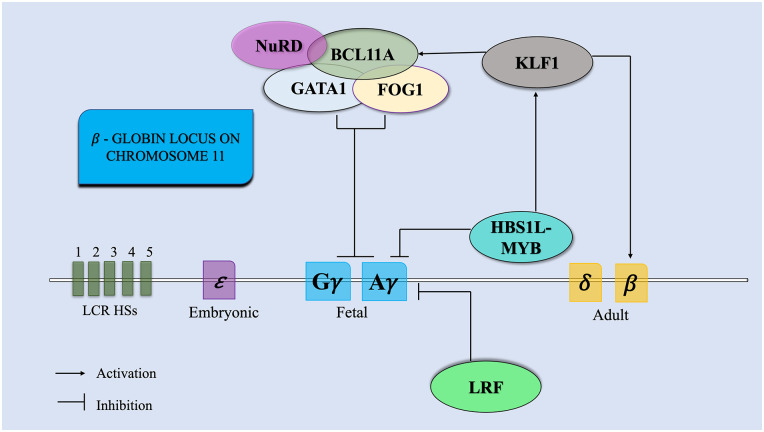
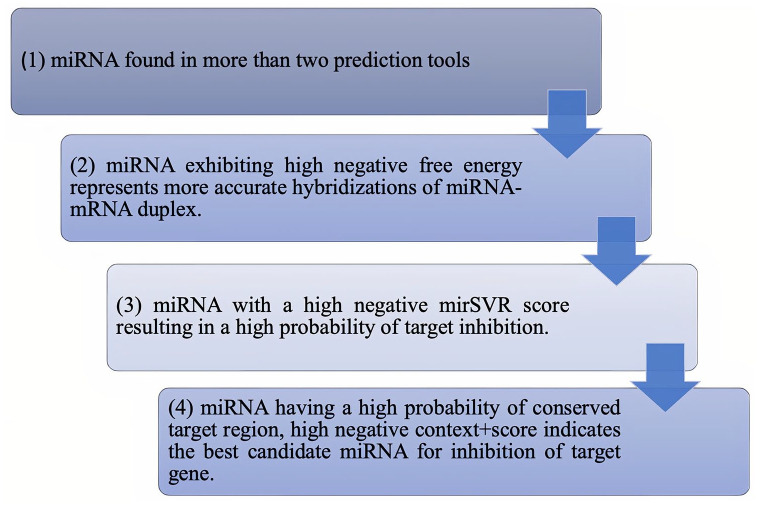
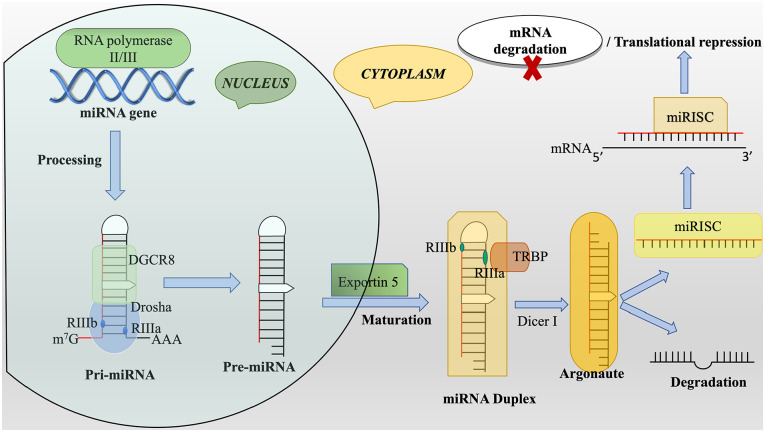
β-thalassemia is a significant health issue worldwide, with approximately 7% of the world's population having defective hemoglobin genes. MicroRNAs (miRNAs) are short noncoding RNAs regulating gene expression at the post-transcriptional level by targeting multiple gene transcripts. The levels of fetal hemoglobin (HbF) can be increased by regulating the expression of the γ-globin gene using the suppressive effects of miRNAs on several transcription factors such as MYB, BCL11A, GATA1, and KLF. An early step in discovering miRNA:mRNA target interactions is the computational prediction of miRNA targets that can be later validated with wet-lab investigations. This review highlights some commonly employed computational tools such as miRBase, Target scan, DIANA-microT-CDS, miRwalk, miRDB, and micro-TarBase that can be used to predict miRNA targets. Upon comparing the miRNA target prediction tools, 4 main aspects of the miRNA:mRNA target interaction are shown to include a few common features on which most target prediction is based: conservation sites, seed match, free energy, and site accessibility. Understanding these prediction tools' usage will help users select the appropriate tool and interpret the results accurately. This review will, therefore, be helpful to peers to quickly choose a list of the best miRNAs associated with HbF induction. Researchers will obtain significant results using these bioinformatics tools to establish a new important concept in managing β-thalassemia and delivering therapeutic strategies for improving their quality of life.
β地中海贫血是一个全球性的重大健康问题,世界上约7%的人口存在血红蛋白基因缺陷。微小RNA(miRNA)是一类短的非编码RNA,通过靶向多个基因转录本在转录后水平调节基因表达。利用miRNA对MYB、BCL11A、GATA1和KLF等多种转录因子的抑制作用来调节γ珠蛋白基因的表达,可提高胎儿血红蛋白(HbF)的水平。发现miRNA:mRNA靶标相互作用的早期步骤是对miRNA靶标的计算预测,随后可通过湿实验室研究进行验证。本综述重点介绍了一些常用的计算工具,如miRBase、Target scan、DIANA-microT-CDS、miRwalk、miRDB和micro-TarBase,这些工具可用于预测miRNA靶标。在比较miRNA靶标预测工具时,miRNA:mRNA靶标相互作用的4个主要方面显示出一些大多数靶标预测所基于的共同特征:保守位点、种子匹配、自由能和位点可及性。了解这些预测工具的用法将帮助用户选择合适的工具并准确解释结果。因此,本综述将有助于同行快速选择与HbF诱导相关的最佳miRNA列表。研究人员使用这些生物信息学工具将获得显著成果,从而在β地中海贫血管理方面建立一个新的重要概念,并提供改善其生活质量的治疗策略。