Department of Urology, Changhai Hospital, Naval Medical University, (Second Military Medical University), Shanghai, China.
Department of Urology, The Second People's Hospital of BengBu, Bengbu, China.
Front Immunol. 2022 Jul 22;13:935595. doi: 10.3389/fimmu.2022.935595. eCollection 2022.
The recent research found that IGF regulator genes played a pivotal role in multiple biological processes, which may be developed for cancer treatment. However, the characteristics and implication of IGF regulators in cancers, especially in clear cell renal cell carcinoma (ccRCC), remain elusive.
We systematically analyzed the expression, prognostic valuation, genome variation, and functional implication at pan-cancer level from The Cancer Genome Atlas. According to expression levels of IGF regulator genes, ccRCC could be divided into three different subtypes unsupervised cluster algorithm: IGF pattern cancer type1 (IPCS1), type2 (IPCS2), and type3 (IPCS3). The immune microenvironment, immunotherapy response, metabolic pattern, and tumor progression signature among the three subgroups were investigated. The clinical characteristics, genomic mutations, and potential drug sensitivity were further analyzed. IGF pattern-related risk model was constructed to predict RCC patients' outcome. Finally, SHC1, a potential IGF axis target, was comprehensively investigated in ccRCC.
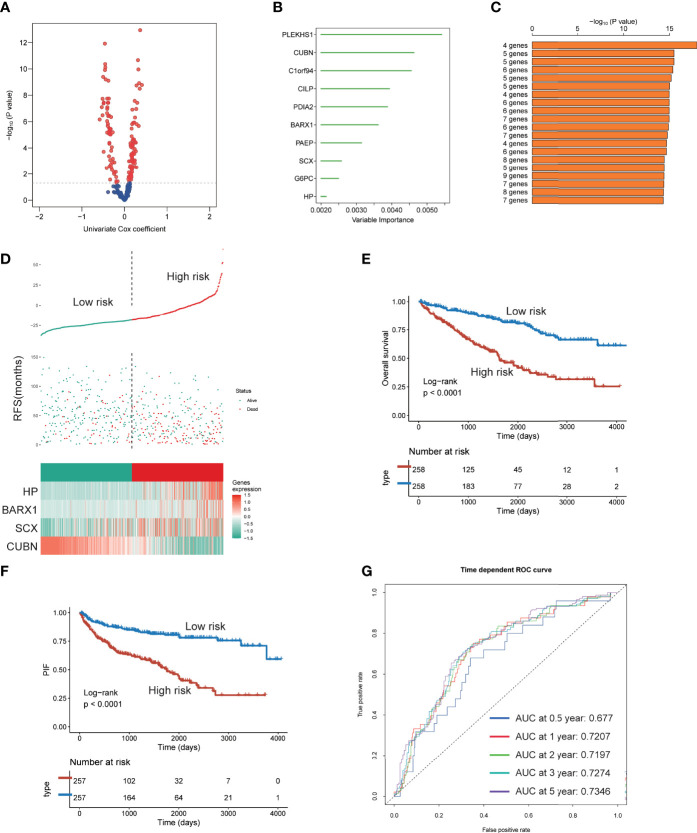
We found that IGF regulator genes were specifically upregulated in various cancer tissues, which were correlated with copy number variations and dysregulated pathways. IPCS1, IPCS2, and IPCS3 exhibited different clinical profiles and biological characteristics in ccRCC. IPCS3 subtype indicated a higher clinical stage and a worse survival. IPSC3 ccRCC displayed activated metabolic signatures to fuel the cancer progression. IPCS3 subgroup holds a higher tumor mutation burden and lower immune activities, which resulted in a low ICI therapy response and tumor immunity dysfunction state. The genome copy numbers of IPCS2/3, including arm gain and arm loss, were significantly higher than IPCS1. Besides, the drug sensitivity profiles were different among the three subgroups. The prognostic risk model based on subtype's biomarker exerted a promising performance both in training and validation cohorts. Finally, upregulated expression of SHC1 partly induced poorer immunotherapy response and shorter survival of ccRCC patients.
Targeting IGF regulators may be functioned as a treatment approach among multi-cancers. IGF regulator-related signature could reshape the tumor immune microenvironment activating multi-step immune programs. The inhibition of SHC1 may enhance the efficacy of immunotherapy, and SHC1 could be a suitable target for ccRCC therapy.
最近的研究发现,IGF 调节基因在多种生物过程中发挥着关键作用,这可能为癌症治疗提供新的靶点。然而,IGF 调节因子在癌症中的特征和意义,特别是在透明细胞肾细胞癌(ccRCC)中,仍然难以捉摸。
我们系统地分析了来自癌症基因组图谱(TCGA)的 pan-cancer 水平的 IGF 调节基因的表达、预后评估、基因组变异和功能意义。根据 IGF 调节基因的表达水平,ccRCC 可分为三个不同的亚型 无监督聚类算法:IGF 模式 1 型(IPCS1)、2 型(IPCS2)和 3 型(IPCS3)。研究了三个亚组之间的免疫微环境、免疫治疗反应、代谢模式和肿瘤进展特征。进一步分析了临床特征、基因组突变和潜在的药物敏感性。构建了 IGF 模式相关风险模型来预测 RCC 患者的预后。最后,全面研究了 SHC1,一种潜在的 IGF 轴靶标,在 ccRCC 中的作用。
我们发现 IGF 调节基因在各种癌症组织中特异性上调,与拷贝数变异和失调途径相关。在 ccRCC 中,IPCS1、IPCS2 和 IPCS3 表现出不同的临床特征和生物学特征。IPCS3 亚组表明临床分期较高,生存预后较差。IPCS3 型 ccRCC 表现出激活的代谢特征,以推动肿瘤的进展。IPCS3 亚组的肿瘤突变负荷较高,免疫活性较低,导致 ICI 治疗反应低和肿瘤免疫功能障碍状态。IPCS2/3 的基因组拷贝数,包括臂增益和臂缺失,明显高于 IPCS1。此外,三组之间的药物敏感性谱不同。基于亚型生物标志物的预后风险模型在训练和验证队列中均表现出良好的性能。最后,SHC1 的上调表达部分导致 ccRCC 患者免疫治疗反应较差和生存时间较短。
靶向 IGF 调节因子可能在多种癌症中作为一种治疗方法。IGF 调节因子相关特征可以重塑肿瘤免疫微环境,激活多步免疫程序。SHC1 的抑制可能增强免疫治疗的疗效,SHC1 可能是 ccRCC 治疗的一个合适靶点。