Department of Allergy, State Key Laboratory of Complex Severe and Rare Diseases, Peking Union Medical College Hospital, Chinese Academy of Medical Science and Peking Union Medical College, Beijing, China.
Research Division of Clinical Pharmacology, the First Affiliated Hospital of Nanjing Medical University, Nanjing, China.
Front Immunol. 2022 Jul 22;13:911300. doi: 10.3389/fimmu.2022.911300. eCollection 2022.
Allergic respiratory diseases have increased dramatically due to air pollution over the past few decades. However, studies are limited on the effects of inorganic components and particulate matter with different particle sizes in smog on allergic diseases, and the possible molecular mechanism of inducing allergies has not been thoroughly studied.
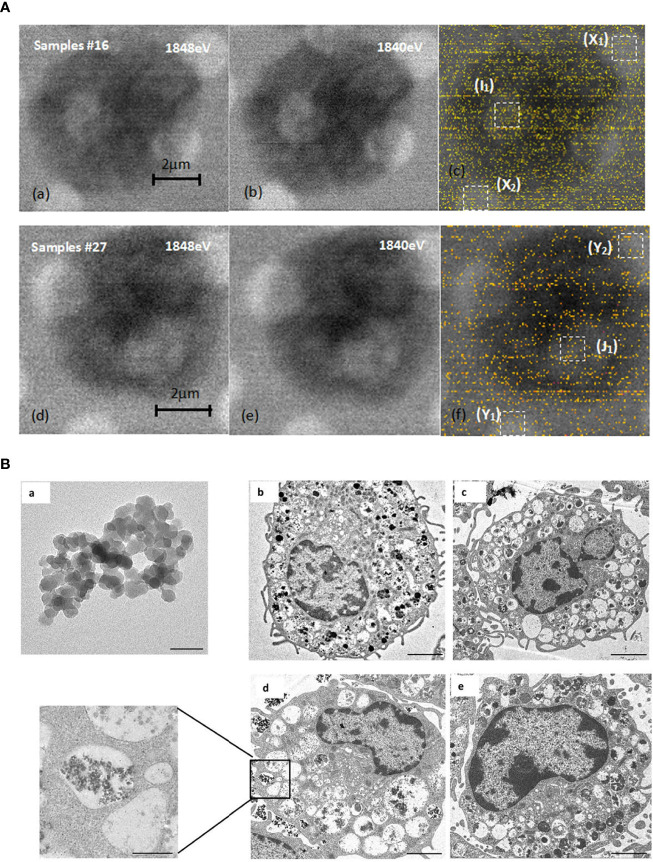
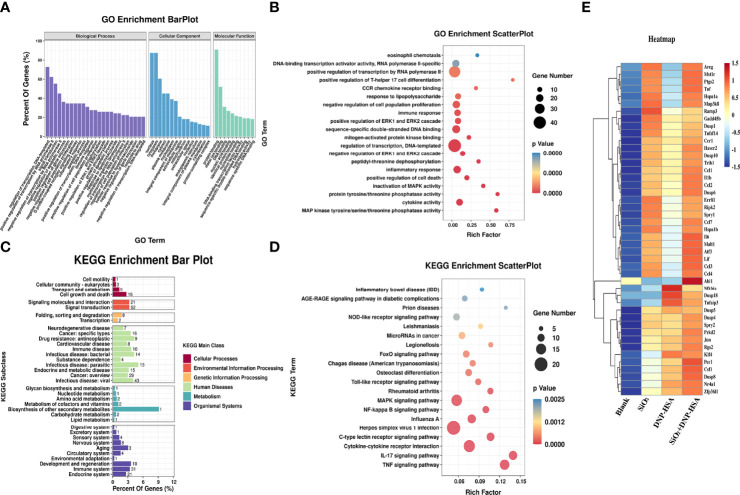
Four common mineral elements with different particle sizes in smog particles were selected, including AlO, TiO, FeO, and SiO. We studied the relationship and molecular mechanism of smog particle composition, particle size, and allergic reactions using mast cells, immunoglobulin E (IgE)-mediated passive cutaneous anaphylaxis (PCA) model, and an ovalbumin (OVA)-induced asthmatic mouse model and , combined with transmission electron microscopy, scanning transmission X-ray microscopy analysis, and transcriptome sequencing.
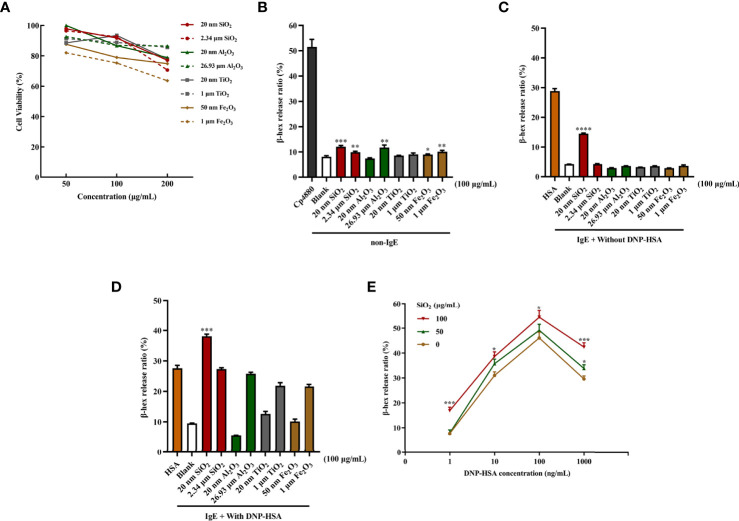
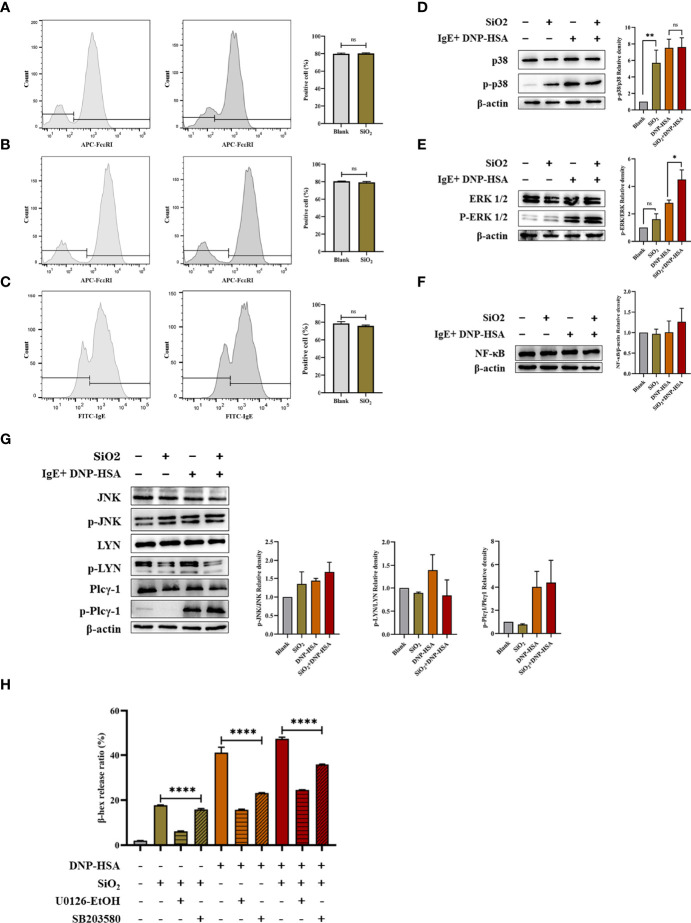
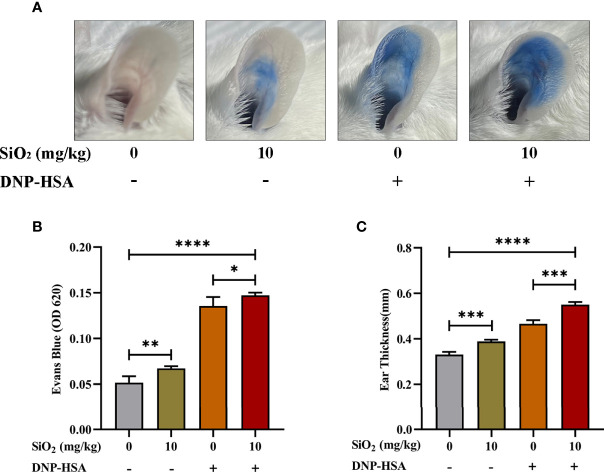
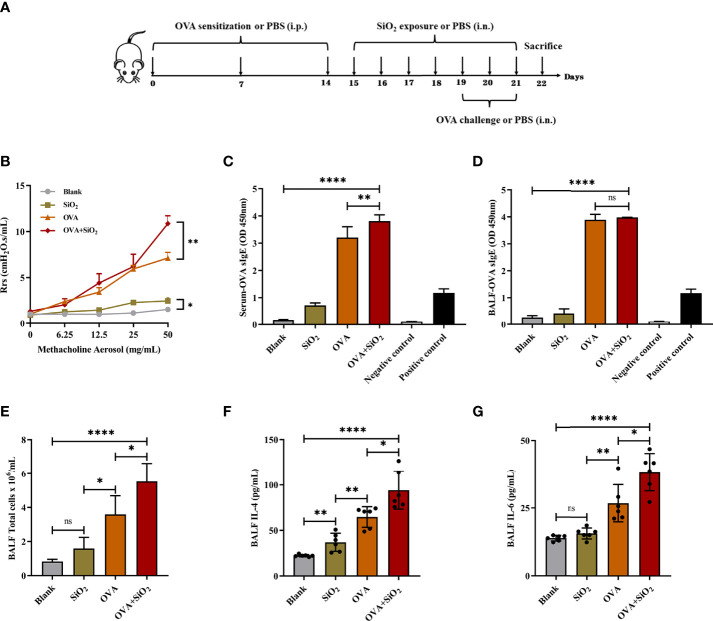
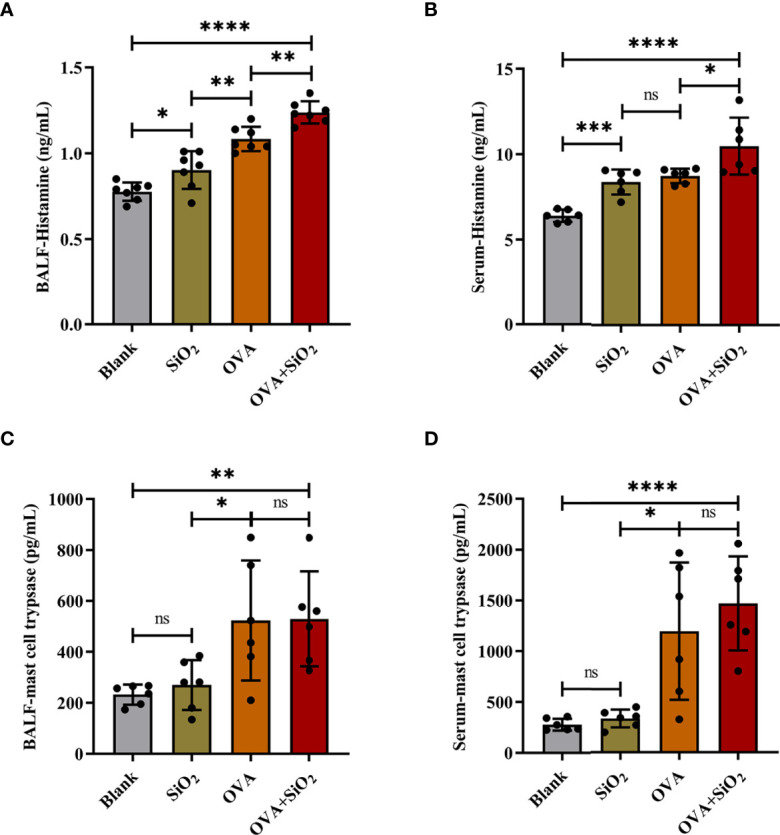
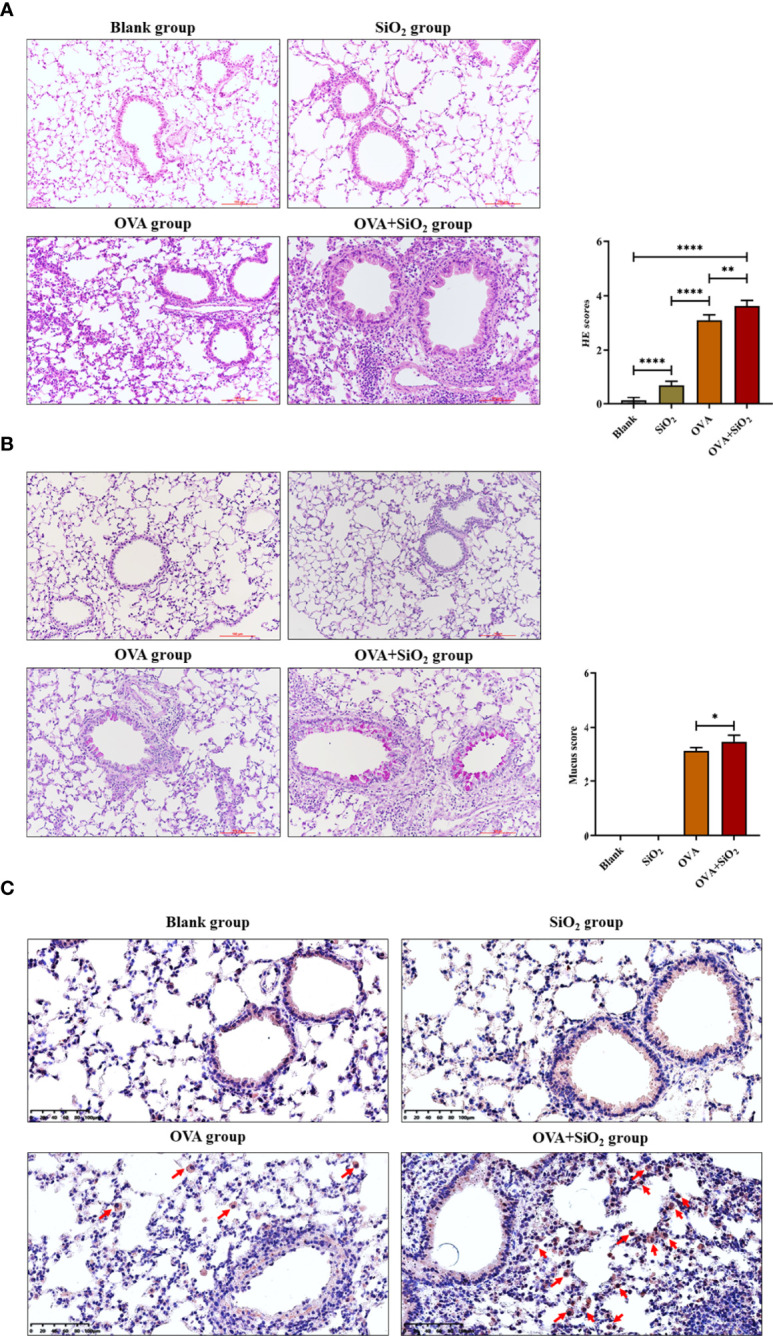
Only 20 nm SiO particles significantly increased β-hexosaminidase release, based on dinitrophenol (DNP)-human serum albumin (HSA) stimulation, from IgE-sensitized mast cells, while other particles did not. Meanwhile, the PCA model showed that Evan's blue extravasation in mice was increased after treatment with nano-SiO particles. Nano-SiO particles exposure in the asthmatic mouse model caused an enhancement of allergic airway inflammation as manifested by OVA-specific serum IgE, airway hyperresponsiveness, lung inflammation injury, mucous cell metaplasia, cytokine expression, mast cell activation, and histamine secretion, which were significantly increased. Nano-SiO particles exposure did not affect the expression of FcϵRI or the ability of mast cells to bind IgE but synergistically activated mast cells by enhancing the mitogen-activated protein kinase (MAPK) signaling pathway, especially the phosphorylation levels of the extracellular signal-regulated kinase (ERK)1/2. The ERK inhibitors showed a significant inhibitory effect in reducing β-hexosaminidase release.
Our results indicated that nano-SiO particles stimulation might synergistically activate IgE-sensitized mast cells by enhancing the MAPK signaling pathway and that nano-SiO particles exposure could exacerbate allergic inflammation. Our experimental results provide useful information for preventing and treating allergic diseases.
在过去几十年中,由于空气污染,过敏性呼吸道疾病急剧增加。然而,关于雾霾中不同粒径的无机成分和颗粒物对过敏性疾病的影响的研究还很有限,诱导过敏的可能分子机制也尚未得到深入研究。
选择雾霾颗粒中四种常见的不同粒径的矿物质元素,包括 AlO、TiO、FeO 和 SiO。我们使用肥大细胞、免疫球蛋白 E(IgE)介导的被动皮肤过敏(PCA)模型和卵清蛋白(OVA)诱导的哮喘小鼠模型,结合透射电子显微镜、扫描透射 X 射线显微镜分析和转录组测序,研究了雾霾颗粒成分、粒径与过敏反应的关系和分子机制。
只有 20nmSiO 颗粒在 DNP-HSA 刺激下,显著增加 IgE 致敏肥大细胞中β-己糖胺酶的释放,而其他颗粒则没有。同时,PCA 模型显示纳米 SiO 颗粒处理后小鼠伊文思蓝渗出增加。哮喘小鼠模型中纳米 SiO 颗粒暴露导致过敏气道炎症增强,表现为 OVA 特异性血清 IgE、气道高反应性、肺炎症损伤、粘液细胞化生、细胞因子表达、肥大细胞活化和组胺分泌增加,均显著增加。纳米 SiO 颗粒暴露不影响 FcεRI 的表达或肥大细胞结合 IgE 的能力,但通过增强丝裂原活化蛋白激酶(MAPK)信号通路,特别是细胞外信号调节激酶(ERK)1/2 的磷酸化水平,协同激活肥大细胞。ERK 抑制剂在减少β-己糖胺酶释放方面显示出显著的抑制作用。
我们的结果表明,纳米 SiO 颗粒刺激可能通过增强 MAPK 信号通路协同激活 IgE 致敏的肥大细胞,纳米 SiO 颗粒暴露可加重过敏炎症。我们的实验结果为预防和治疗过敏性疾病提供了有用的信息。