Ahmed Wesam S, Philip Angelin M, Biswas Kabir H
Division of Biological and Biomedical Sciences, College of Health and Life Sciences, Hamad Bin Khalifa University, Qatar Foundation, Doha, Qatar.
Division of Genomics and Translational Biomedicine, College of Health and Life Sciences, Hamad Bin Khalifa University, Qatar Foundation, Doha, Qatar.
Front Mol Biosci. 2022 Jul 22;9:846996. doi: 10.3389/fmolb.2022.846996. eCollection 2022.
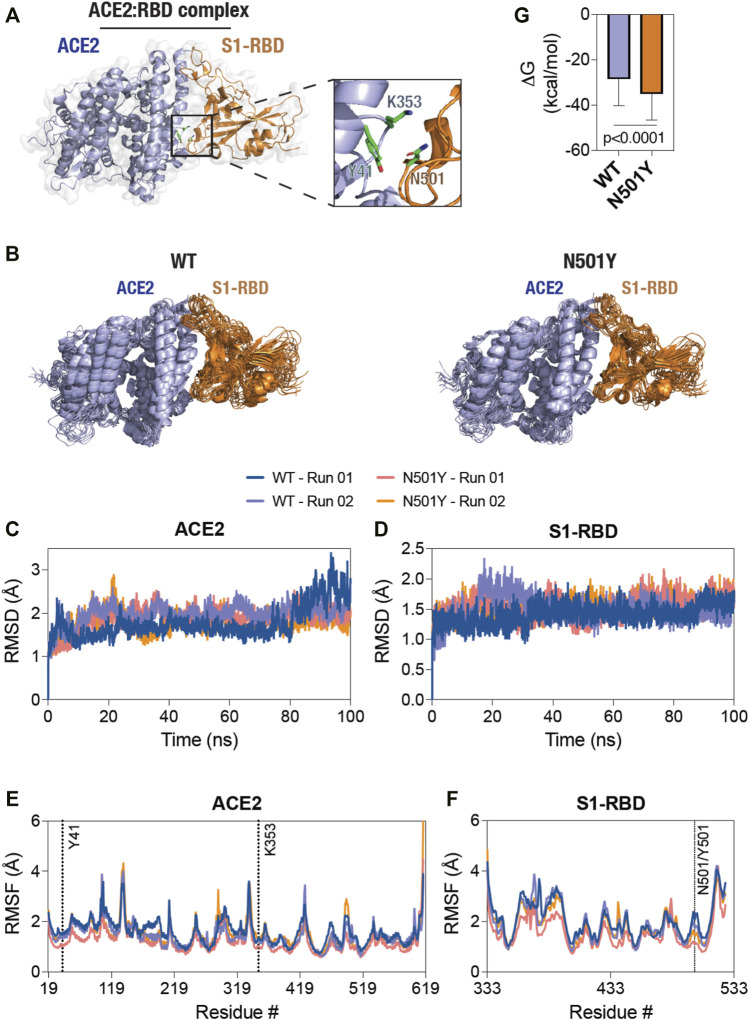
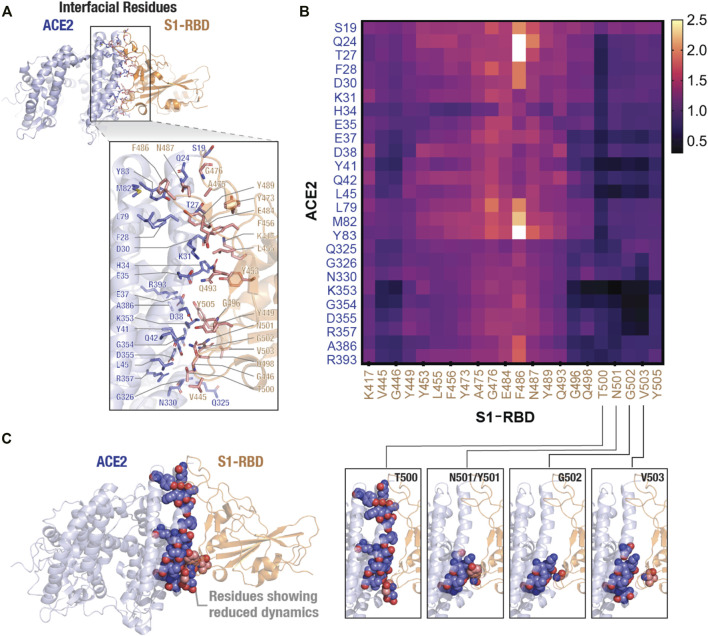
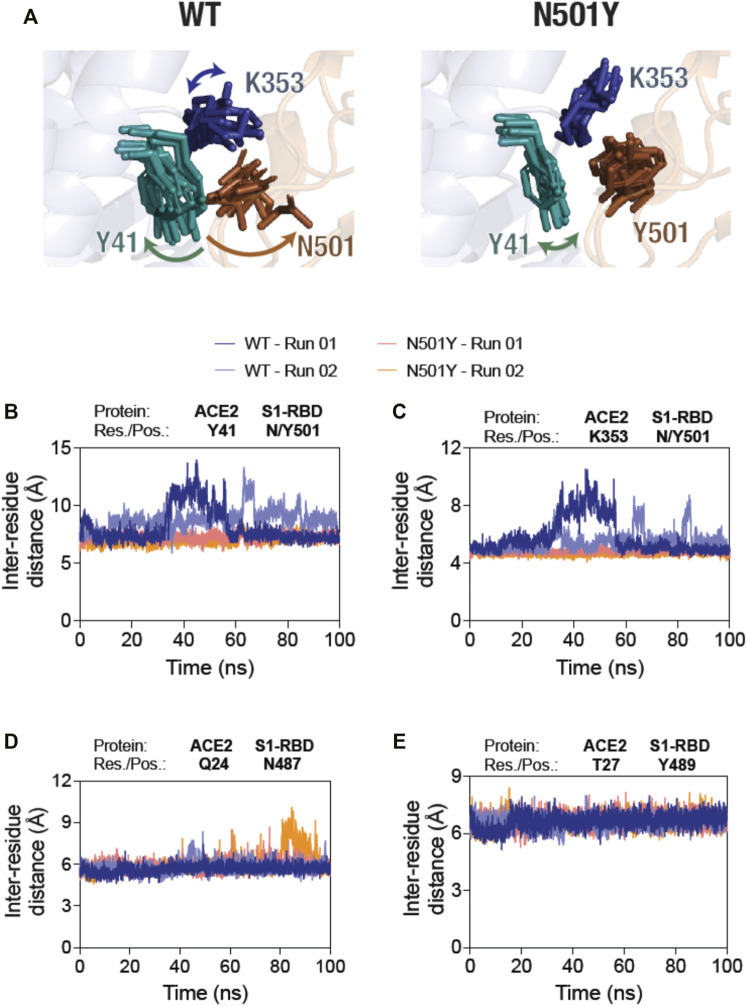
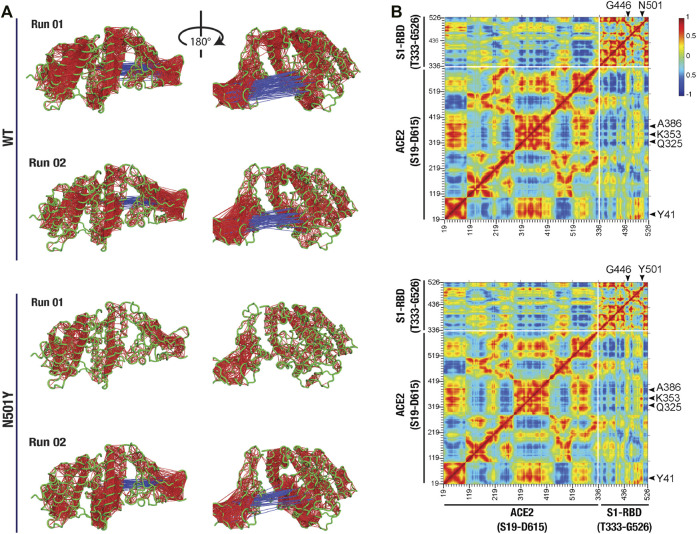
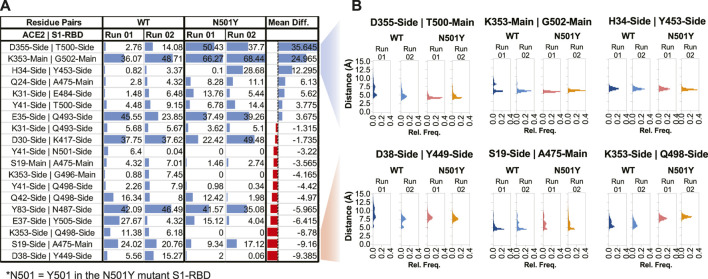
Coronavirus Disease of 2019 (COVID-19) caused by Severe Acute Respiratory Syndrome Coronavirus 2 (SARS-CoV-2) has resulted in a massive health crisis across the globe, with some genetic variants gaining enhanced infectivity and competitive fitness, and thus significantly aggravating the global health concern. In this regard, the recent SARS-CoV-2 alpha, beta, and gamma variants (B.1.1.7, B.1.351, and P.1 lineages, respectively) are of great significance in that they contain several mutations that increase their transmission rates as evident from clinical reports. By the end of March 2021, these variants were accounting for about two-thirds of SARS-CoV-2 variants circulating worldwide. Specifically, the N501Y mutation in the S1 spike receptor binding domain (S1-RBD) of these variants have been reported to increase its affinity for ACE2, although the basis for this is not entirely clear yet. Here, we dissect the mechanism underlying the increased binding affinity of the N501Y mutant for ACE2 using molecular dynamics (MD) simulations of the available ACE2-S1-RBD complex structure (6M0J) and show a prolonged and stable interfacial interaction of the N501Y mutant S1-RBD with ACE2 compared to the wild type S1-RBD. Additionally, we find that the N501Y mutant S1-RBD displays altered dynamics that likely aids in its enhanced interaction with ACE2. By elucidating a mechanistic basis for the increased affinity of the N501Y mutant S1-RBD for ACE2, we believe that the results presented here will aid in developing therapeutic strategies against SARS-CoV-2 including designing of therapeutic agents targeting the ACE2-S1-RBD interaction.
由严重急性呼吸综合征冠状病毒 2(SARS-CoV-2)引起的 2019 冠状病毒病(COVID-19)已在全球范围内引发了大规模的健康危机,一些基因变体的传染性和竞争适应性增强,从而显著加剧了全球对健康问题的担忧。在这方面,最近出现的 SARS-CoV-2 阿尔法、贝塔和伽马变体(分别为 B.1.1.7、B.1.351 和 P.1 谱系)具有重要意义,因为临床报告显示它们含有多个增加传播率的突变。到 2021 年 3 月底,这些变体约占全球流行的 SARS-CoV-2 变体的三分之二。具体而言,据报道这些变体的 S1 刺突受体结合域(S1-RBD)中的 N501Y 突变增加了其对 ACE2 的亲和力,尽管其具体机制尚不完全清楚。在此,我们利用现有的 ACE2-S1-RBD 复合物结构(6M0J)的分子动力学(MD)模拟来剖析 N501Y 突变体与 ACE2 结合亲和力增加的潜在机制,并表明与野生型 S1-RBD 相比,N501Y 突变体 S1-RBD 与 ACE2 的界面相互作用更持久、更稳定。此外,我们发现 N501Y 突变体 S1-RBD 表现出改变的动力学,这可能有助于其与 ACE2 增强相互作用。通过阐明 N501Y 突变体 S1-RBD 对 ACE2 亲和力增加的机制基础,我们相信本文给出的结果将有助于开发针对 SARS-CoV-2 的治疗策略,包括设计靶向 ACE2-S1-RBD 相互作用的治疗药物。