Department of Psychology, Center for Studies in Behavioral Neurobiology, Concordia University, Montréal, Québec, Canada.
Department of Anatomy, Division of Neurobiology, University of Ilorin, PMB, Ilorin, Nigeria.
PLoS One. 2022 Aug 8;17(8):e0271131. doi: 10.1371/journal.pone.0271131. eCollection 2022.
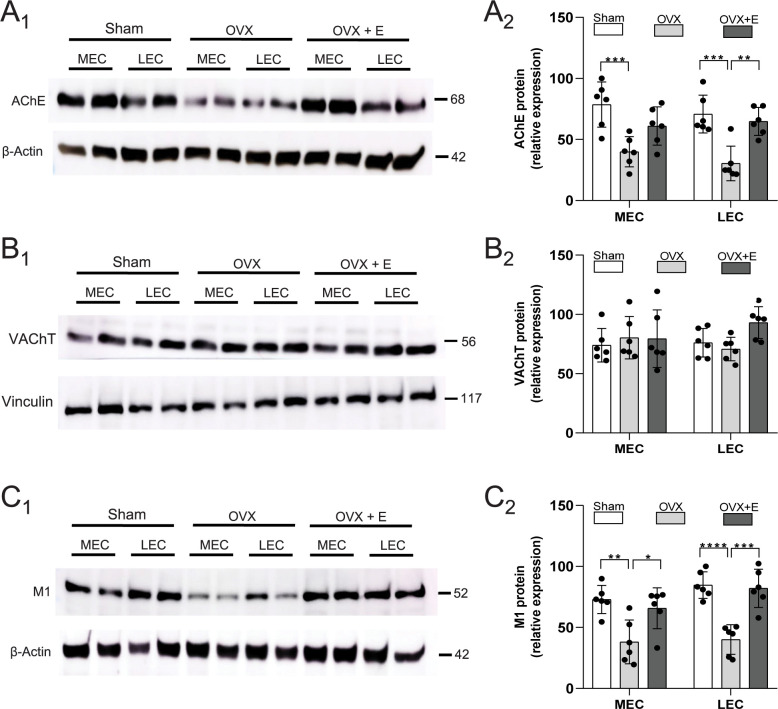
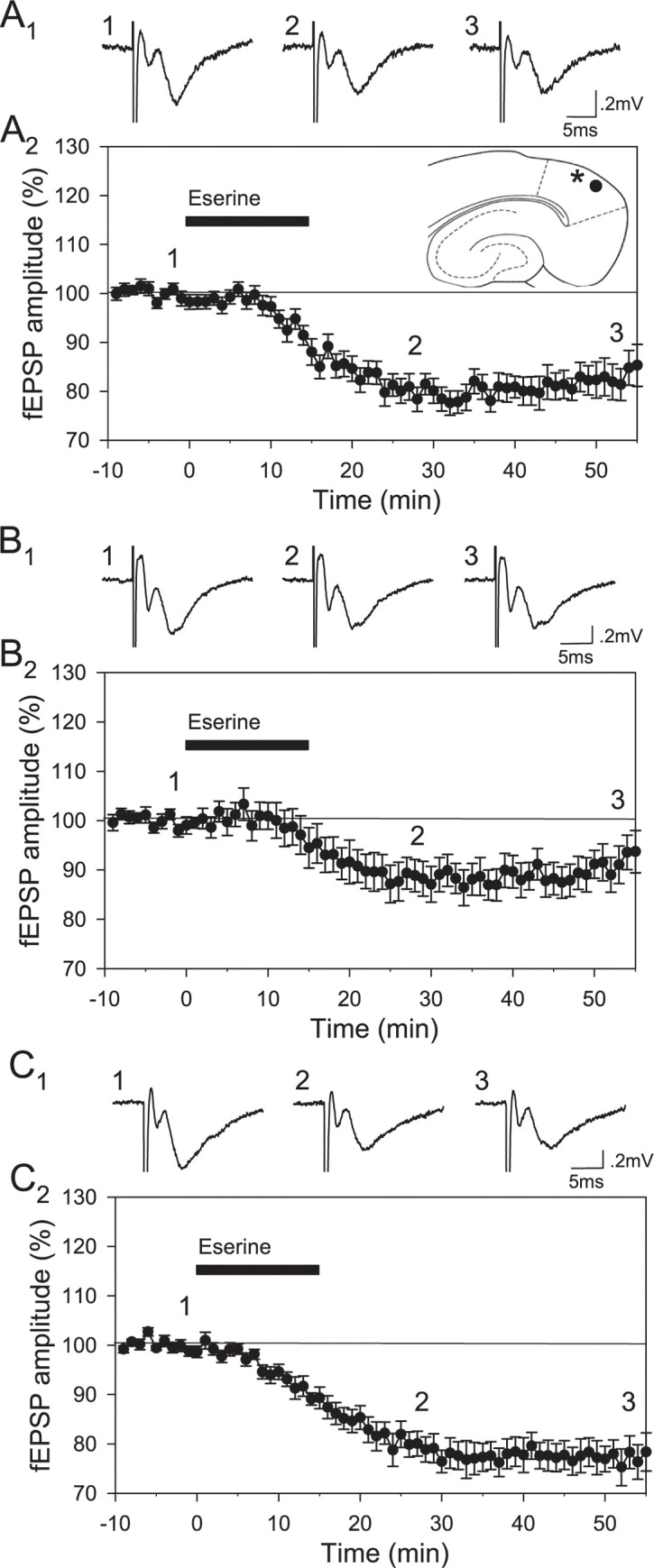
Estrogens are thought to contribute to cognitive function in part by promoting the function of basal forebrain cholinergic neurons that project to the hippocampus and cortical regions including the entorhinal cortex. Reductions in estrogens may alter cognition by reducing the function of cholinergic inputs to both the hippocampus and entorhinal cortex. In the present study, we assessed the effects of ovariectomy on proteins associated with cholinergic synapses in the entorhinal cortex. Ovariectomy was conducted at PD63, and tissue was obtained on PD84 to 89 to quantify changes in the degradative enzyme acetylcholinesterase, the vesicular acetylcholine transporter, and muscarinic M1 receptor protein. Although the vesicular acetylcholine transporter was unaffected, ovariectomy reduced both acetylcholinesterase and M1 receptor protein, and these reductions were prevented by chronic replacement of 17β-estradiol following ovariectomy. We also assessed the effects of ovariectomy on the cholinergic modulation of excitatory transmission, by comparing the effects of the acetylcholinesterase inhibitor eserine on evoked excitatory synaptic field potentials in brain slices obtained from intact rats, and from ovariectomized rats with or without 17β-estradiol replacement. Eserine is known to prolong the effects of endogenously released acetylcholine, resulting in an M1-like mediated reduction of glutamate release at excitatory synapses. The reduction in excitatory synaptic potentials in layer II of the entorhinal cortex induced by 15-min application of 10 μM eserine was greatly reduced in slices from ovariectomized rats as compared to intact rats and ovariectomized rats with replacement of 17β-estradiol. The reduced modulatory effect of eserine is consistent with the observed changes in cholinergic proteins, and suggests that reductions in 17β-estradiol following ovariectomy lead to impaired cholinergic function within the entorhinal cortex.
雌激素被认为通过促进基底前脑胆碱能神经元的功能来部分促进认知功能,这些神经元投射到海马体和包括内嗅皮层在内的皮质区域。雌激素的减少可能通过减少海马体和内嗅皮层的胆碱能传入的功能来改变认知。在本研究中,我们评估了卵巢切除术对海马体和内嗅皮层胆碱能突触相关蛋白的影响。PD63 进行卵巢切除术,PD84 至 89 获得组织,以量化降解酶乙酰胆碱酯酶、囊泡乙酰胆碱转运体和毒蕈碱 M1 受体蛋白的变化。尽管囊泡乙酰胆碱转运体不受影响,但卵巢切除术减少了乙酰胆碱酯酶和 M1 受体蛋白,而这些减少可通过卵巢切除后慢性 17β-雌二醇替代来预防。我们还通过比较乙酰胆碱酯酶抑制剂 eserine 对从完整大鼠和卵巢切除大鼠以及是否用 17β-雌二醇替代获得的脑片中诱发的兴奋性突触场电位的影响,评估了卵巢切除术对胆碱能调制兴奋性传递的影响。Eserine 已知可延长内源性释放的乙酰胆碱的作用,导致兴奋性突触处谷氨酸释放的 M1 样介导减少。与完整大鼠和用 17β-雌二醇替代的卵巢切除大鼠相比,在 10 μM eserine 应用 15 分钟后,内嗅皮层 II 层中兴奋性突触电位的降低大大减少。与观察到的胆碱能蛋白变化一致,eserine 的调节作用降低表明,卵巢切除后 17β-雌二醇的减少导致内嗅皮层胆碱能功能受损。