Department of Inorganic and Physical Chemistry, Indian Institute of Science, Bangalore, Karnataka, India.
Department of Microbiology and Cell Biology, Indian Institute of Science, Bangalore, Karnataka, India.
J Biol Chem. 2022 Sep;298(9):102352. doi: 10.1016/j.jbc.2022.102352. Epub 2022 Aug 6.
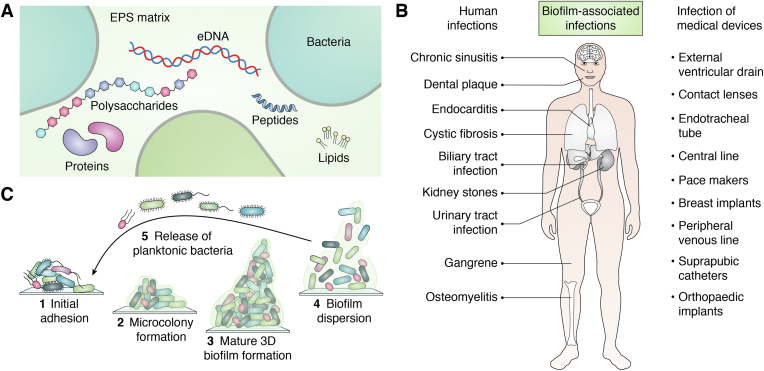
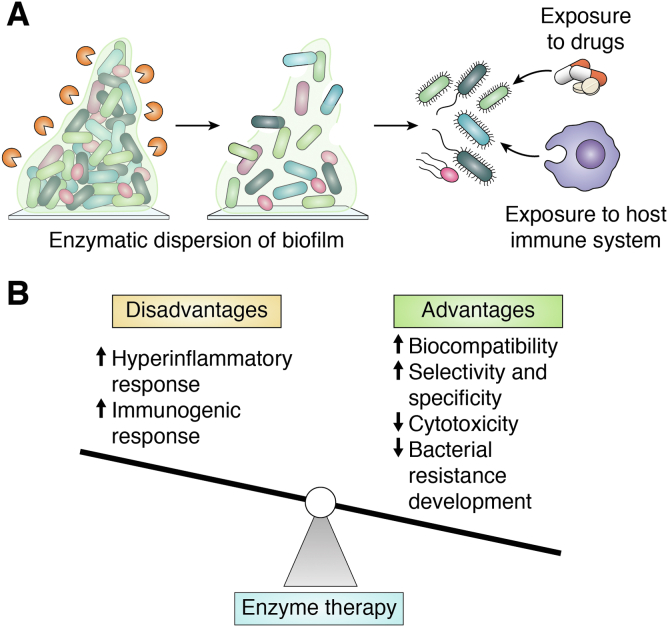
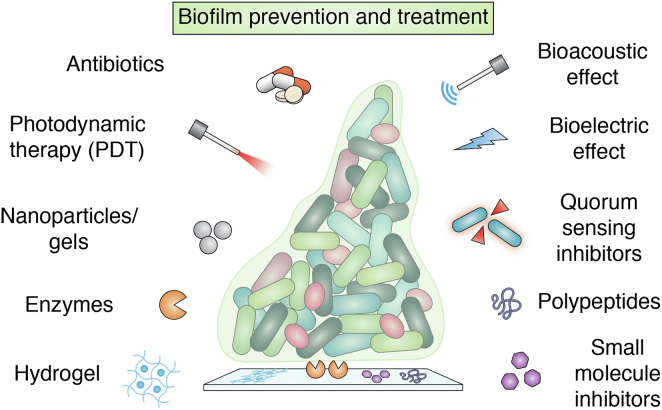
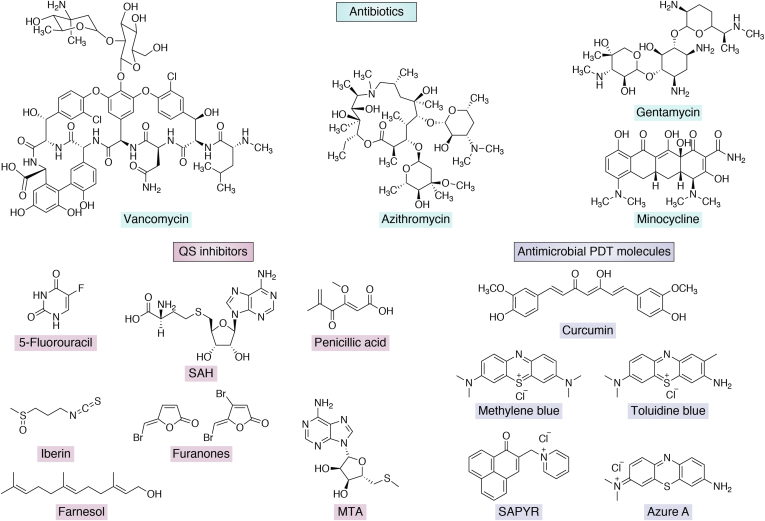
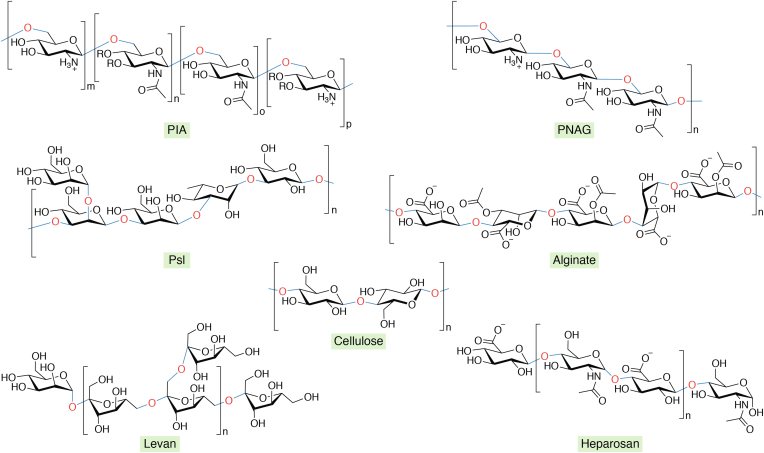
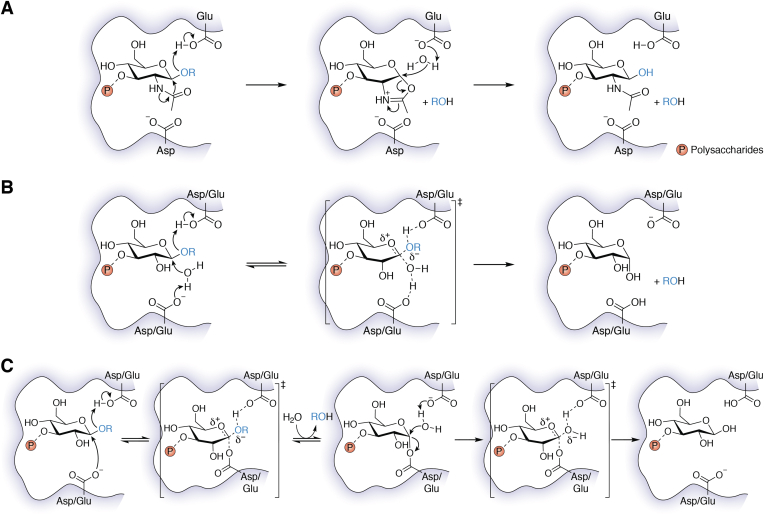
Drug resistance by pathogenic microbes has emerged as a matter of great concern to mankind. Microorganisms such as bacteria and fungi employ multiple defense mechanisms against drugs and the host immune system. A major line of microbial defense is the biofilm, which comprises extracellular polymeric substances that are produced by the population of microorganisms. Around 80% of chronic bacterial infections are associated with biofilms. The presence of biofilms can increase the necessity of doses of certain antibiotics up to 1000-fold to combat infection. Thus, there is an urgent need for strategies to eradicate biofilms. Although a few physicochemical methods have been developed to prevent and treat biofilms, these methods have poor efficacy and biocompatibility. In this review, we discuss the existing strategies to combat biofilms and their challenges. Subsequently, we spotlight the potential of enzymes, in particular, polysaccharide degrading enzymes, for biofilm dispersion, which might lead to facile antimicrobial treatment of biofilm-associated infections.
病原微生物的耐药性已成为人类关注的重大问题。细菌和真菌等微生物对药物和宿主免疫系统采用了多种防御机制。微生物的主要防御线是生物膜,它由微生物群体产生的细胞外聚合物组成。大约 80%的慢性细菌感染与生物膜有关。生物膜的存在会使某些抗生素的剂量增加 1000 倍以上,以对抗感染。因此,迫切需要制定策略来消除生物膜。尽管已经开发了一些物理化学方法来预防和治疗生物膜,但这些方法的疗效和生物相容性较差。在这篇综述中,我们讨论了现有的对抗生物膜的策略及其挑战。随后,我们重点介绍了酶,特别是多糖降解酶,在生物膜分散方面的潜力,这可能会导致生物膜相关感染的简便抗菌治疗。