Institute of Human Genetics, University Hospital Heidelberg, Heidelberg, Germany.
Aix-Marseille Université, Mediterranean Institute of Neurobiology (INMED), Parc Scientifique de Luminy, Marseille, France.
Transl Psychiatry. 2022 Aug 8;12(1):318. doi: 10.1038/s41398-022-02054-1.
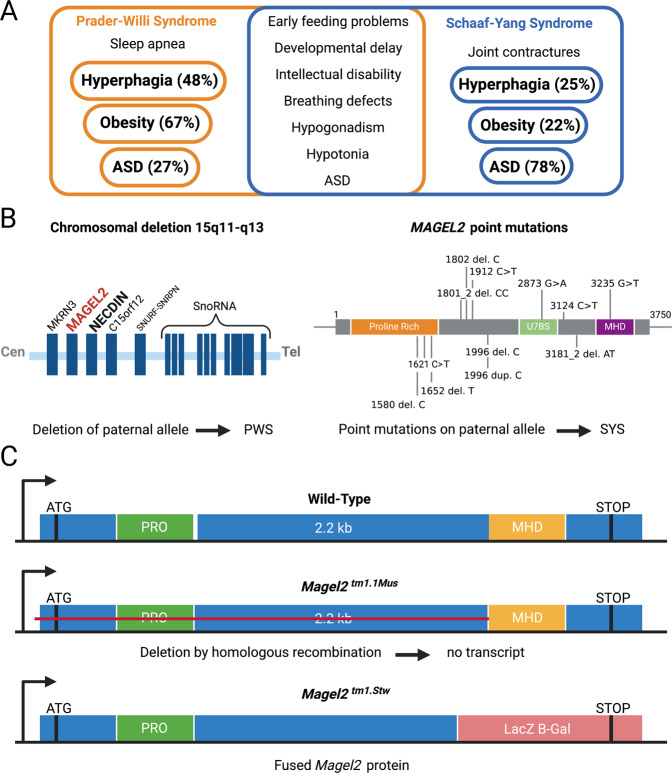
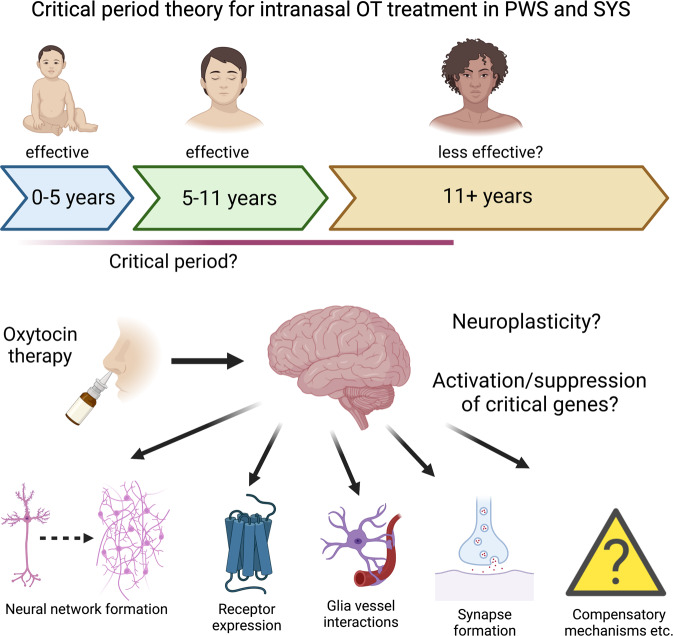
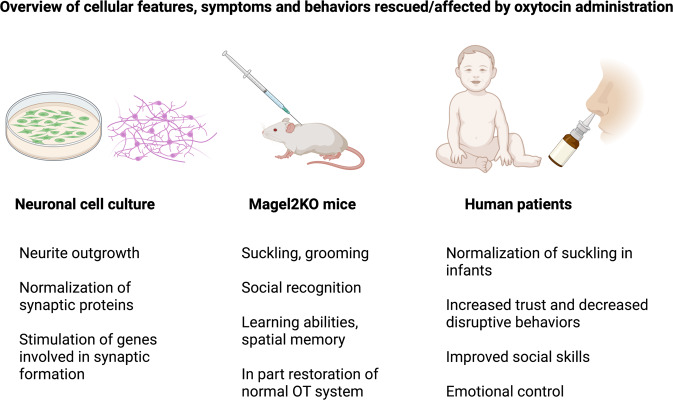
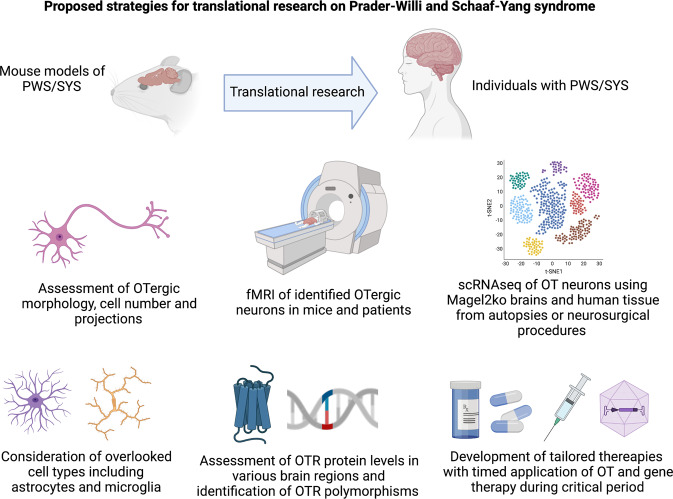
The prosocial neuropeptide oxytocin is being developed as a potential treatment for various neuropsychiatric disorders including autism spectrum disorder (ASD). Early studies using intranasal oxytocin in patients with ASD yielded encouraging results and for some time, scientists and affected families placed high hopes on the use of intranasal oxytocin for behavioral therapy in ASD. However, a recent Phase III trial obtained negative results using intranasal oxytocin for the treatment of behavioral symptoms in children with ASD. Given the frequently observed autism-like behavioral phenotypes in Prader-Willi and Schaaf-Yang syndromes, it is unclear whether oxytocin treatment represents a viable option to treat behavioral symptoms in these diseases. Here we review the latest findings on intranasal OT treatment, Prader-Willi and Schaaf-Yang syndromes, and propose novel research strategies for tailored oxytocin-based therapies for affected individuals. Finally, we propose the critical period theory, which could explain why oxytocin-based treatment seems to be most efficient in infants, but not adolescents.
社交神经肽催产素正被开发为治疗各种神经精神疾病的潜在方法,包括自闭症谱系障碍(ASD)。早期在 ASD 患者中使用鼻内催产素的研究取得了令人鼓舞的结果,一时间,科学家和受影响的家庭对鼻内催产素在 ASD 行为治疗中的应用寄予厚望。然而,最近的一项 III 期试验使用鼻内催产素治疗 ASD 儿童的行为症状的结果为阴性。鉴于 Prader-Willi 和 Schaaf-Yang 综合征中经常观察到类似自闭症的行为表型,尚不清楚催产素治疗是否是治疗这些疾病行为症状的可行选择。在这里,我们回顾了鼻内 OT 治疗、Prader-Willi 和 Schaaf-Yang 综合征的最新发现,并为针对受影响个体的定制催产素治疗提出了新的研究策略。最后,我们提出了关键期理论,该理论可以解释为什么基于催产素的治疗在婴儿中似乎最有效,但在青少年中却并非如此。