Department of Biotechnological and Applied Clinical Sciences, University of L'Aquila, L'Aquila, Italy.
Laboratory of Neuronal Cell Signaling, EBRI Rita Levi-Montalcini Foundation, Rome 00161, Italy.
Oxid Med Cell Longev. 2022 Jul 29;2022:8923615. doi: 10.1155/2022/8923615. eCollection 2022.
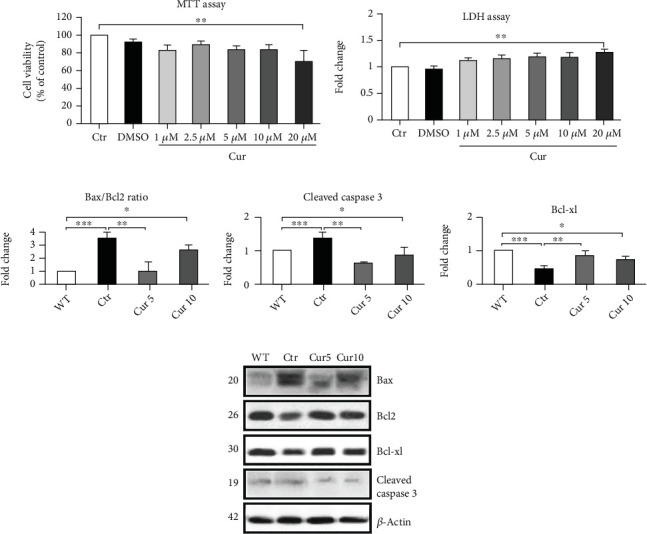
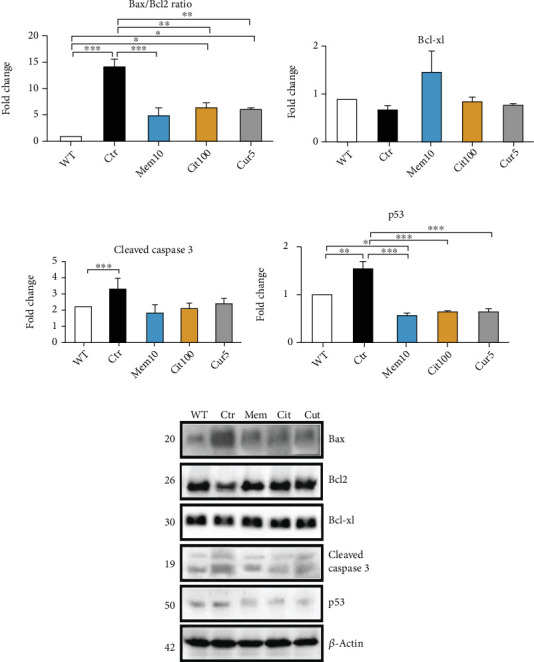
Retinal degeneration is the major and principal cause behind many incurable blindness diseases. Several studies indicated the neuroprotective effect of Curcuma longa in eye pathologies, specifically retinopathy. However, the molecular mechanism behind its effect has not been completely elucidated. Using an model of retinal degeneration obtained from an optic nerve cut (ONC), we demonstrated that Curcuma extract (Cur) exerted a neuroprotective effect. Importantly, Cur was able to modulate apoptosis and MAPK signaling pathway activation and prevent retinal ganglion cell (RGC) loss. Other well-known neuroprotective pharmacological tools, including memantine (Mem), citicoline (Cit), and ginkgolic acid (GA), were used to compare the potential mechanisms of Cur. The antioxidant activity of retinas treated with Cur following optic nerve cut was significantly higher than control, but Cur failed to change the retina glutamate content. Considering the antioxidant effect of Cur and taking advantage of our recent findings on the crosstalk between oxidative stress and post-translational protein modifiers, in particular, small ubiquitin-related modifier (SUMO), we were interested in exploring the effect of Cur on SUMOylation. We found that Cur significantly prevented the increase of protein SUMOylation, confirming our previous data indicating the cytoprotective effect of curcumin through modulating the oxidative stress and SUMO-JNK axis. Altogether, these results suggest that Curcuma protects the retina from degeneration via antioxidant activity and targets SUMOylation. Therefore, it might be considered for the combination therapy with other neuroprotective agents with different mechanisms in preclinical studies on retinal degeneration.
视网膜变性是许多不可治愈的失明疾病的主要和主要原因。几项研究表明,姜黄在眼部疾病,特别是视网膜病变中具有神经保护作用。然而,其作用的分子机制尚未完全阐明。使用视神经切割(ONC)获得的视网膜变性模型,我们证明姜黄提取物(Cur)具有神经保护作用。重要的是,Cur 能够调节细胞凋亡和 MAPK 信号通路的激活,并防止视网膜神经节细胞(RGC)的损失。其他著名的神经保护药理工具,包括美金刚(Mem)、胞磷胆碱(Cit)和银杏酸(GA),被用于比较 Cur 的潜在机制。与对照组相比,视神经切割后用 Cur 处理的视网膜的抗氧化活性明显更高,但 Cur 未能改变视网膜谷氨酸含量。考虑到 Cur 的抗氧化作用,并利用我们最近关于氧化应激和翻译后蛋白质修饰物之间相互作用的发现,特别是小泛素相关修饰物(SUMO),我们有兴趣探索 Cur 对 SUMO 化的影响。我们发现 Cur 可显著阻止蛋白质 SUMO 化的增加,证实了我们之前的数据表明姜黄素通过调节氧化应激和 SUMO-JNK 轴发挥细胞保护作用。总之,这些结果表明,Curcuma 通过抗氧化活性和靶向 SUMO 化来保护视网膜免受变性。因此,在视网膜变性的临床前研究中,它可能与其他具有不同机制的神经保护剂联合使用。