State Key Lab of Automotive Safety and Energy, School of Vehicle and Mobility, Tsinghua University, Beijing, 100084, China.
Sci Rep. 2022 Aug 10;12(1):13597. doi: 10.1038/s41598-022-16713-2.
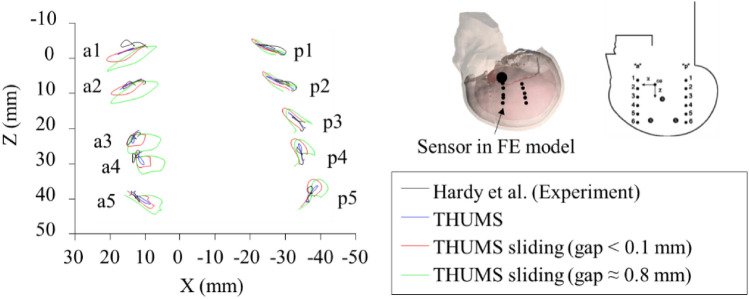
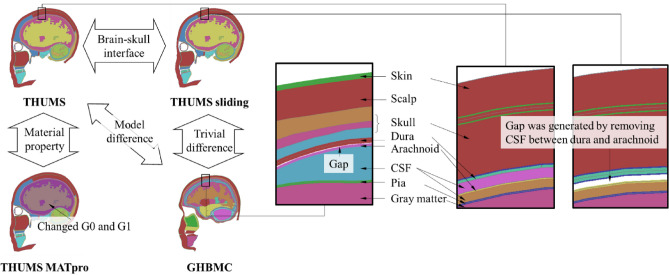
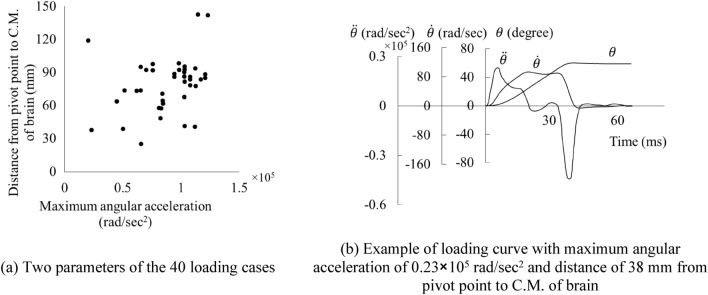
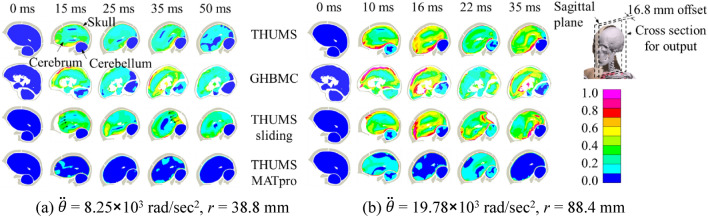
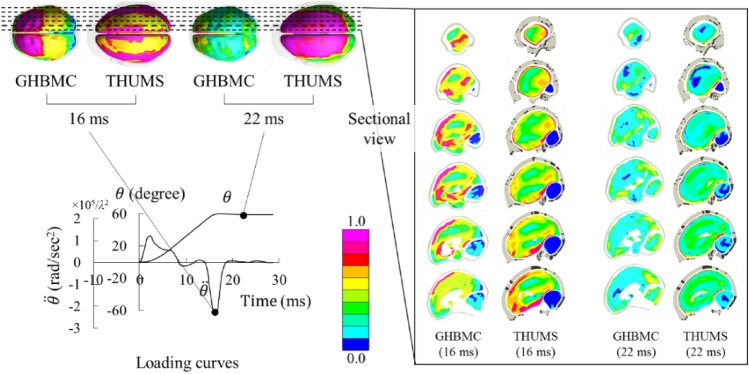
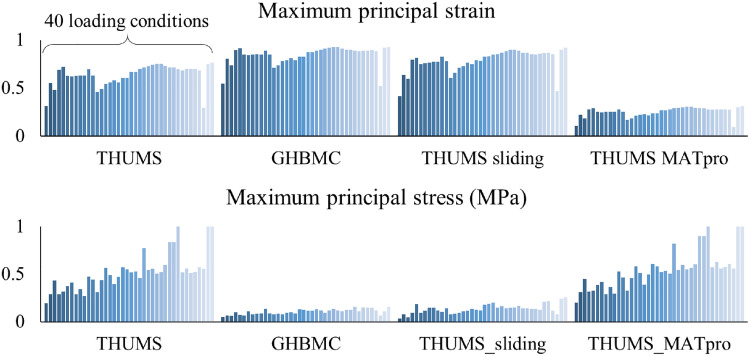
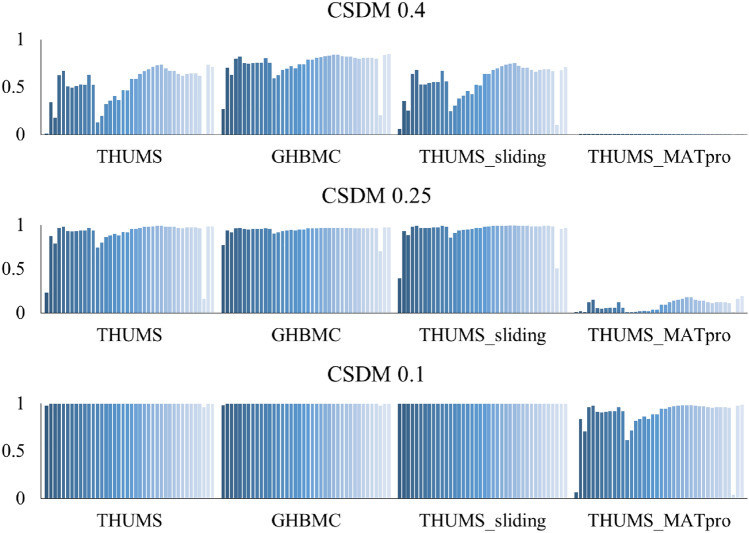
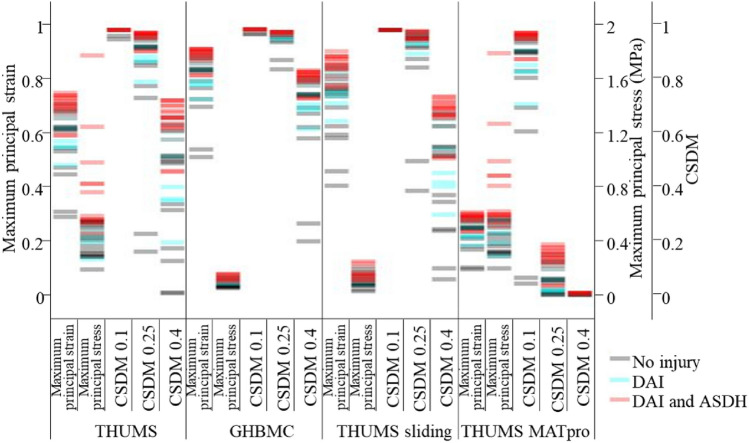
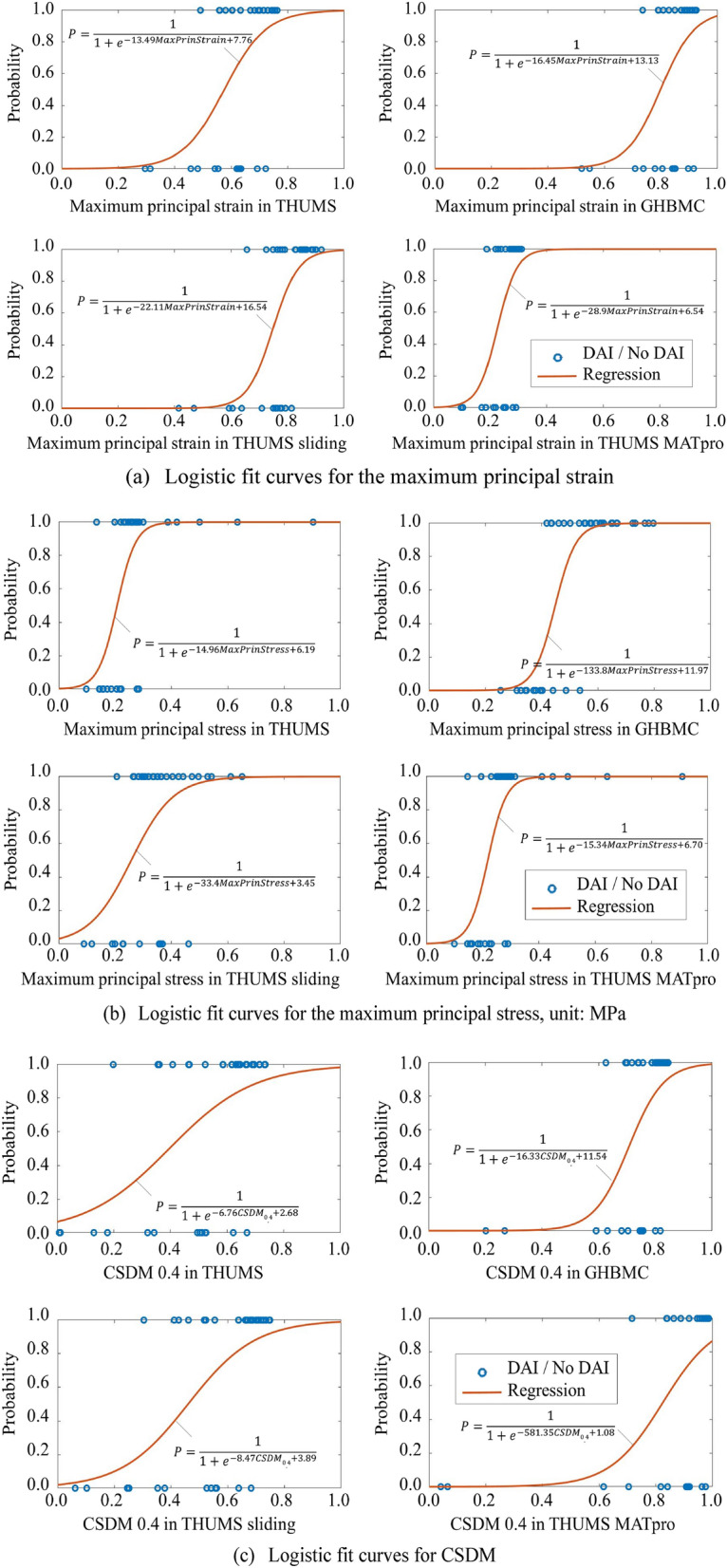
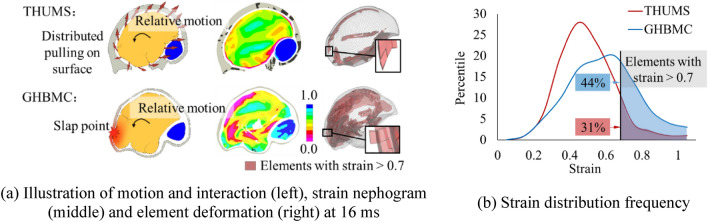
In this study, using computational biomechanics models, we investigated influence of the skull-brain interface modeling approach and the material property of cerebrum on the kinetic, kinematic and injury outputs. Live animal head impact tests of different severities were reconstructed in finite element simulations and DAI and ASDH injury results were compared. We used the head/brain models of Total HUman Model for Safety (THUMS) and Global Human Body Models Consortium (GHBMC), which had been validated under several loading conditions. Four modeling approaches of the skull-brain interface in the head/brain models were evaluated. They were the original models from THUMS and GHBMC, the THUMS model with skull-brain interface changed to sliding contact, and the THUMS model with increased shear modulus of cerebrum, respectively. The results have shown that the definition of skull-brain interface would significantly influence the magnitude and distribution of the load transmitted to the brain. With sliding brain-skull interface, the brain had lower maximum principal stress compared to that with strong connected interface, while the maximum principal strain slightly increased. In addition, greater shear modulus resulted in slightly higher the maximum principal stress and significantly lower the maximum principal strain. This study has revealed that using models with different modeling approaches, the same value of injury metric may correspond to different injury severity.
在这项研究中,我们使用计算生物力学模型,研究了颅骨-脑界面建模方法和大脑材料特性对动力学、运动学和损伤结果的影响。在有限元模拟中重建了不同严重程度的活体动物头部撞击试验,并比较了 DAI 和 ASDH 损伤结果。我们使用了经过多次加载条件验证的 Total HUman Model for Safety (THUMS) 和 Global Human Body Models Consortium (GHBMC) 的头部/大脑模型。评估了头部/大脑模型中颅骨-脑界面的四种建模方法。它们分别是 THUMS 和 GHBMC 的原始模型、将颅骨-脑界面改为滑动接触的 THUMS 模型,以及大脑剪切模量增加的 THUMS 模型。结果表明,颅骨-脑界面的定义会显著影响传递到大脑的负荷的大小和分布。与强连接界面相比,滑动脑-颅骨界面使大脑的最大主应力降低,而最大主应变略有增加。此外,较大的剪切模量会导致稍高的最大主应力和显著降低的最大主应变。这项研究表明,使用具有不同建模方法的模型,相同的损伤指标值可能对应不同的损伤严重程度。