Nuffield Department of Surgical Sciences, University of Oxford, Oxford, UK.
Department of Gene Technology, KTH Royal Institute of Technology, Science for Life Laboratory, Solna, Sweden.
Nature. 2022 Aug;608(7922):360-367. doi: 10.1038/s41586-022-05023-2. Epub 2022 Aug 10.
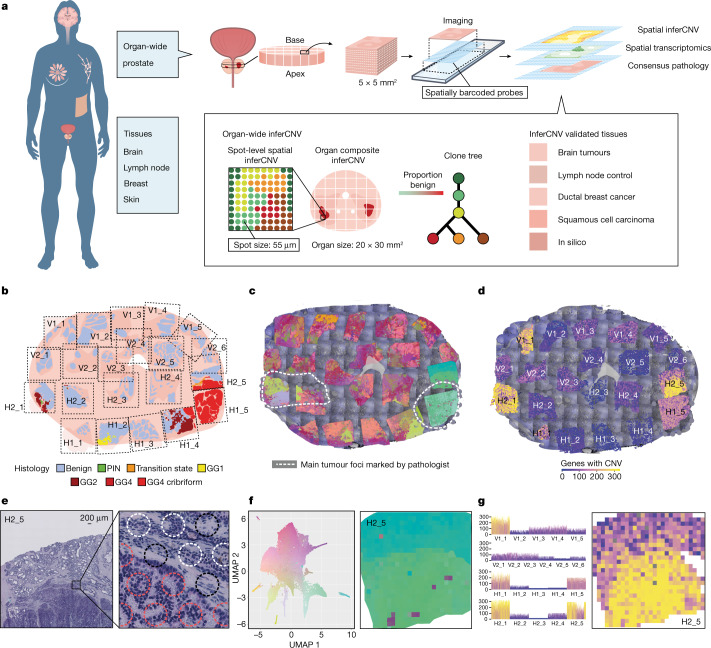
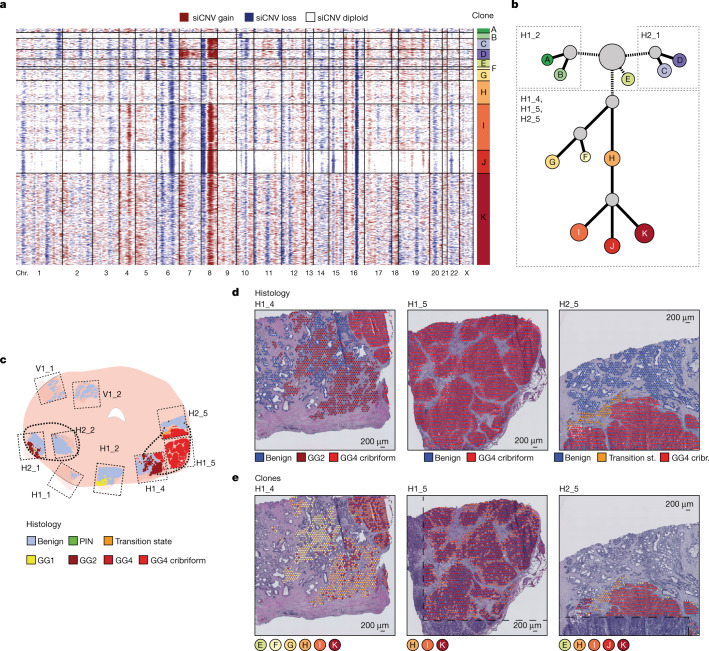
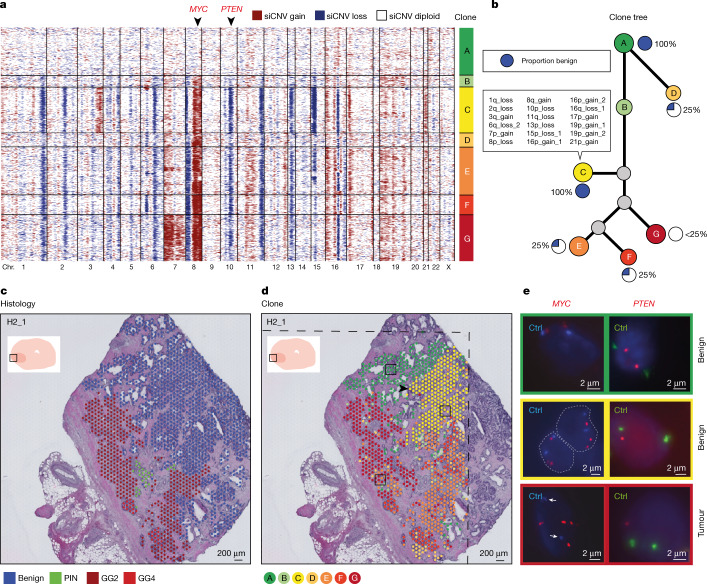
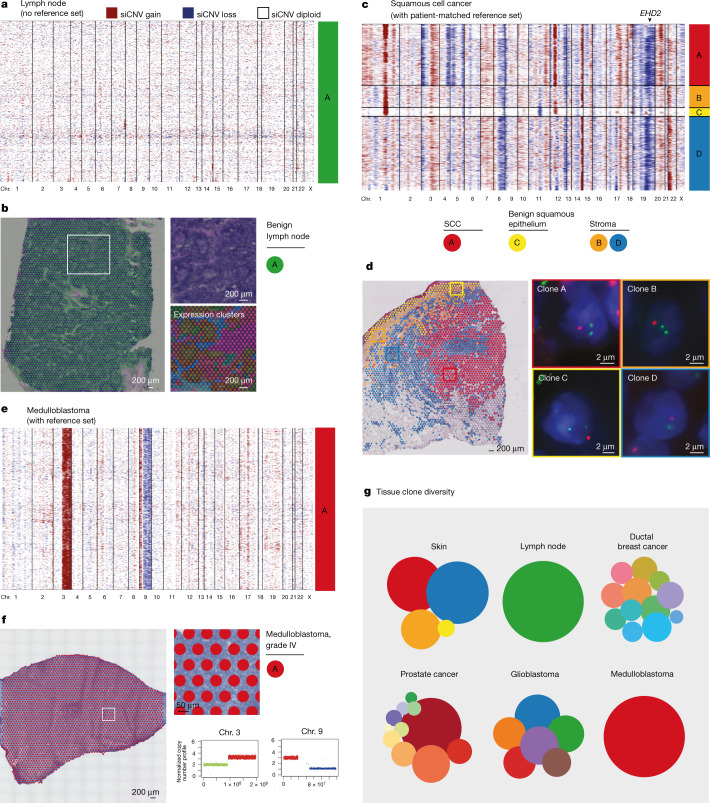
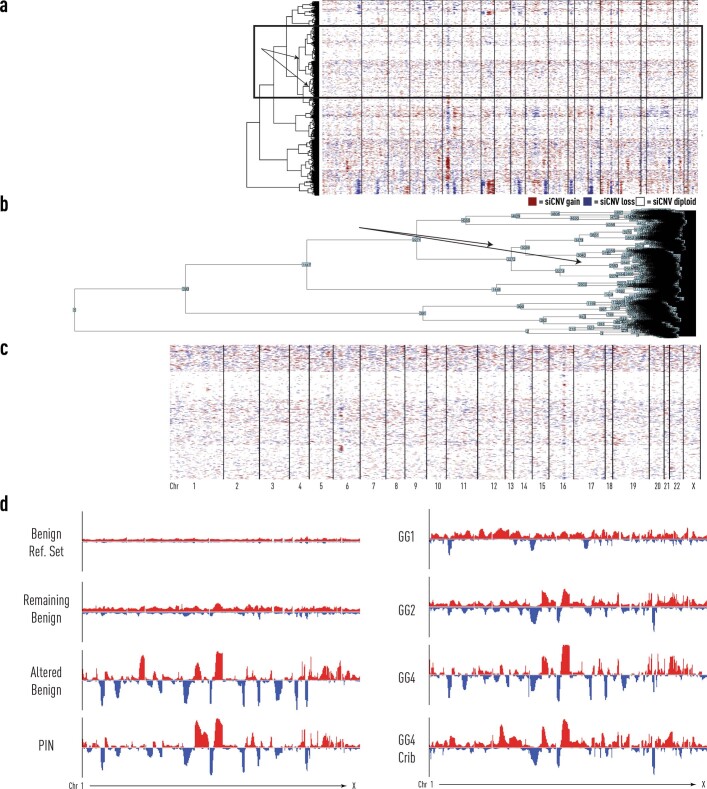
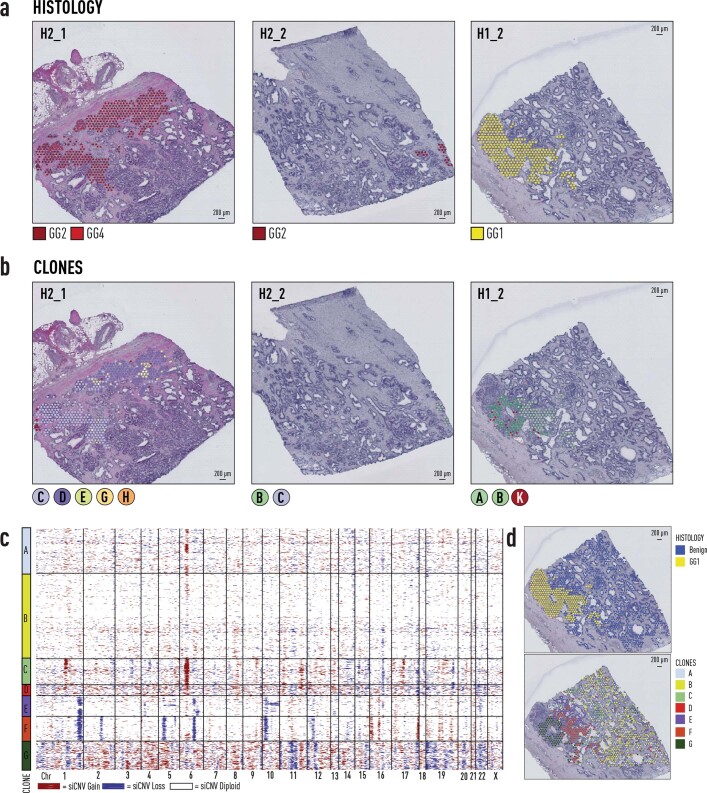
Defining the transition from benign to malignant tissue is fundamental to improving early diagnosis of cancer. Here we use a systematic approach to study spatial genome integrity in situ and describe previously unidentified clonal relationships. We used spatially resolved transcriptomics to infer spatial copy number variations in >120,000 regions across multiple organs, in benign and malignant tissues. We demonstrate that genome-wide copy number variation reveals distinct clonal patterns within tumours and in nearby benign tissue using an organ-wide approach focused on the prostate. Our results suggest a model for how genomic instability arises in histologically benign tissue that may represent early events in cancer evolution. We highlight the power of capturing the molecular and spatial continuums in a tissue context and challenge the rationale for treatment paradigms, including focal therapy.
定义良性组织向恶性组织的转变对于提高癌症的早期诊断至关重要。在这里,我们采用系统的方法来研究原位空间基因组完整性,并描述以前未识别的克隆关系。我们使用空间分辨转录组学方法推断了多个器官中 >120,000 个区域的空间拷贝数变化,包括良性和恶性组织。我们通过一种针对前列腺的全器官方法证明,全基因组拷贝数变化揭示了肿瘤内和附近良性组织中独特的克隆模式。我们的结果提出了一种基因组不稳定性在组织学良性组织中出现的模型,这可能代表癌症进化的早期事件。我们强调了在组织背景下捕捉分子和空间连续性的力量,并挑战了治疗模式的合理性,包括局部治疗。